
The British government has introduced a new Rwanda bill to parliament, aimed at addressing the concerns raised by the Supreme Court in November, which deemed the plan "unlawful." The bill includes provisions to disapply relevant sections of the Human Rights Act.
"The bill is the toughest immigration legislation ever introduced to parliament," states a British government press release published on December 6 as the bill was introduced. Its title, "Safety of Rwanda (Asylum and Immigration)," indicates its aims -- to convince judges that Rwanda is a safe country for the deportation of asylum seekers.
According to the UK government, it builds upon the treaty that the UK's Home Secretary (Interior Minister) James Cleverly signed with the Rwandan Foreign Affairs Minister Dr Vincent Biruta in Rwanda on Tuesday.
The draft legislation will instruct judges to ignore some sections of the Human Rights Act (HRA) and "any other provision or rule of domestic law, and any interpretation of international law by the court or tribunal."
Thereby it will "unambiguously exclude the courts from challenging the fact that Rwanda is safe, and confirm that ministers alone can decide whether to comply with blocking orders from Strasbourg [where the European Human Rights Court is based], like the one that grounded the first Rwanda flight in 2022."
Essentially, if passed, the bill aims to convince UK courts that Rwanda is a safe country for asylum seekers. It seeks to address all the concerns about their safety if sent to Rwanda raised by the Supreme Court’s judgement in November, when it deemed the plan "unlawful," because it judged Rwanda not to be a safe country.
Also read: Visa rules tightened in the UK as government pledges to get tough on immigration
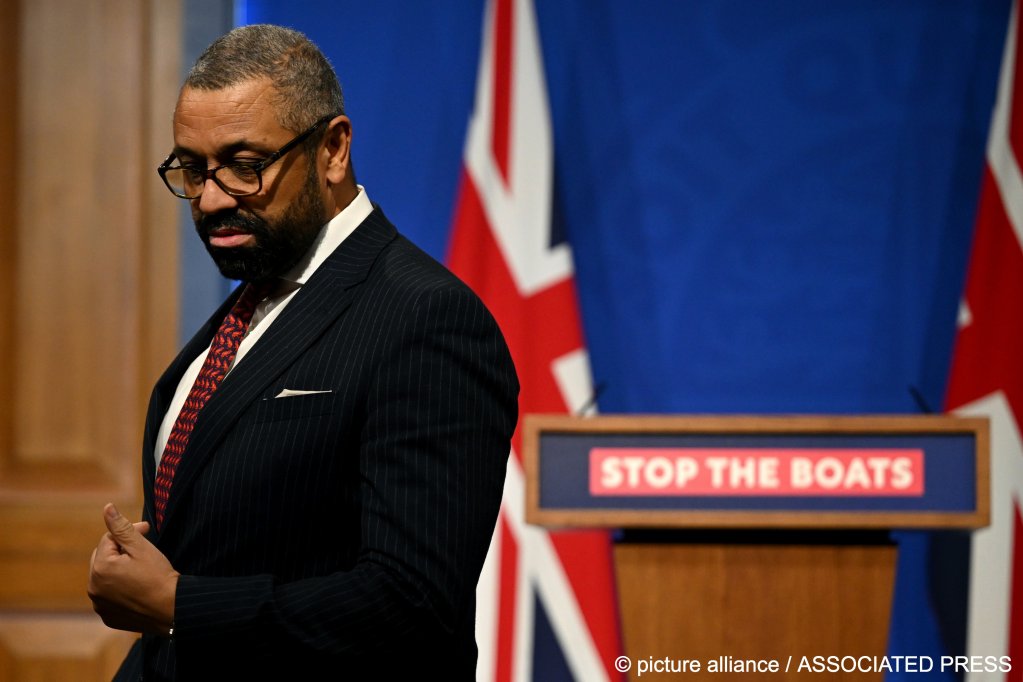
The ruling Conservative party has made it its priority to "stop the boats" crossing the Channel. One of the main planks of that plan is enacting the Rwanda treaty and flying some of those crossing the Channel to Rwanda to seek asylum there.
Critics say bill 'does not go far enough'
At the moment the Conservative Party holds a majority in the House of Commons and so should be able to push its bill through. However, some in the party have already criticized it, including former Home Secretary Suella Braverman, who declared the bill "didn’t go far enough." She and other supporters are pushing for Britain to leave the European Convention on Human Rights altogether.
Braverman told the BBC "I’m very concerned that the bill on the table will allow a merry-go-round of legal claims and litigation."

And Braverman is not the only one. The Immigration Minister Robert Jenrick, who had served under Braverman, and continued in his position as Cleverly took over, resigned soon after the bill was introduced on Wednesday. In his resignation letter, reported the French news agency Agence France Presse (AFP) Jenrick called the proposed laws a "triumph of hope over experience."
Also read: Thousands of migrants rescued in Channel, crossings at second highest
On Thursday, Michael Tomlinson was appointed "Britain’s new minister for illegal migration," reported Reuters. Tom Pursglove has now been appointed "minister for legal migration and delivery."
Rwanda warns Britain must stay within the law
In Rwanda, the foreign minister confirmed that Rwanda would pull out of the bill if Britain didn’t stick to international law. Vincent Biruta said in a statement: "It has always been important to both Rwanda and the UK that our rule of law partnership meets the highest standards of international law, and it places obligations on both the UK and Rwanda to act lawfully," AP quoted him as saying.
According to the government, the newly signed Rwanda treaty, along with the proposed law "will prevent UK courts and tribunals from delaying or preventing a person’s removal to Rwanda, on the grounds that they are at risk of being removed to an unsafe country."
The bill, says the government "will also make clear that the UK Parliament is sovereign, and the validity of any Act of Parliament is unaffected by international law. Ministers will retain the decision on whether or not to comply with interim measures from the European Court of Human Rights.”
Challenge still possible in 'extremely limited exceptions'
The bill sets out a list of "extremely limited exceptions" whereby individuals might be able to challenge removal to Rwanda. In order to challenge the decision, a person would have to prove due to their personal circumstances that they face an “imminent and foreseeable risk of serious and irreversible harm if removed to Rwanda.”
Also read: Backlog of asylum processing claims in UK reaches record high
The new bill also "disapplies elements of the Human Rights Act 1998" meaning that those clauses "cannot be factored into court or tribunal decision making."
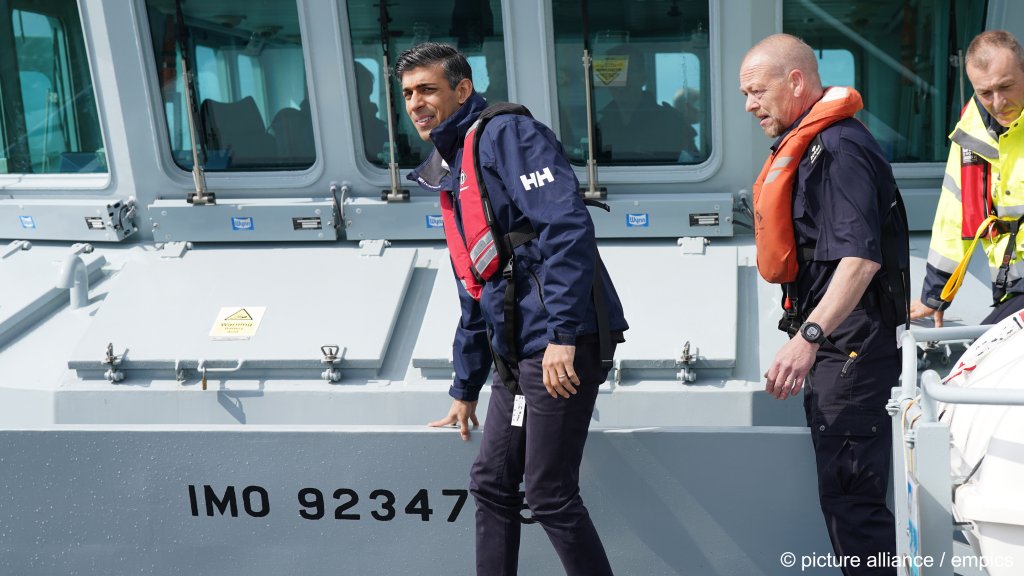
On the introduction of the bill, Prime Minister Rishi Sunak said: "The endless scourge of illegal migration…is costing us billions of pounds and costing innocent lives. […] Through this new landmark emergency legislation, we will control our borders, deter people taking perilous journeys across the Channel and end the continuous legal challenges filling our courts."
Sunak said that disapplying the Human Rights Act, or elements thereof would ensure "our plan [for Rwanda] cannot be stopped." He described Rwanda as "not just a safe country, but a modern, prosperous nation." He called those who sought to challenge decisions to send them to Rwanda as trying to "cheat the system and betray the British people."
Cleverly: UNHCR uses Rwanda to host refugees
James Cleverly added that the bill represented "crucial steps forward to respond to the Supreme Court’s findings." Having just been to Rwanda himself, Cleverly described Rwanda as "a country that cares deeply about supporting refugees. It stands ready to welcome those relocated there."
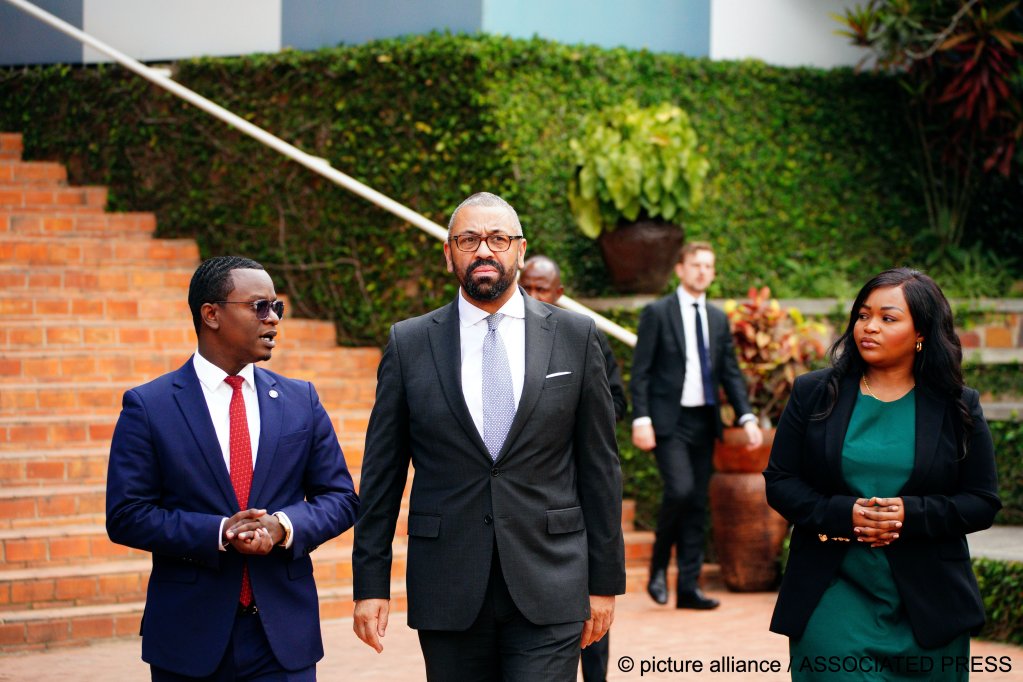
Cleverly underlined that none of the courts actually found the principle of relocating people to another country to have their asylum claims processed unlawful. What they questioned was whether Rwanda at the moment was a safe country.
Again, Cleverly repeated that countries across Europe, "including Austria, Germany and Denmark" were "following the UK’s lead in exploring third country models for illegal immigration." He also highlighted Italy’s deal with Albania as using a similar model to their latest Rwanda plan.
He also pointed out that Rwanda "currently hosts more than 135,000 people seeking safety and protection and has a track record of providing that protection and supporting people in thriving in their country." He added that the UN Refugee Agency UNHCR "has its own scheme for refugees in Rwanda, which is not delivered through a legally binding Treaty."
The British government's treaty with Rwanda, on the other hand, would be binding in international law and is currently going through the parliamentary ratification process, Cleverly said.
Sunak: 'Rwanda bill will work'
Despite facing opposition within his own party and the resignations, Sunak insisted on Thursday that the plan will work, and said he was "absolutely committed" to seeing it through to fruition, reported Reuters.
During a press conference on December 7, when questioned about potential challenges from the European Court of Human Rights, Sunak responded that he would do "what is necessary".
"I am confident that the Rwanda bill will work. We will get flights off the ground," declared Sunak at the press conference. However, for all Sunak’s confidence, some political analysts and party members fear the possibility of another leadership challenge could be on the horizon.
With Reuters, AFP, AP