
Two senior Home Office officials have admitted that their department does not know what has happened to 17,000 people whose asylum claims have been withdrawn, as they are questioned on the government's controversial asylum policy.
Two senior civil servants from the UK Home Office faced questions from the a parliamentary committee about the backlog of asylum claims waiting to be considered by the department. The Commons Home Affairs Committee questioned the department in light of the ambitious target set by prime minister Rishi Sunak to clear older cases by the end of the year.
The recent Home Office figures published on November 23, 2023 showed that 17,316 asylum applications had been withdrawn in the year to September. According to the Home Office, withdrawn claims may occur for a number of reasons, including where someone has already left the UK before their claim was considered, where they fail to attend their asylum interview, or they choose to or pursue another application for permission to stay.
At committee meeting, the Conservative MP Tim Loughton asked Simon Ridley, the interim second permanent secretary at the Home Office, the reasons behind the 17,316 withdrawals in the year to September 2023 and whether the Home Office knew the whereabouts of the former applicants.
Ridley, replied that in "dealing with a lot of older cases there have been some of those people who have absconded at that point,” he said. When pressed again by Loughton if he had any idea where the 17,316 people were, Ridley replied: “I don’t think we know where those people are, no.”
No information
When an asylum seeker receives a negative decision on their application for refugee status, they usually have to leave UK Visas and Immigration (UKVI) accommodation within 21 days of receiving the decision.
In that time the asylum applicant may choose to exercise any right of appeal, but if there is no further right of appeal or the appeal is unsuccessful, they must leave the accommodation within 21 days of being told the outcome of the appeal.
After application is refused there are several steps that can be taken before they are at risk of being deported.
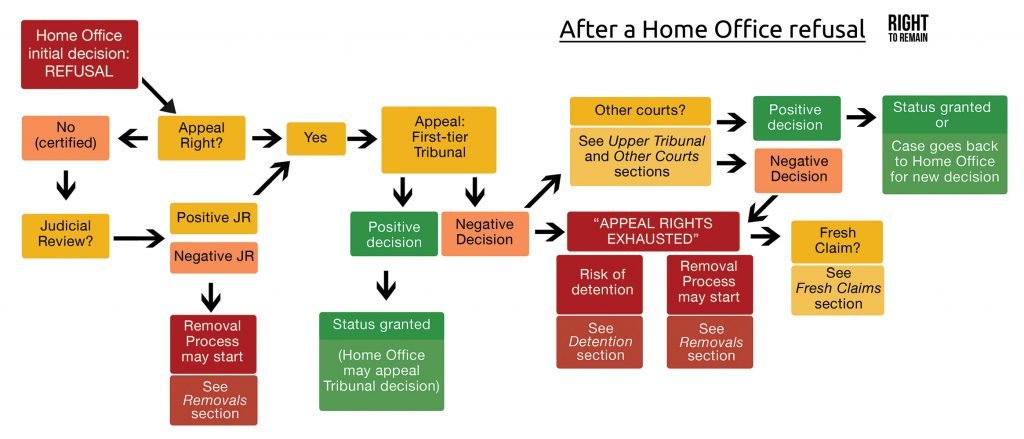
Ridley told the committee that a claim was withdrawn when asylum seekers did not turn up for interviews or complete questionnaires and were “not engaging with the system that leads to a decision”.
A National Audit Office report published in June 2023 showed that many of the withdrawal cases were actually due to non-compliance refusals. This means that the asylum seeker was rejected because they failed to return a form on time or did not turn up to an appointment. Reasons for this may also include bureaucratic failures, such as the Home Office failing to update a change of address. However, it is still possible that some asylum seekers may have disappeared deliberately, fearing their claim would not be granted.
Also read: UK: Thousands of homeless refugees expected before year's end
Asylum backlog
The Home Office figures published last week showed that the current backlog of asylum applications stood at 122,585 as of October 29 this year, down 12% from a record 138,782 at the end of February.
The “legacy” backlog of asylum applications stood at 33,253 as of October 29, these were reduced by almost half (47%) from 62,157 on July 30, 2023. , Figures showed that between September 24 and October 29, 12,620 applications were cleared, and 9,604 cleared between August 27 and September 24.
Around 16,630 applications would need to be cleared per month before December 31, 2023, in order to meet Sunak's target.
The permanent secretary at the Home Office, Sir Matthew Rycroft, told MPs that the Home Office has "always been confident" that ministers estimates to clear backlog by the end of next month in line with the government's deadline was realistic.
He added that extra resources had been brought in to tackle the backlog.
Also read: Unaccompanied minors seeking asylum in the UK left in limbo
No estimates of future cost of Rwanda scheme
In addition to the lack of answers in relation to withdrawn asylum requests, the government does not appear to be giving up on its plans to send asylum seekers to Rwanda. Rycroft, told MPs that officials were currently in Kigali, Rwanda's capital, to put the “finishing touches” on a new immigration deal, after the UK Supreme Court ruled the government’s previous agreement was "unlawful".
So far the Rwanda scheme has cost UK taxpayers £140m since April 2022, as it continues to face numerous legal challenges over human rights concerns. When asked how much more it would cost UK taxpayers, Rycroft was unable to provide a clear answer stating that ministers had decided to wait to reveal that information in the the department’s annual report next year.
He also claimed that he did not have a figure for the number of Rwandan people the government might have to accept under a clause in the deal, and could not give any details about alternative plans to the Rwandan deal if it could not be implemented.
During the committee meeting Rycroft and Ridley were also unable to answer detailed questions on Channel crossings and deporting asylum seekers who had had their claims rejected.
When committee chairwoman Dame Diana Johnson, asked Ridley: “Do we have any figures about anything?” He was also unable to confirm whether the numbers published were accurate, even though the figures, which were only published a week ago. When asked why he was unable to confirm these, he stated “I just haven’t got the precise number in front of me”.
Deputy Conservative party chair Lee Anderson said: “I find this absolutely staggering that the big boss hasn’t got a clue, not just on this question, but nearly every other question we’ve asked today. Why is that?”
Rycroft responded that his deputy, Ridley, "is looking for the numbers and we will send them to you".
After the meeting Loughton told the BBC’s PM programme: “I think we’re all just flabbergasted… that was one of the worst performances from a senior civil servant I have ever seen.”
Also read: PM Sunak considers 'next steps' as UK Supreme Court rules Rwanda migrant deal 'unlawful'
Sunak accused of being 'lost in La-La Land'
At prime minister’s questions, the government's immigration policies again came under fire. Starmer accused Sunak of having the “reverse Midas touch”, stating that migration has trebled under his watch and is now "giving the house a lecture about targets".
The Labour leader has mainly focused on the government's incompetence in regards to immigration policy, while trying to maintain a careful balancing act in regards to his own party's stance towards migration.
"He is lost in La-La Land. There can be few experiences more haunting for the members opposite than hearing this prime minister claim that he is going to sort out a problem,” said Starmer.
He also pointed to claims by members of Sunak's own party, including former home secretary Suella Braverman and immigration minister Robert Jenrick, that the prime minister has failed to enforce harsher immigration policies.
Starmer stated that the prime minister seems to be "the only person on the Tory benches without his own personal immigration plan. Cleary his own side don’t have any faith in him. Why should the public?”
Sunak defended his record and claimed the “toughest action ever taken" to reduce legal migration is “yet to be felt”.
Also read: UK government complicit in exploitation of farm workers – Bureau of Investigative Journalism