
Long considered a safe haven surrounded by volatile nations, Senegal is facing an unprecedented surge in emigration in response to an increasingly shaky political and economic landscape. With nearly half the population under working age, the West African nation is now scrambling to keep that trend at bay.
Perched on the westernmost part of the African continent, Senegal has long been regarded as a beacon of stability in a region that is known for its many upheavals and struggles.
But growing economic challenges and repeated bouts of social unrest are now forcing a growing number of people to seek irregular ways out of the country in hopes of finding greener pastures in Europe and beyond.
But those journeys are filled with dangers ranging from human trafficking to deaths at sea, and don't always end in success, with a high rate of Senegalese nationals being denied asylum abroad.
Still, each day, people continue to get in boats or attempt to cross the desert, risking life and limb to escape poverty.
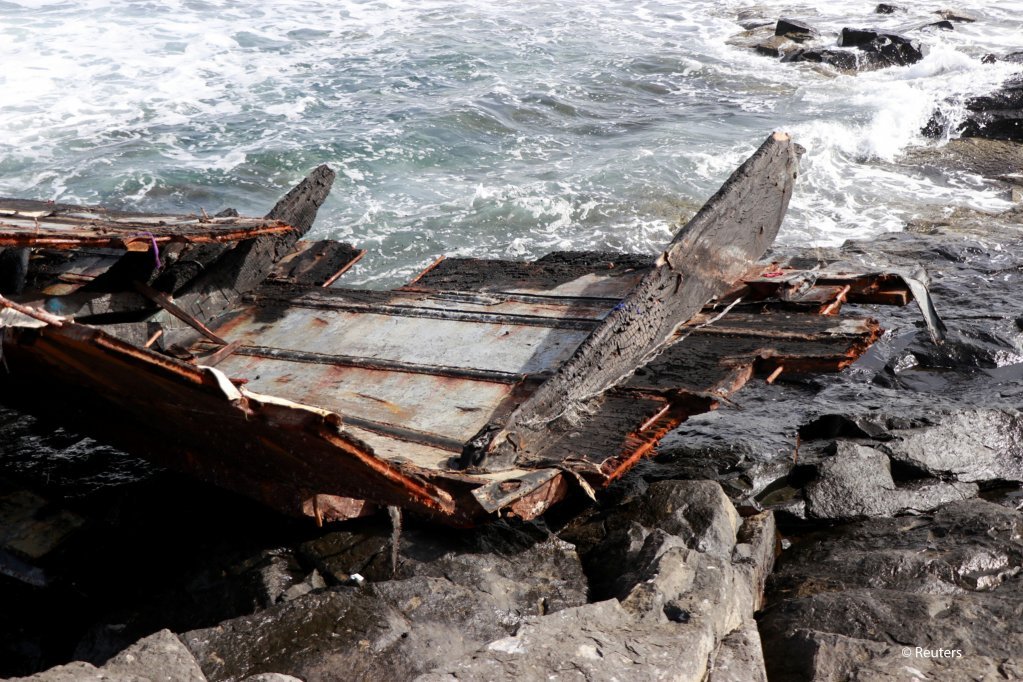
About one in four departures from Senegal is involved in an incident or shipwreck at sea, according to the IOM.
Also listen: Tales from the Border, Senegal -- Crossing the Atlantic Ocean
Record numbers in irregular departures
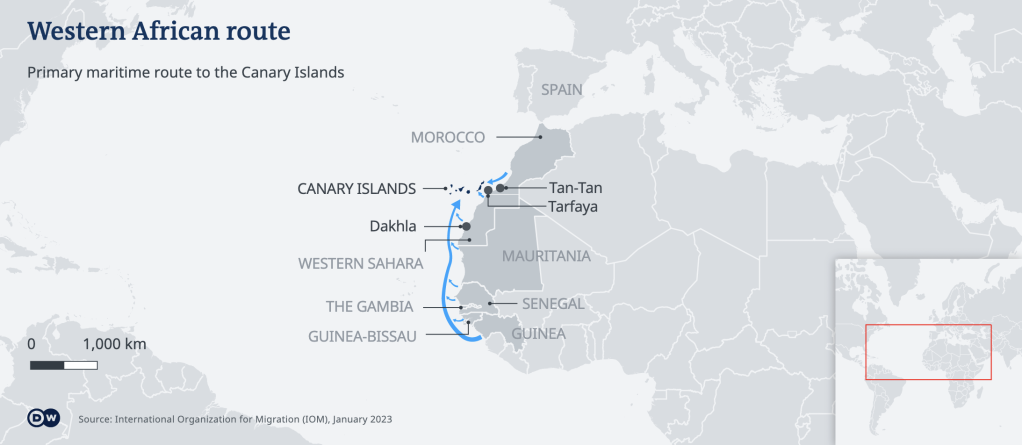
The majority of migrants leaving Senegal these days tend to seek sea routes, hoping to reach Spain's Canary Islands. This, however, is considered the most dangerous route in the world, where small vessels are often hit by adverse weather conditions and waves.
According to Spain's interior ministry, more than 32,000 migrants reached the Canaries to date this year, setting a new record. This is twice the number of migrant arrivals on the archipelago during the same period in 2022.
In August 2023, the number of irregular arrivals from Senegal for the first time overtook that of Morocco, which geographically is considerably closer to the Canary Islands, with more than one in three migrants reaching the Canaries that month being Senegalese, as reported by local news outlet Canarias7 on November 22.
On some days, there are reports of up to five dinghies reaching the islands, with dozens of people huddled together on board for days to make the perilous journey, which measures more than 1,500 kilometers in length.
In response to these developments, Senegalese President Macky Sall issued emergency orders earlier in November to try to stop these growing numbers of migrants leaving the West African country. This follows a 10-year plan presented by the government in July to combat irregular migration.
However, many think that rather than truly seeking to solve the growing issue, Sall is part of the problem resulting in this growing trend.
Also read: Senegal villagers mourn dead after latest migrant shipwreck
Youth disillusioned by ongoing political crisis
After decades of stability since gaining independence from France in 1960, Senegal -- for the first time -- is facing a political crisis threatening to escalate.
Opponents of President Sall reportedly are facing growing repression, as the country gears up to head to the polls in early 2024. Even though Sall has ruled out running in the race, questions about his political succession continue to fuel protests and riots, which so far have cost at least two dozen lives in the streets of Senegal to date this year.
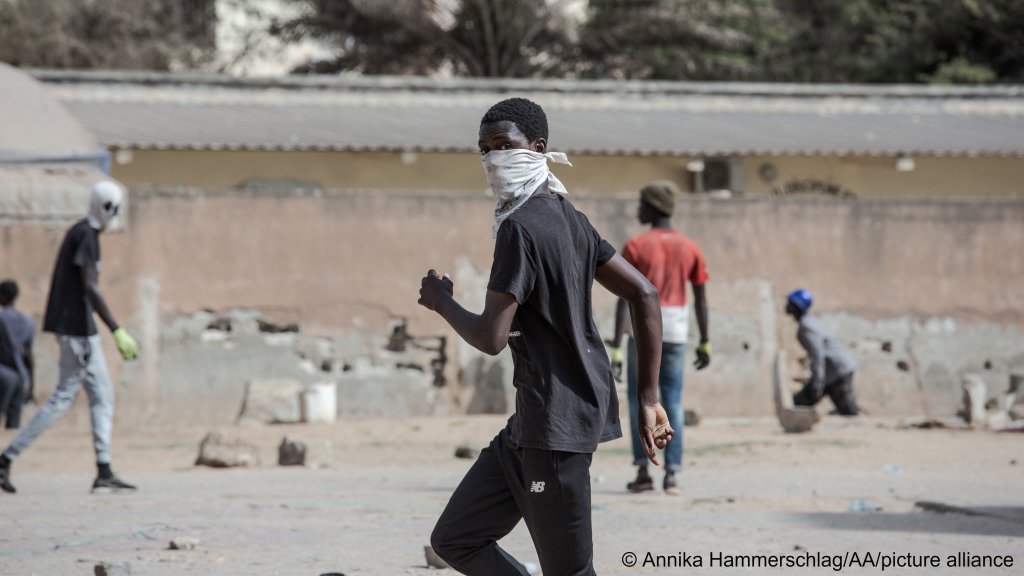
In particular, supporters of opposition figure Ousmane Sonko report being singled out and mistreated by security forces in protests against Sall's rule, which have been raging on for the past few months, casting questions about Senegal's overall human rights record as well.
Ironically, Sonko's main campaign issue is also one of the main push factors for irregular migration out of the West African country: youth unemployment -- in a country, where the median age is only 18.
Sonko, who enjoys most of his support from Senegal's youth, has tried to run for office before and came in third place in 2019. However, with court cases hanging over his head, which his supporters describe as politically motivated, it is unlikely that he will succeed in standing for election next year.
However, this ongoing standoff in Senegal's political landscape isn't the only issue driving people away from Senegal.
Also read: 13 Senegalese migrants dead in shipwreck off Morocco
Dry sea beds, dryer pockets
Senegal's Atlantic waters are historically rich in fish, in particular hake and tuna. However, a piece of tuna steak from Senegal, which can easily fetch more than $25 at an upscale restaurant in Europe, only results in about 5 cents in the pockets of the actual fishermen involved in catching the delicacy, meaning a 500 times mark-up from sea to table in this example.
The prices paid to fishermen under this arrangement between European importers and Senegalese exporters were last updated in 2020, not taking into consideration the rise in living costs since the beginning of the COVID-19 pandemic and the war in Ukraine. It is since that year that migration rates have been skyrocketing, jumping ninefold from 2019 to 2020.
These economic disparities and their effects are also highlighted in a report published by the World Wildlife Fund, which says that even though a whopping 17% of the population are employed in the fishing sector -- nearly one in five people -- fishing contributes only 3.2% to Senegal's GDP.
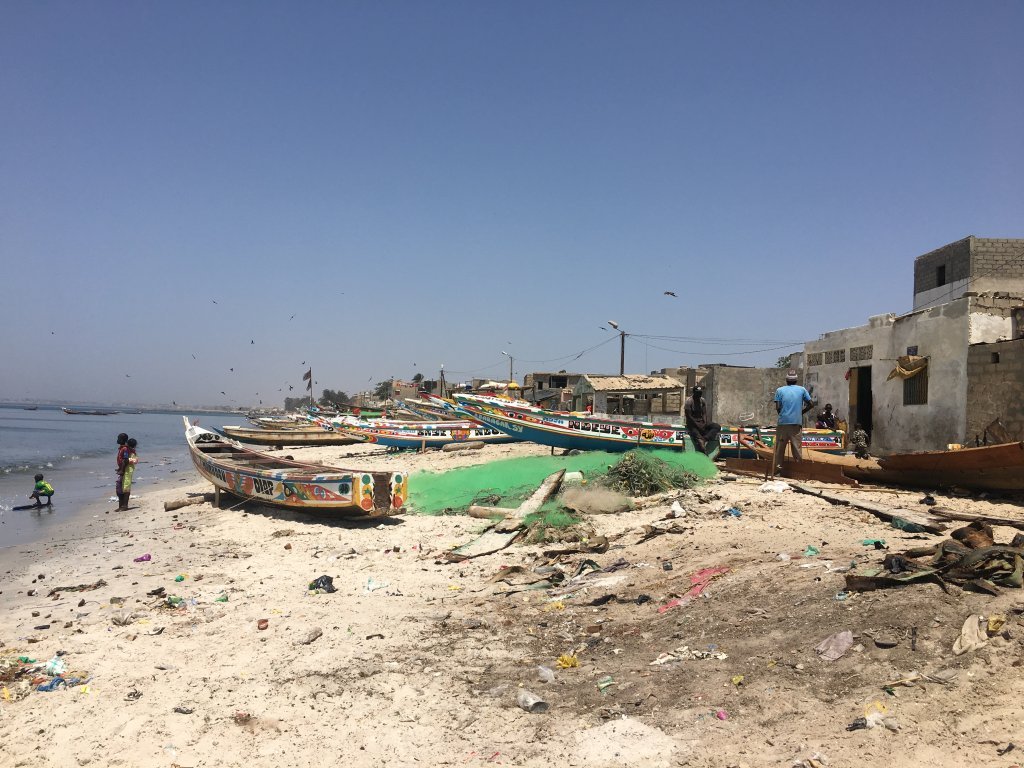
Furthermore, the waters off the Senegalese coast have been depleted by artisanal fishermen using illegal fishing methods in the past, resulting in even less income for many in this key industry. During the 2010s, catches by artisanal fishermen plunged by 58%, according to the AFP news agency.
To supplement their income, these fishermen are now increasingly moonlighting as people smugglers, using their vessels to take desperate people from the shores of Senegal to the Canary Islands, charging hundreds of euros for the journey across the Atlantic.
Also read: How Senegalese fishermen try to reach Europe
A ticking time bomb
Despite not being a French-speaking nation, many Senegalese migrants increasingly regard Spain as a destination country for migration rather than a point-of-transit en route to Francophone countries like France, Belgium and Switzerland; in the past 20 years, a Senegalese community of more than 80,000 people has developed in various parts of Spain, including the Canary Islands.
For many, finding a home community can be a major pull factor when planning their migration journeys.
Meanwhile back in Senegal, the high rate of departures is also leading to a domestic crisis, as large sections of the working-age population are simply disappearing. In July, Senegal's Interior Minister Antoine Felix Abdoulaye Diome announced that the country needed to "drastically reduce migration by 2033" if the country wants to continue on its overall upward trajectory over the past six decades.
Meanwhile during a general debate at the UN General Assembly in September, Senegalese President Sall chose more diplomatic words to describe the effects that irregular migration is having on his country:
"The tragedy of illegal migration is a reminder of the need … relentlessly continue the fight against the criminal networks which organize this illicit trafficking of human beings," he told the Assembly in what will likely be his last speech in that chamber.
His successor in 2024 will have to continue on Sall's endeavors, as the clock to prevent further poverty and destitution keeps ticking.
Also read: Don Bosco Foundation: Four Senegalese youths arrived in Italy's Catania for training