
At least seven people are reported to have died in the Atlantic Ocean during a 15-day journey from Gambia to the Canary Islands. Meanwhile the number of migrants reaching the archipelago is at an all-time high.
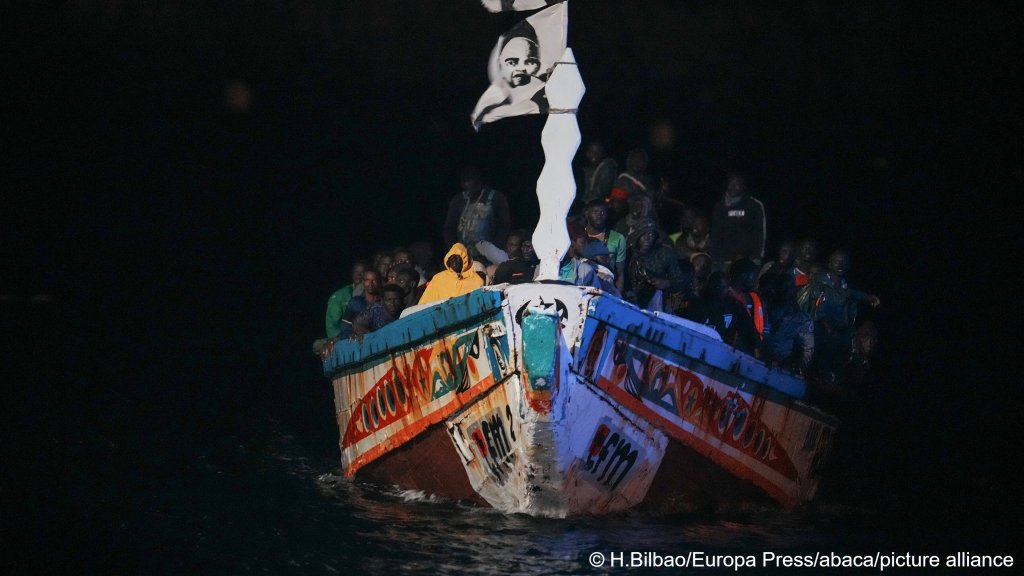
The news of the deaths was reported by migrants who survived the journey and were rescued by the Spanish coast guard. The migrant boat with about 55 people on board was first located on Wednesday (November 15) south of El Hierro, the westernmost of the Canary Islands, by a British sailboat. The EFE news agency reported that the crew gave water to the migrants and remained alongside their boat until help arrived.
When rescuers from the coast guard reached the scene they said that one of the migrants on board was already dead.
But survivors later said that between six and eight others had died at sea during the journey and their bodies had been thrown overboard.
The boat had apparently set out from Kartong in Gambia, which is about 1,650 kilometers from El Hierro and about nine times the distance between Sfax in Tunisia and the Italian island of Lampedusa.
Also read: Canary Islands: Regional government warns El Hierro is 'becoming Lampedusa'
On November 2, InfoMigrants received a message asking for information about the fate of another boat that had set out from Kartong in mid-October with around 50 to 60 people on board.
"Since their departure no one has heard from them. They were heading to Spain…. Everyone here is worried."
Every few days, new reports of deaths and disappearances of migrants on the Atlantic route to the Canary Islands are recorded by the UN migration agency IOM. The agency’s data show that this year alone more than 630 people have lost their lives, mostly by drowning, dehydration, starvation and exposure. At least 16 were children.
Because it is hard to collect data on migrant deaths and disappearances in the region, the IOM says the actual number could be much higher. The Spanish NGO Caminando Fronteras, which helps migrant boats in distress and the families of those who have gone missing, says that between 2018 and 2022, more than 7,800 people died or went missing at sea en route to the Canary Islands.
Also read: Bodies of three Senegalese found on boat heading for Canary Islands
Record high numbers confirmed
Spanish emergency services reported the arrival of more people in wooden boats on Thursday. In addition to the group of 55 – including the deceased person, another 42 people were brought to safety by a maritime rescue vessel. Later the same day, Spanish police intercepted a boat with 163 people on board. They were disembarked at the port of La Restinga, according to Europa Press.
A Spanish interior ministry report has confirmed that the number of people to reach the Canary Islands so far this year has passed the record number set during all of 2006. Between January 1 and November 15, 32,436 migrants reached the islands from Africa. During all of 2006, the number of arrivals recorded was 31,678.
The increase in the number of people making the journey from West Africa has been attributed to several factors. The United Nations and migration experts say that among other things, the political and economic downturn in Senegal, and the lack of opportunities in Gambia, are acting as push factors that drive people to leave.
Dangerous consequences
Another reason for the rising number of people setting out for the Canary Islands is the tightening of border controls on the Mediterranean routes to Europe.
Spain is now making similar moves to try to block the route from Senegal and Mauritania to the Canaries, sending surveillance equipment, planes, boats and personnel to the West African countries to try to stop boats from leaving their shores. Spain's interior minister Fernando Grande-Marlaska said last month that over 12,000 migrants had been prevented from reaching the Canaries since the start of the year.
But some believe Spain’s tactics have had dangerous consequences, with boats forced to take longer journeys in order to avoid border controls. Whereas the journey from Senegal to the Canaries usually takes a week of difficult upwind sailing for around 1,600 kilometers, according to AFP, some migrant boats are now sailing west into the open Atlantic before continuing north to El Hierro.
According to EFE, 11 people have arrived dead in El Hierro or have died later in hospital. The latest reports of bodies which were left at sea point to a greater death toll.
Also read: Senegal villagers mourn dead after latest migrant shipwreck
Missing migrants in the Atlantic
If you are trying to trace missing people on the Atlantic route, please try the following contacts:
Spanish Red Cross – Hotline: 900 221 122 ; +34 91 335 4507, +34 91 335 4560. Email: busquedas@cruzroja.es
Caminando Fronteras - Whats App here, Email: info@caminandofronteras.org
Centro Internacional Para la Identificación de Migrantes Desaparecidos (CIPIMD) – Search Form - INTERNATIONAL CENTRE FOR THE IDENTIFICATION OF MISSING MIGRANTS (cipimigrantesdesaparecidos.org)