
Finland has proposed closing its border with Russia, which it accuses of turning a blind eye to undocumented migrants crossing into the nordic state.
Prime Minister Petteri Orpo said Tuesday (November 14) that he believed Russia was allowing migrants to cross into Finland, despite not having proper travel documents.
The Finnish leader said it was a tactic aimed at destabilizing his country. Following Finland’s decision to join NATO, Russia threatened to take retaliatory measures.
"This seems like a deliberate decision," he said, adding: "[This] government's message is clear, we want to take care of the security of our border."
Finland has already begun constructing a fence along a 200-kilometer section of its shared 1,340-kilometer border with Russia, due to be completed by 2026.
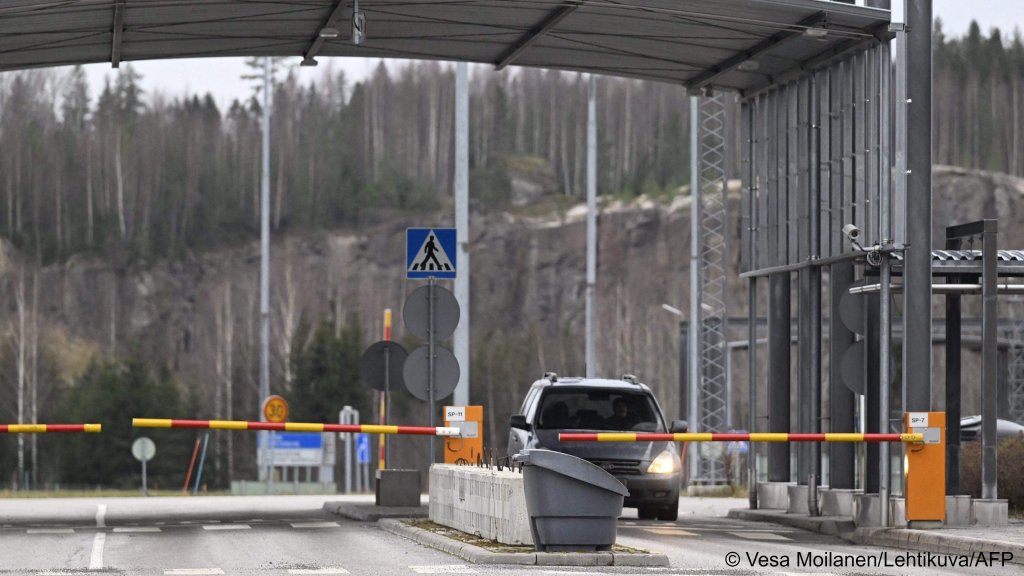
Currently, crossing the land border at any point between Russia and Finland is restricted to vehicles, says Colonel Matti Pitkäniitty, a spokesperson for the Finnish border guard.
While much of the border is marked only by light wooden fences, mainly intended to stop cattle from wandering to the wrong side, it’s not permitted to cross on foot or even bicycle.
The border guard uses several forms of technical surveillance and patrols in order to detect and apprehend those who try to cross illegally, Pitkäniitty told InfoMigrants.
Number relatively low, but increasing
"Based on observations by the Finnish Border Guard, the number of asylum seekers has grown on the eastern border in recent months," the Finnish interior minister, Mari Rantanen, said.
She added the numbers remained "relatively low, but have increased significantly in a short period of time."
At the weekend, Finnish authorities said that since the start of August, 91 people had crossed the southeastern border. "The amount is higher than usual," a press release from the border guard said.
According to officials, 34 asylum seekers arrived at the southeastern border last week. On Monday, a further 39 people were recorded in a single day.
"These are persons who enter Finland without proper documentation, for example they don't have a Schengen visa or a residence permit," said Pitkäniitty. "Once they come to the border and we see that the entry criteria are not fulfilled, they apply for asylum."
Most coming from Iraq, Somalia, Yemen
The Finnish government believes the increase is the result of a recent change of policy on the part of Russian border authorities, who are now allowing people to travel even if they have no documents.
Russia made a similar move to allow those without proper travel documents to cross the border after it invaded Ukraine in February 2022. Most were Russians and Ukrainians applying for temporary protection in Finland.
Finnish authorities say most of the migrants now arriving are "citizens of third countries" who used Russia for transit.
Mikko Lehmus, the head of the border guard's risk analysis unit, said that since August, an increasing number are from the Middle East and Africa. The top three nationalities crossing without documents were Iraqis, Somalis and Yemenis, Lehmus told AFP, adding that the change began "at the end of summer."
Pitkäniitty declined to comment further on the nationalities of those crossing.
Restrictions in accordance with Finnish law
The government has announced plans to introduce additional restrictions under the Border Guard Act and has stated that it is prepared to "exercise all its powers under the law in situations that seriously endanger border security."
That could mean restricting cross-border traffic or closing border crossing points. It might also result in applications for international protection being allowed at only a small number, or even a single, crossing.
Pitkäniitty stressed that any actions taken would comply with Finnish and international law.
"Where there are any kind of restrictions to human activity by the government, one has to evaluate the proportionality and take into consideration all international agreements that Finland is bound by, and the justifiability of actions, and of course the principle of minimum harm to private life," he said.
As winter approaches, there is growing concern about what will happen at the Finnish-Russian frontier if a larger number of undocumented migrants try to cross. If an emergency situation develops, Pitkäniitty says it would be difficult to identify which migrants were especially vulnerable and for authorities to ensure they were fulfilling human rights obligations.
The situation is reminiscent of the crisis on the border between Belarus and Poland, which the EU blamed on the Belarussian leader Lukashenko. That situation led to the deaths of many migrants, who became trapped as a result of actions by the Polish authorities aimed at preventing migrants from entering the bloc.
On the Finnish border, the conditions could be much more severe. Temperatures in winter there can vary from a relatively mild -2 degrees to -35 degrees and heavy snow, says Pitkäniitty. How to manage irregular migrants at the border under these conditions is a challenge they are currently grappling with.