
At least four people died and hundreds of others were intercepted off Spain's Canary Islands. The arrival of several boats in recent days has pushed the number reaching the Atlantic archipelago to a new record high.
Four migrants have died and more than 730 others have been rescued from boats in the Atlantic Ocean off the Canary Islands over the past few days.
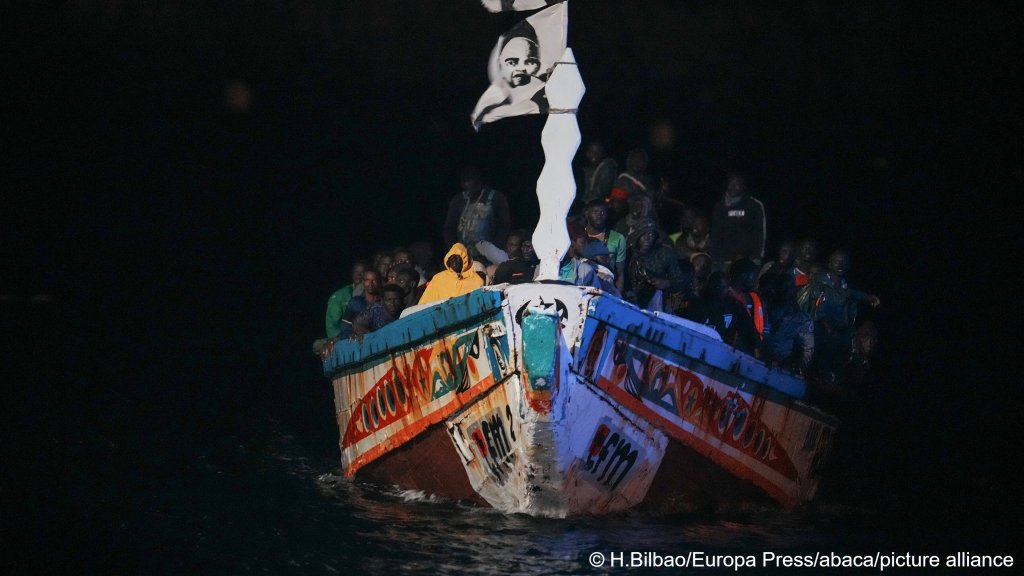
On Friday evening (November 3), Spanish authorities said they had intercepted two boats carrying a total of 254 people. A third boat carrying 238 people was intercepted at dawn on Saturday and a fourth vessel carrying 247 people was intercepted on Saturday morning.
Most of the migrants were reported to be in good health. However, the Spanish coast guard said they had also found two dead bodies among those rescued from four boats in the waters off El Hierro, the smallest and most westerly of the Canary Islands. Two more migrants also died later in hospital.
New all-time high
The Canary Islands lie around 100 kilometers from the nearest point on the west coast of Africa. The seven islands have become the main destination for migrants from sub-Saharan Africa trying to reach Spain, particularly since border controls along land routes through the Sahara Desert and the Mediterranean Sea were tightened.
The latest statements from regional authorities and calculations by the AP news agency show that so far this year, roughly 32,000 people have reached the islands, surpassing the previous record of 31,678 reached during what the EU called the 'cayucos crisis' (named after the wooden fishing boats commonly used by migrants setting out from Senegal and Mauritania) in 2006.
At the weekend, the head of the Canary Islands regional government, Fernando Clavijo, said the latest figures showed the islands were again facing a crisis, and complained that the response of the central government and the European Union was not the same as in 2006, despite the numbers reaching a new high.
"Migration management on the southern border must be a priority on the Spanish and European agenda," he wrote on the media platform X, formerly known as Twitter.
In contrast, the migration minister, José Luis Escrivá, said last month that the situation on the Canary Islands was "manageable," and pointed out that the number of migrants reaching the islands was still relatively small compared with the 200,000 Ukrainians who had been taken in by Spain since the Russian invasion.
Following calls from the Canary Islands administration for greater support, Spain has sped up transfers of migrants off the islands to the mainland. The government in Madrid announced last week that it would create additional emergency accommodation in military barracks, hotels and hostels at several sites across the country for around 3,000 migrants.
'We will reach spain, or we will die'
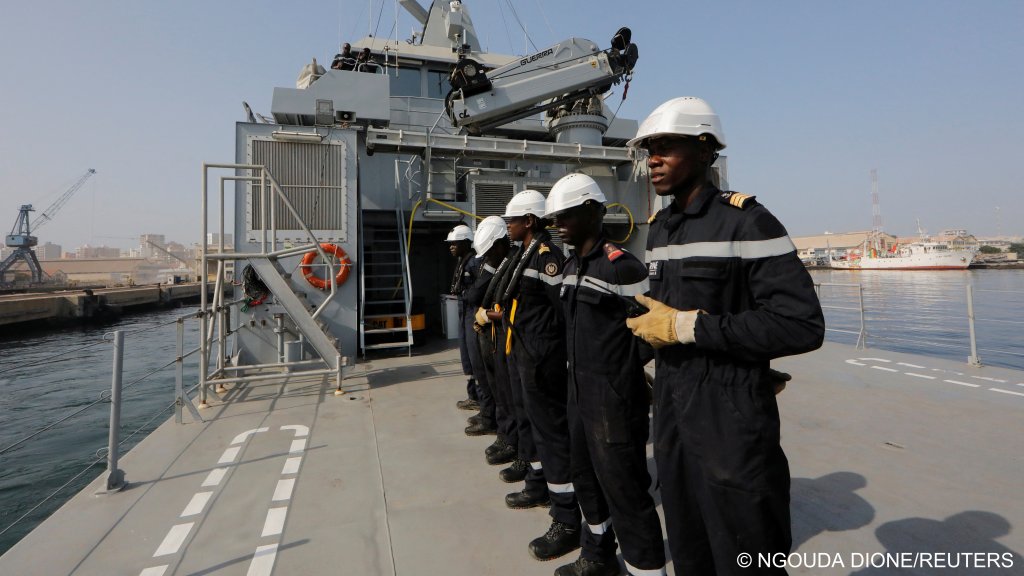
In order to try to stop migrants attempting the crossing to the Canaries, Spain's central government has also sent surveillance equipment and personnel to Senegal, now the main country of departure.
On Thursday (November 2), a Senegalese patrol boat, 'Walo', chased a fishing vessel carrying migrants bound for the Canaries for over an hour before it managed to catch the boat. One man who was among those brought on board the Walo shouted, "You think you’re going to stop us? We’re going back! We will reach Spain, or we will die," according to a Reuters reporter who witnessed the operation.
The migrants on the boat – almost all from Gambia (more than 1,600 kilometers from the Canary Islands) – included a newborn baby, Reuters reported. They were taken back to Senegal in the early hours of Friday, most huddled together on the Walo’s rear deck.
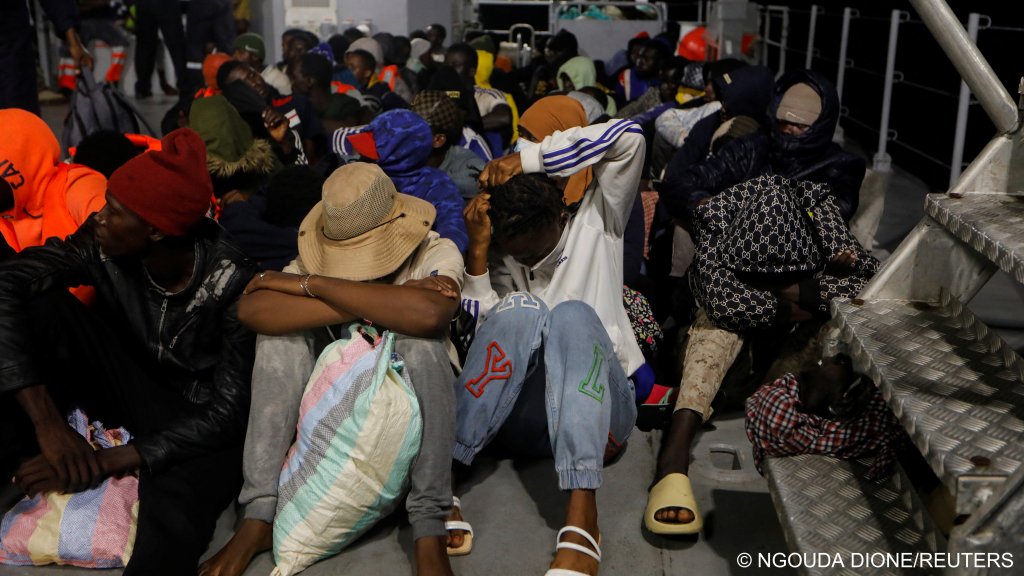
"Their boat would not have survived this. It is our duty to save them," the Walo’s commander told the news agency.
Another officer said the Walo had intercepted about 4,000 migrants since it launched operations in August.
With Reuters, AP