
Spain has revealed it plans to convert sites such as military barracks into new accommodation for 3,000 migrants. The shelters will house some of the migrants being transferred from the Canary Islands, where more than 23,500 people have arrived this year.
The migration minister, José Luis Escrivá, said Thursday (October 26) that unused military barracks, hotels and hostels would be converted into temporary shelters for migrants to deal with the rapidly-growing number of people arriving on the Canary Islands.
Escrivá said the migration ministry and military officials were deciding whether two barracks in the Madrid region and other facilities in the southern cities of Seville and Cartagena on the Spanish mainland would be appropriate.
"I believe at this moment we have to be ready in case (the shelters) are necessary," Escrivá was quoted by AP as saying.
The minister did not say how many additional places would be created, but a source told Reuters that it would be around 3,000 in total. According to the source, migrants will undergo police screenings and will then be placed in the military barracks, hotels, hostels and other types of accommodation on a voluntary basis. It is intended that people will not remain in the same place for longer than three months, Reuters reports.
Pressure off the islands
Between January to mid-October, around 23,500 people reached the Canary Islands after setting out in boats from West Africa – mainly Senegal and Mauritania. During the same period last year the number was 13,000, according to Spain’s interior ministry.
Most of the boats have arrived at the smallest of the islands, El Hierro which has received several thousand migrants in recent weeks.
With few resources to cope with large numbers of migrants in the islands, local authorities have said they feel abandoned by politicians in Madrid. This week the central government approved a €50 million aid package aimed at helping the islands to receive migrants, as well as preventing departures from Africa.
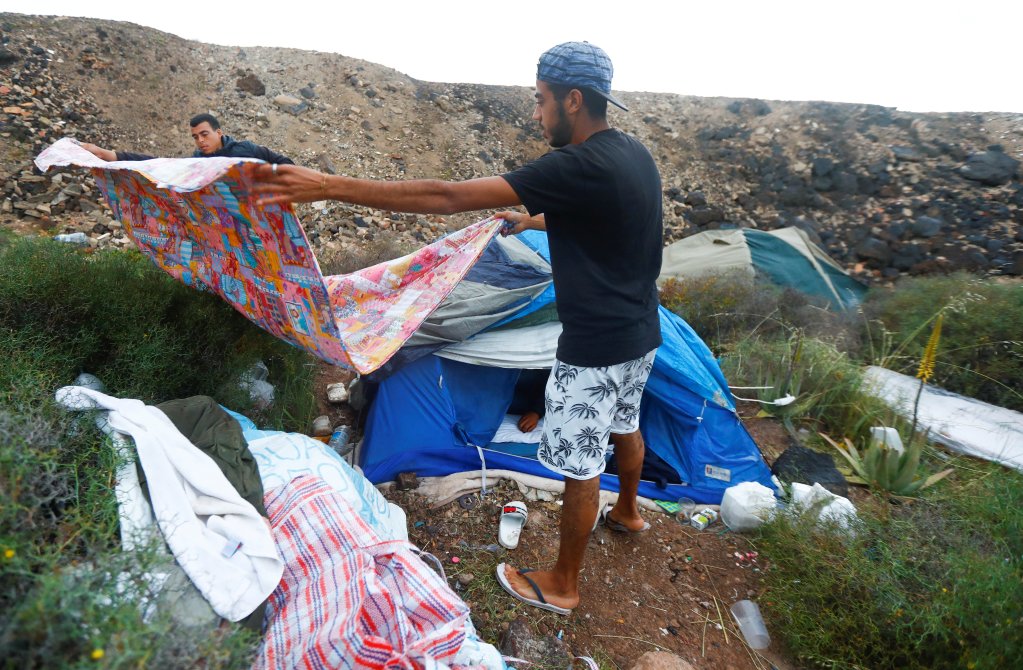
After an increase in migrants reaching the Canaries from West African countries in 2021, Spain opened new camps in the islands. This time, however, it is focusing on expanding emergency accommodation across the country, hoping to reduce pressure on the Canaries.
Escrivá said that in recent weeks about 5,000 people have been transferred from the islands to the mainland.
Situation manageable, says minister
Madrid's conservative regional leader, Isabel Díaz Ayuso, accused the government of mismanaging the migration situation and suggested that the transfer of migrants to the mainland could pose a security risk.
But Escrivá said conservative politicians were whipping up what he called xenophobic rhetoric.
He said the situation was well-handled and manageable, pointing out that the number of migrants arriving in the Canaries is relatively small compared with the number of Ukrainians who reached Spain after fleeing the Russian invasion.
"We have lots of experience with these situations," the minister said. "We have integrated 200,000 Ukrainians. Compared with that, this is relatively small."
With AP, Reuters