
More migrants entered Germany irregularly in September than in any month over the past seven years. Germany's interior minister Nancy Faeser is looking to ease deportation procedures.
The month of September saw the single highest number of irregular migrant entries to Germany in over seven years, data published Saturday shows.
Some 21,000 migrants entered the country irregularly in September — the highest monthly figure Germany has seen since February 2016, when around 25,650 entered the country.
The number of irregular entries to the country has steadily increased in the past months. Around 92,100 people entered Germany irregularly between January and September 2023. This year's figure has already surpassed last year's (around 92,000) and 2021's (around 57,600).
Read more: Germany: Asylum procedure slightly faster
Draft deportation bill to be discussed Wednesday
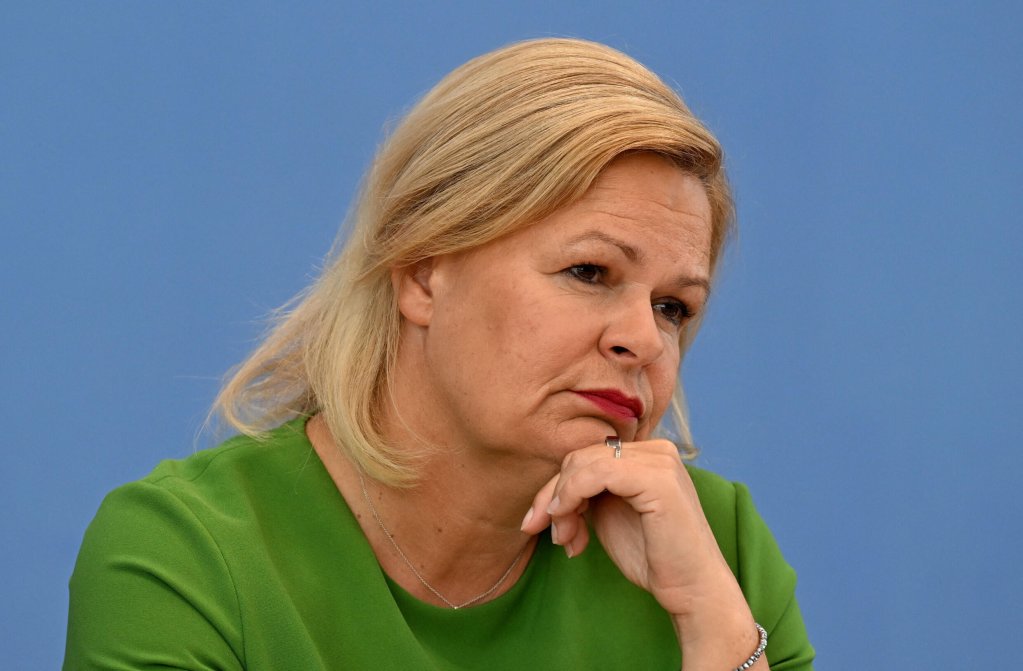
German Interior Minister Nancy Faeser will introduce a draft bill to cabinet on Wednesday featuring measures to more efficiently deport people, the Rheinische Post newspaper reported Monday (October 23).
The bill will look at ways to speed up and increase Germany’s number of deportations, particularly of those considered dangerous, like people smugglers and criminals. It also takes measures to ensure deportations don’t fail at the last minute.
It also gives police authority to enter rooms other than the bedroom of the individual facing deportation if they live in shared accommodation.
"This is necessary so that we can continue to provide well for people who have found protection from war and terror with us," she said.
Faeser added that the number of deportations facilitated this year is up 27% from last year, but insisted there is still more to be done. The bill gives more power to police and authorities to enforce these measures and extends the period of time a person can be detained before deportation from 10 to 28 days, to give authorities more time to prepare.
Faeser’s draft was first presented to cabinet on October 11.
Germany’s police union said Faeser’s plan would require "significantly more forces" to realistically implement.
"We are heading towards an unbelievable burden on the police when it comes to simply designing the legislation," police union chairman Jochen Kopelke told the Rheinische Post.

Read more: Germany moves to streamline migrant deportations
Scholz: 'We have to deport more'
German Chancellor Olaf Scholz praised Faeser’s plan in an interview with weekly news magazine Spiegel.
"We finally have to deport on a large scale those who have no right to stay in Germany,” he said. "We have to deport more and faster."
It remains to be seen whether SPD politician Scholz will find approval for the bill within his own party.
Deportations rose in the first half of this year compared with the same period in 2022. Some 7,861 people were returned from Germany between January and June 2023. Around 1,660 were women, and some 1,370 were minors.
Read more: Germany: Migrant deportations rise sharply
With dpa, epd