
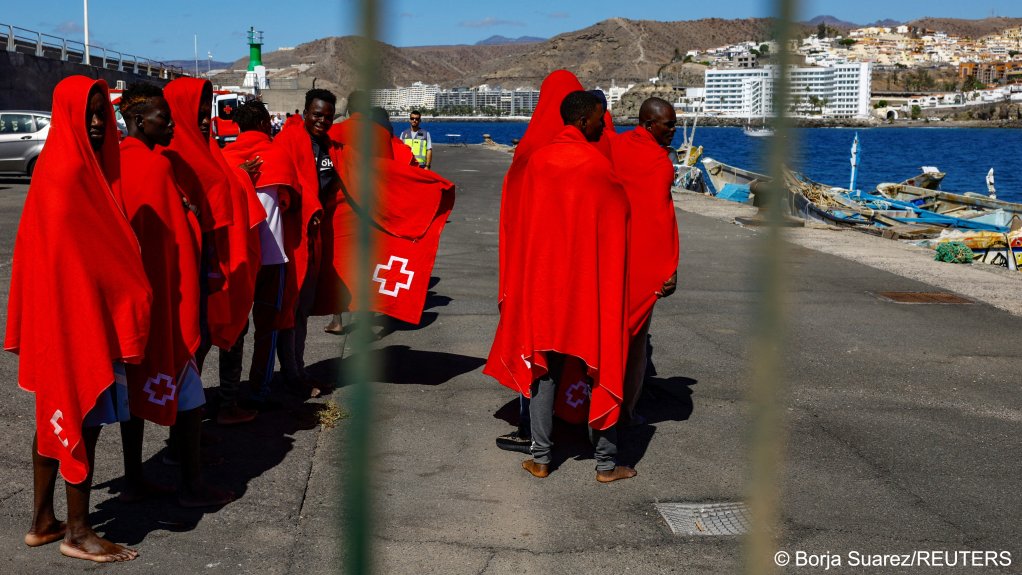
The Spanish government is to spend €50 million on measures to help the Canary Islands manage the large number of migrants arriving by boat. About 4,000 people per week have reached the islands since the start of October.
Spain’s acting migration minister said Thursday (October 19) that the government was preparing a €50 million aid package for the Canary Islands, which are experiencing what the minister, José Luis Escrivá, called an "extraordinary migration flow."
At least 8,561 people have reached the islands by boat over the past two weeks, while the number to have arrived since January 1 is around 23,540 (as of Sunday, October 15), representing an 80% increase from the same period in 2022.
If the current rate continues, the number of arrivals will exceed the record set in 2006, when nearly 32,000 people reached the archipelago.
Also read: Canary Islands overwhelmed by increase in arrivals
Money and planes, but 'no magic solutions'
Most of the migrants reaching the Canaries so far in October have arrived on El Hierro, the smallest and westernmost of the main islands, with a population of 11,400.
During a visit to El Hierro, Escrivá said the government would ensure that migrants are transferred to the Spanish mainland so that the number in the Canary Islands never exceeds 6,000 at a time.
"When we have lower arrivals, migrants stay on average a month and a half in the islands. Now with an average weekly arrivals of 4,000, the average stay is a week and a half," he said.
The central government is also deploying more material resources to the region. The acting interior minister, Fernando Grande-Marlaska, who visited the islands earlier this week, said two planes would be deployed – one in Senegal "which will begin work immediately on predicting and shortcutting departures [of migrants]" and another in the Canary Islands.
Marlaska added that there were "no magic solutions or shortcuts," but he has previously pointed out that the best way to tackle irregular migration is to cooperate with the countries of origin and transit, Spain's El Mundo reported.
Focus on unaccompanied minors
The aid package announced by the government on Thursday is said to include money to support unaccompanied children and teenagers who are under the care of local authorities.
There are currently around 3,800 unaccompanied minors in the archipelago, according to the president of the Canary Islands, Fernando Clavijo. In an interview with El Mundo, Clavijo stressed the importance of speeding up the transfer of migrant children and teenagers to the mainland.
The Canary Islands government head of Child Protection, Sandra Rodríguez, also highlighted the need to guarantee the rights of children, as she announced the opening this week of two new centers on Tenerife and Gran Canaria to house young migrants whose ages have yet to be confirmed.
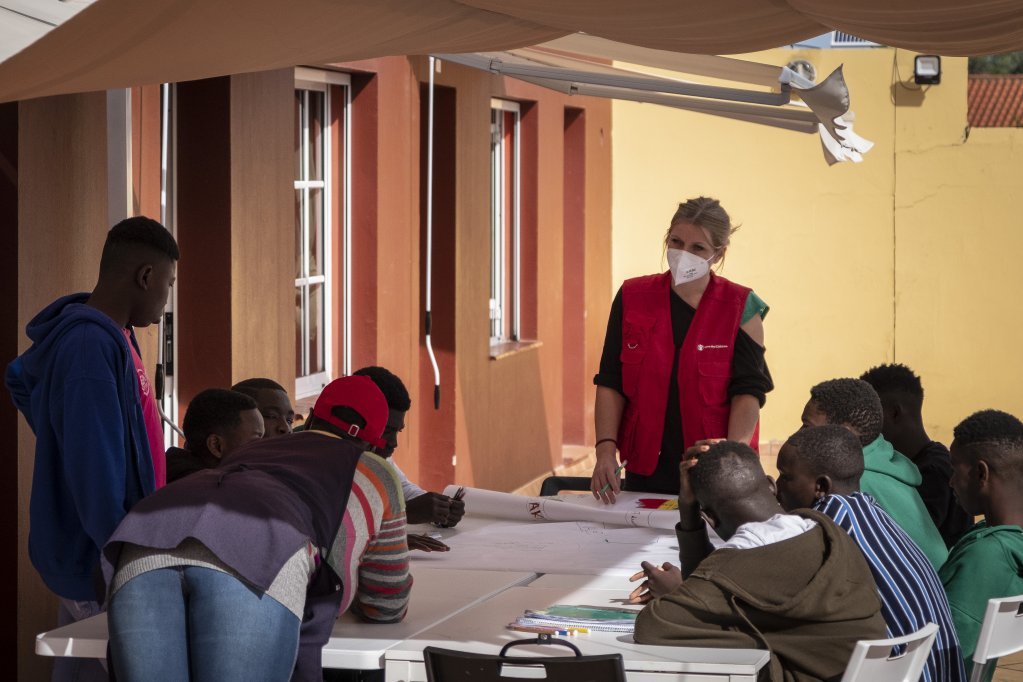
A significant proportion of migrants who reach the Canary Islands are initially declared to be minors, but are later found to be over 18 years old, said Rodríguez. She added that around 1,500 young people on the islands are currently awaiting age determination, according to a report in Canarias7.
The number of people attempting the journey across the Atlantic Ocean to the Canary Islands – a distance of about 100 kilometers – usually rises during September and October, when the weather and sea conditions are more favorable.
In recent months, political instability in Senegal has acted as an additional "push factor", as thousands of people have fled the country.
Also read: In Senegal, migration tears families apart
The journey remains one of the world’s deadliest migration routes. In 2022, at least 559 mostly sub-Saharan African migrants died in the attempt to reach the islands, according to the UN migration agency IOM. The actual number of fatalities is said to be substantially higher.