
A teenager from Ivory Coast has won a case against the Maltese government at the European Court of Human Rights. The court ruled that the migrant was unlawfully treated in detention, despite suffering serious physical and mental health problems.
A teenager, named as A.D., who spent 225 days in detention in Malta has been awarded €25,000 in damages by the European Court of Human Rights. Lawyers from Aditus, a Maltese human rights NGO which supported A.D., responded to the judgment on social media on Tuesday saying that they were proud of his "courage to challenge the system."
"It's an extremely important judgment. It confirms what all of us have been saying for years now, that Malta's detention regime is largely based on illegal considerations and that it subjects the most vulnerable persons to horrible treatment," Aditus director Neil Falzon told InfoMigrants.
The Strasbourg court heard that the young Ivorian had arrived in Malta irregularly in November 2021. He had been a victim of torture in Libya and then spent 10 days at sea during which he witnessed the deaths of 12 others traveling with him. On arrival in Malta, the 17-year-old was taken to Hal Far, an initial reception center also known as China House, and kept in quarantine for COVID-19 for over two weeks.
Confined to a block with 23 others, including adult men, he said he was given no explanation as to why he was detained. The room he shared with three others was cold, humid, lacked natural light and was poorly ventilated.
During this period of detention, A.D. tested negative for COVID three times but he was then diagnosed with tuberculosis and, after a period of treatment in hospital, he was moved to Safi Detention Center.
Here, he said, there was no common room, chairs, tables or praying room. The bedroom he shared with seven others had one window that could not be opened and the room was very dark. They were provided with one bucket which they used to wash their clothes as well as to clean the floor.
Authorities claimed then that he was aged 19.
Total isolation
At the end of January, 2022, A.D. claimed, he was transferred to a container where he was held with a Nigerian man and kept inside all day. After this, he was moved to another location where he spent more than a month alone, in total isolation as neither the guards nor the doctors could speak French. Despite the young man's suffering from mental health problems such as post-traumatic stress disorder (PTSD) and depression, authorities failed to give him proper medical attention as required by law.
Lawyers who filed the case at the European Court of Human Rights argued that A.D. had been subjected to inhuman or degrading treatment, unlawfully detained and denied an effective remedy in the Maltese courts.
The Strasbourg court on Tuesday upheld the claims, saying that the Maltese government's practice of detaining migrants "for health reasons" had been illegal and that the teenager’s needs as a vulnerable minor had not been met.
'Not a one-off case'
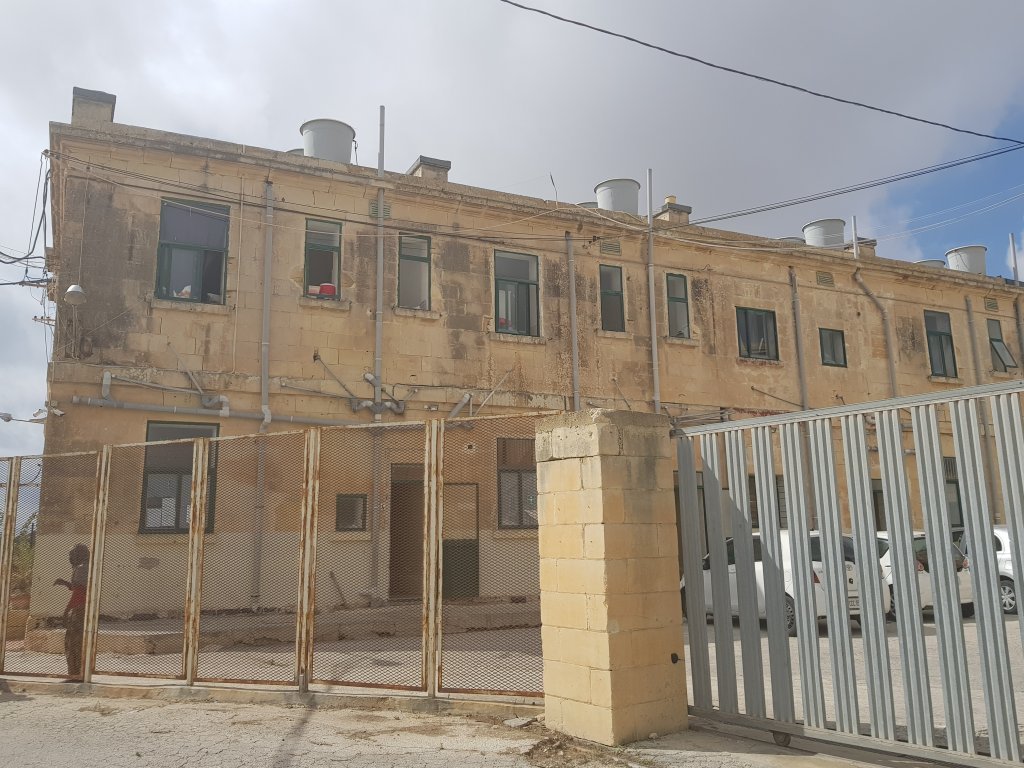
The conditions the young A.D. experienced in detention facilities in Malta are not unique -- they have been documented by many human rights observers, including experts who visited the country's immigration reception centers in 2020 and 2021. The Committee for the Prevention of Torture and Inhuman or Degrading Treatment or Punishment (CPT) in its report in 2021, for example, had already described numerous problems with facilities throughout the Safi center, such as shower facilities which were "filthy" and not always functioning, and mold on walls and ceilings, while also warning that the conditions in Hal Far could amount to a breach of Article 3 of the Human Rights Convention, which prohibits inhuman and degrading treatment.
Two years on, according to accounts from detainees within the centers, little has been done to improve conditions, despite recommendations from the CPT as well as the Council of Europe's Commissioner for Human Rights, who conducted a visit to Malta in October 2021.
Also read: Claims of physical torture, suicide attempts by detained migrants in Malta
Organizations like Aditus have to rely on reports from detainees as they are barred from access to the migrants' living quarters. "We only have information from our clients, however from all information that we have, the situation is just as bad," Falzon said.
The judgment of the European Court of Human Rights will put Maltese authorities under pressure to speed up reform of what it called a "dysfunctional national [detention] system". The government has been slapped with so-called "general measures", which means it must ensure that people are not being detained for false "health reasons", and it must guarantee that detainees, especially those who are vulnerable such as children, are humanely treated.
A.D.'s appeal against an initial rejection of his asylum claim is still pending.