
Around 200 isolated young people from West Africa spend their nights in Belleville Park in northern Paris while waiting to obtain recognition of their status as minors. Many used to live in an abandoned school in the 16th arrondissement, but when it closed in June, they found themselves on the streets once again.
At 7:30 p.m. on a mild autumn evening, the outdoor terraces in northern Paris were filling up. The tables at the trendy bar Floréal Belleville were already full, while the art gallery next to it was teeming with Parisians who had come to attend an opening. The nearby Belleville Park was gradually emptying out.
But in this emblematic place of the French capital, another evening was just beginning.
Further ahead, where the shaded paths began to curve, another group of people — younger and more impoverished — was preparing for the night in the arteries of the park. Once the sun disappeared and darkness covered everything, small groups of teenagers from West Africa began appearing.

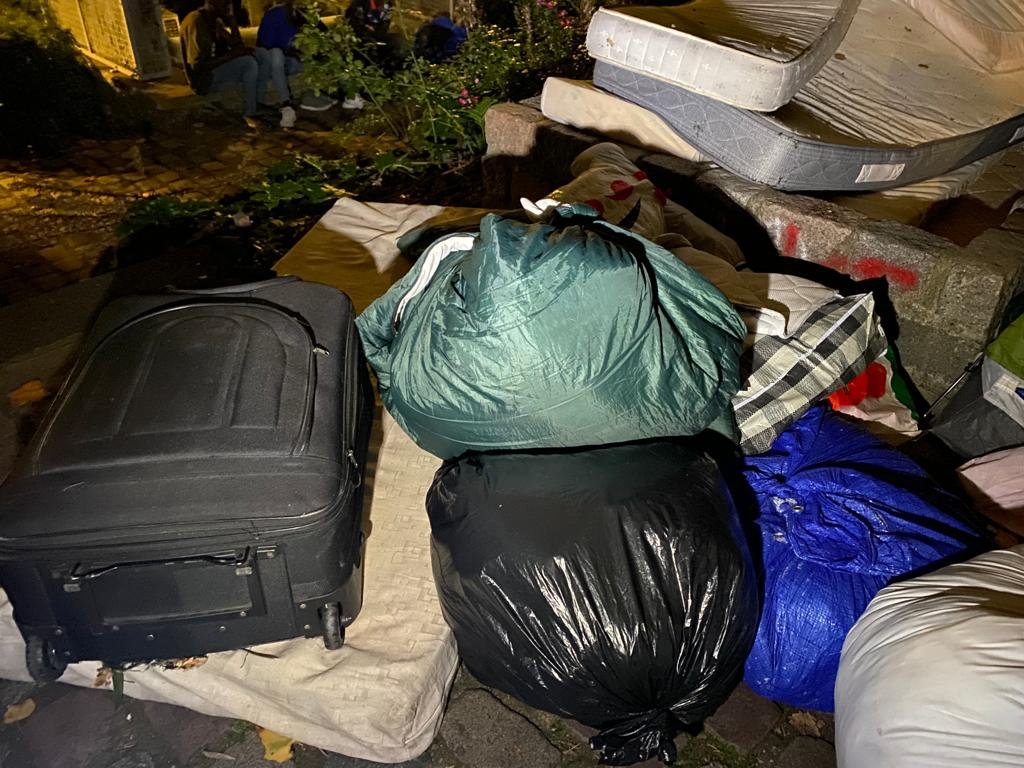
They settled down with large plastic bags, mattresses and blankets hidden behind benches and bushes. At the end of another path, their sweaters, t-shirts, duvets and towels were spread out to dry on metal barriers surrounding a small square. Some of the teenagers sat on the benches and chatted with one another, some played, while others fiddled with their phones.
Read more: Unaccompanied homeless youth in Paris: "We used to look for shelter, now we look for places to hide"
Months spent on the streets
The town hall services began blowing their whistles at 8 p.m. before closing the gates of the park. The remaining people made their way toward the exit. As the space emptied out, Mohamed didn't budge. Municipal employees didn’t say a word. Like dozens of others in the park, the 16-year-old Guinean had nowhere to go. Sitting on a mattress in the middle of a path, he exuded serenity despite the precarity of his daily existence.
“This is where I sleep,” explained the young man, pointing to his makeshift bed. He was familiar with life on the street. Since his arrival to France last March, he had been spending nights outside. “I slept on the Bercy esplanade at first, then I went to live at the school. When it closed, I returned to Bercy and now I have been here for several months,” Mohamed said.
The Guinean was referring to an abandoned school where 700 young migrants lived for two and a half months. Located in the wealthy 16th arrondissement of Paris, the establishment was evacuated in June by associations managing the overcrowded site, with humanitarian workers fearing a disaster. The school’s closure forced hundreds of young people waiting to obtain recognition of their minority status to return to the streets. While waiting to make an appeal before a judge, they wander the streets of the capital.
Salif*, 17, had also followed the same path: street, school and street again. His court appeal is scheduled in two weeks.
“It’s not easy,” said the Guinean about his life in France since he arrived in April. Sitting on the steps of the park shrouded in darkness, the teenager ate tomato pasta out of an aluminum tray which he picked up earlier the same day at a food kitchen. “We arrive in the evening around 7 or 8 p.m., we wait for the park to close and we pitch our tents,” he said.
Read more: 'My mother wouldn't sleep if she knew': 200 young migrants live under Paris bridge
New arrivals every evening
As night fell, dozens of figures moved around in the bushes to collect personal belongings before settling on the ground. The "luckiest" ones had a tent, others used mattresses they found in the street, while some only had a piece of cardboard to sleep on.
"Sometimes I get so cold I sleep sitting up on the steps," said Abdou*, a 15-year-old Ivorian.
Although they are not evicted at night, police wake the youth the next morning around 6 a.m. and ask them to pack up and clean the area. Then they begin the same routine from the day before: first taking down their tents and tarpaulins, rolling up blankets and then hiding everything in the bushes.

According to the estimates of the city hall of the 20th arrondissement, around 180 people spend the night in this park, while certain associations estimate the number to be much higher, at around 300 people. All the parties involved agree that the camp has expanded since the first arrivals came in June after the school closed.
That particular evening, it was difficult to count the number of people in the park. Several small groups of around ten migrants were scattered in different places, making it impossible to count them. Young people kept coming well after the park closed, passing through a broken bar at the main entrance.
Read more: Paris: 300 people camp in front of City Hall to protest migrant accommodation provision
'We will not evacuate without shelter organized by the State'
The nearby town hall tries to manage the people living on the street.
"It’s not that we tolerate their situation, above all we try to ensure things go as well as possible for these young people while waiting for the State to react," Antoine Alibert, the municipal deputy for solidarity, told InfoMigrants.
Agathe Nadimi, from Midis du Mie, fears the informal living space will continue to expand.
"All the newly dismissed cases find themselves here so the camp will inevitably grow. There are new arrivals every evening. The more time goes by, the more people there are. There will be up to at least 500 in the next few weeks," said the activist. Humanitarians have been calling for the creation of a shelter for these young people for months, while they wait for their appeal. Yet their calls have fallen on deaf ears.

The town hall claims it has not received any help from the authorities.
"The letters sent to the prefecture remained unanswered," said Alibert. "Our doctrine is clear: we will not evacuate without a shelter organized by the State. In the meantime, we do what we can."
The town hall services of the 20th arrondissement gave an order to police not to harass the young people and to let them sleep in the park. Yet camps like this one have been rapidly dismantled by the authorities in recent months.
The exiles encountered that evening dread the cold and the rain of the upcoming months.
"What are we going to do in this winter when the temperatures drop?" said Kourouma, another 16-year-old Guinean. "When it rains, it's already a struggle. We hide under trees or under sheltered areas of the park. But the cold is worse, there is nothing we can do to warm up."
*First names have been changed.