
Organizations helping migrants on both sides of the Italian-French border have accused authorities of stepping up controls and effectively "hunting" migrants trying to cross from Italy to France. They say this behavior endangers lives and curtails freedom.
The number of migrants crossing from Italy to France has increased in recent weeks, according to the French authorities. They say crossings have been growing since mid-September, when 8,000 migrants arrived on the Italian island of Lampedusa in the space of just a few days.
Pro-migrant organizations say pressure in the region is soaring -- not only due to the new arrivals, but also because local authorities have shut down many of the shelters designed to host them, saying they are overfilled.
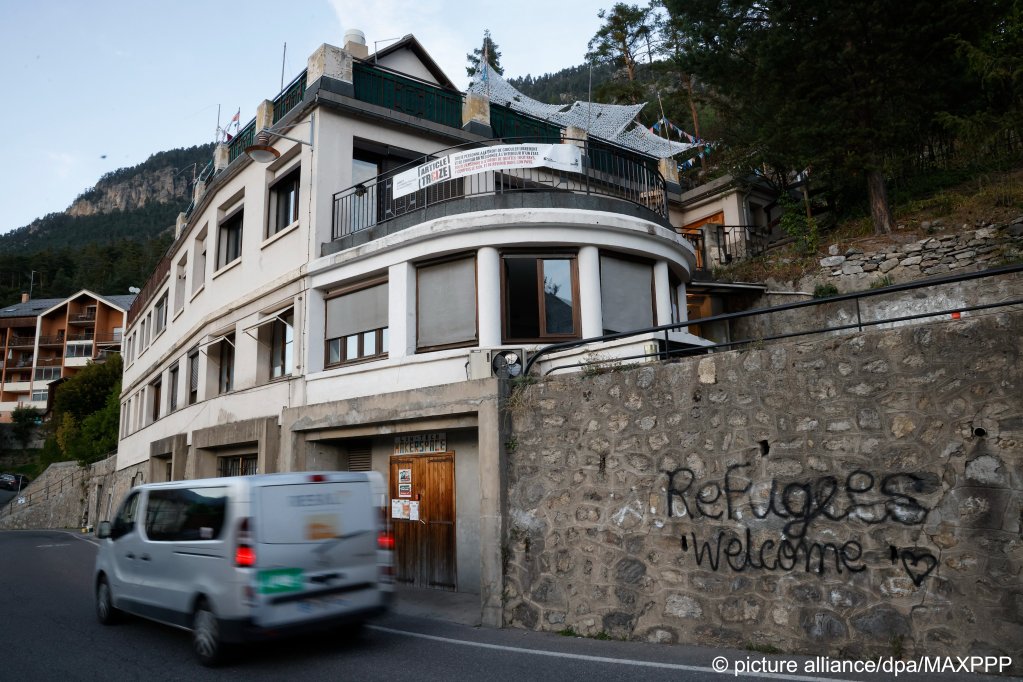
A squatted building run by volunteers in the town of Briancon, about 20 kilometers from the Italian border to France, is one of the few places still open to traveling migrants.
🎧 Also listen: Tales from the Border podcast --Helping hands in the French Alps
Many migrants from sub-Saharan Africa have been able to find some refuge at the structure. But increasing police controls in the region are making their lives more difficult. In August, the local water company issued an order to cut off water to the building and others like it. The order was contested by pro-migrant organizations in court, but was rejected by the judge on September 20.
Organizations accuse the authorities of effectively carrying out "racialized" controls and arrests amounting to a kind of "hunt" designed to make a stay in France -- or journey through it -- untenable for those without the correct papers.
The organization Tous Migrants complains that these controls are racially targeted and have no precise justification. They say that "each day, tens of people are taken to the police station and some spend an entire night there."
'Border controls, pursuits, pushbacks and arrests'
"Reinforcements of border controls, pursuits, pushbacks and arrests," are becoming more and more common in the mountainous area on the border between Italy and France known in French as the Hautes Alpes, according to reporting by several French newspapers and the Il Riforma, an Italian news organ of the country's Protestant, Methodist and Valdesi churches.
On September 21, a judgement at the European Court of Justice in Luxembourg (CJEU) condemned these kinds of practices. But the controls are only increasing.
Hautes Alpes region prefect Dominique Dufour announced that "in response to an increase in 'uncivil' behavior, and in the context of migratory pressure, the numbers of checks, controls and police presence in the border region would increase."
Towards the end of September, the French authorities announced they would send 84 additional officers to help reinforce border controls.
Over 32,000 arrests of migrants at Italo-French border since January 2023
These reinforcements go against the CJEU's judgement, say the pro-migrant organizations who took the case to court. European countries don’t have the right to refuse entry to migrants entering the territory irregularly, even when they carry out controls and find them at the border.
Also read: 'Do something!' Protests in the Alps regarding migrant reception situation
The law states that citizens from outside Europe should be "conceded a certain period of time to leave the territory they entered voluntarily."
But since the beginning of 2023, some 32,000 arrests of migrants have been made on the Italo-French border, according to Emmanuelle Joubert, director of the French border police. 24,000 of the arrested have been taken back over the border and handed over to the Italian authorities.
A spokesperson for the authorities justified these pushbacks to local broadcaster Alpes 1: "People who have no residence permit and are the subject of a control by the local police can be detained in a police station under an article in the law governing asylum law and foreigners," they said.
Police controls are spreading, say pro-migrant organizations
The prefecture told Alpes 1 that "individuals in an irregular situation in respect of their residence permit can be asked to leave the country."
Organizations working with migrants in the area on both sides of the border, like Tous Migrants and Medici del Mondo (Doctors of the World), say police controls have spread from the border region to larger nearby cities, like Marseilles, Gap and Grenoble. Some migrants are even being stopped on trains and buses on their way to the French capital Paris, they say.
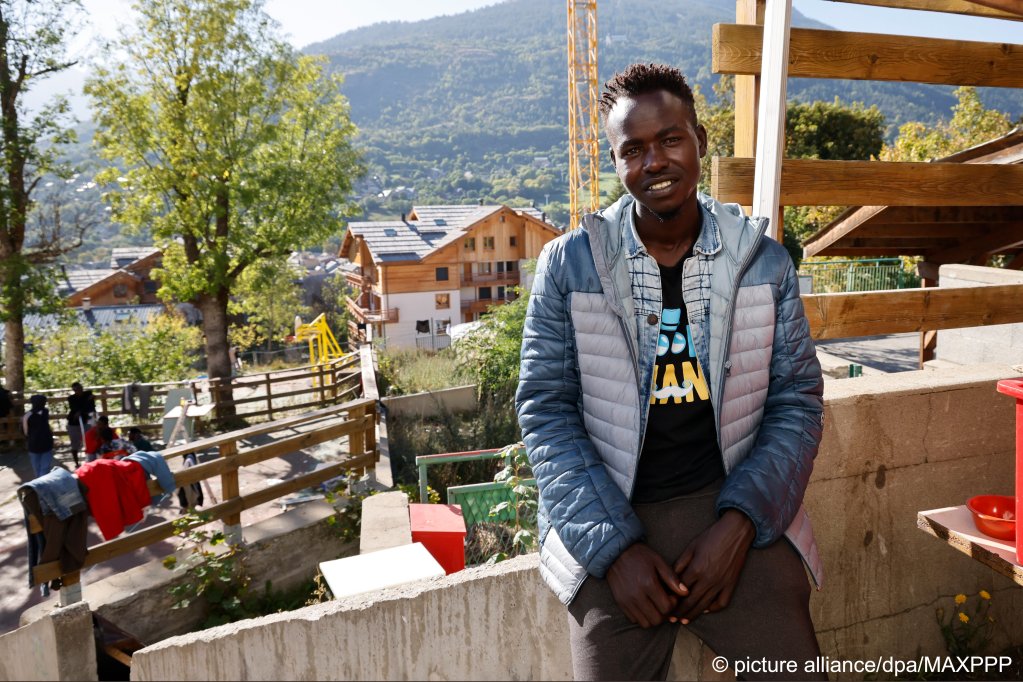
Police authorities in Briancon told Il Riforma that the increased controls are part of the Schengen agreement and are allowed within 20 kilometers of a border within the zone. The controls are allowed for the purpose of preventing cross-border crime, they said.
On September 21, the Court of Justice of the European Union (CJEU) ruled that these kinds of border controls should only be done in "exceptional" cases. However, France has effectively been operating controls at and near its border with Italy since 2015 -- many of the trains passing from the Italian city of Ventimiglia to the French town of Menton on the Mediterranean coast contain police controls, for example.
Also read: An overwhelmed migrant center in south-eastern France appeals to state
Doctors without Borders (MSF) teams in Ventimiglia have documented migrants who say they have repeatedly been pushed back at the border. MSF says police are facilitating "systematic" pushbacks against unaccompanied minors, sometimes separating families and even pushing back those who say they want to apply for asylum.
These policies are 'endangering lives,' say migrant organizations
One of the associations who took the lawsuit to the CJEU, the Association for Foreigners’ Rights (ADDE) in France, claimed that France was using pushbacks to effectively "refuse these people the possibility of coming to France to apply for asylum or to cross France to go elsewhere in the EU."
Organizations like Medici del Mondo (Doctors of the World) and Tous Migrants published observations of practices in this area at the end of August.
In it, they concluded that the authorities were endangering lives. It said the controls they conducted were not actually stopping migrants from entering Italy, but were instead pushing them into vulnerable and precarious situations.
The patrols -- which rely on the element of surprise -- push people to take more dangerous paths. In some cases, these alternative routes have resulted in falls causing bone fractures and loss of consciousness, according to the published observations.
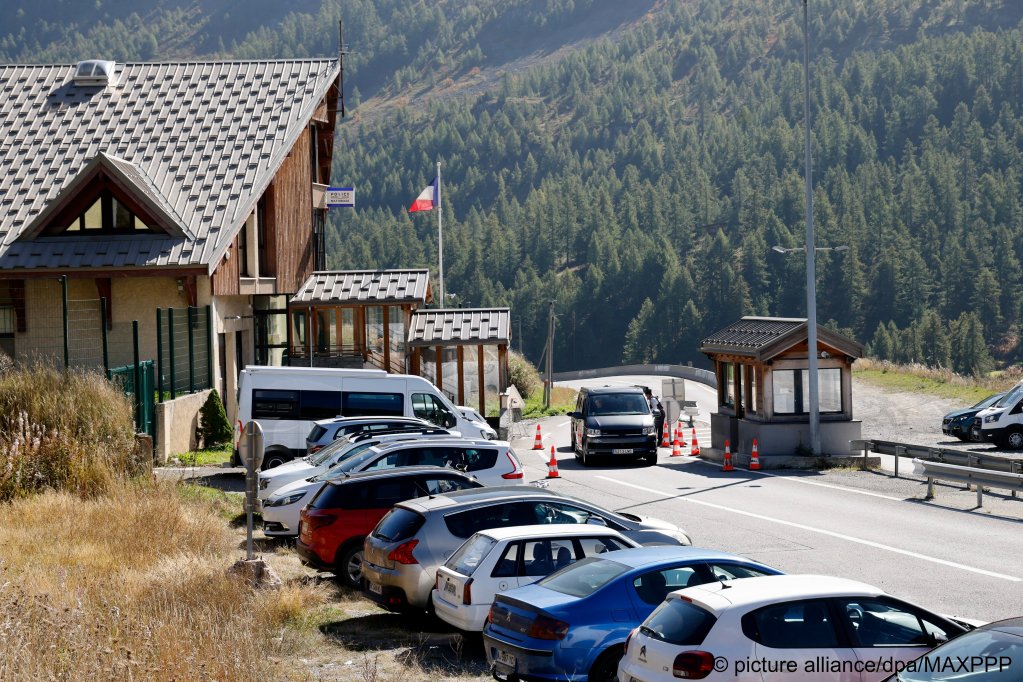
The published observations said that because of the police patrols, migrants ended up walking on higher, more obscure paths and regularly spending up to 48 hours in the open air.
Temperatures are low at this altitude at night, even in the summer, when most crossings take place. Many migrants run out of food and drink during their journey, making the dangers of thirst, hunger and hypothermia even more likely after prolonged exposure to the elements.
Also read: French police deploy drones to track migrants at Italian border