
The body of a newborn baby was brought to the Italian island of Lampedusa by a patrol boat after it was found onboard a boat carrying 40 migrants during a rescue operation.
The baby's body was taken to Lampedusa where it arrived on a Coast Guard patrol boat that rescued a group of migrants off the island. Immediately after docking, the baby's body was placed in a white coffin and taken to the cemetery in Contrada Imbriacola in the center of the island. According to reports, the infant's mother was taken to a nearby polyclinic by ambulance.
The infant was reportedly born during the crossing, and died shortly after the birth. The boat which was carrying about 40 people, was rescued by a patrol boat of the Harbor Master's Office. The Italian news agency ANSA reported that the death is still being investigated. In recent days another little victim, just five months old, fell into the water and died during the rescue efforts.
Also read: Lampedusa: Five-month old baby dies during 'chaos' of rescue
High number of arrivals on Lampedusa
In the early hours of Saturday (September 16), three boats carrying 121 migrants landed on Lampedusa. The boats, which departed from Sfax and Zwara in Tunisia and Libya, were met by a border and tax police (guardia di finanza) patrol boat.
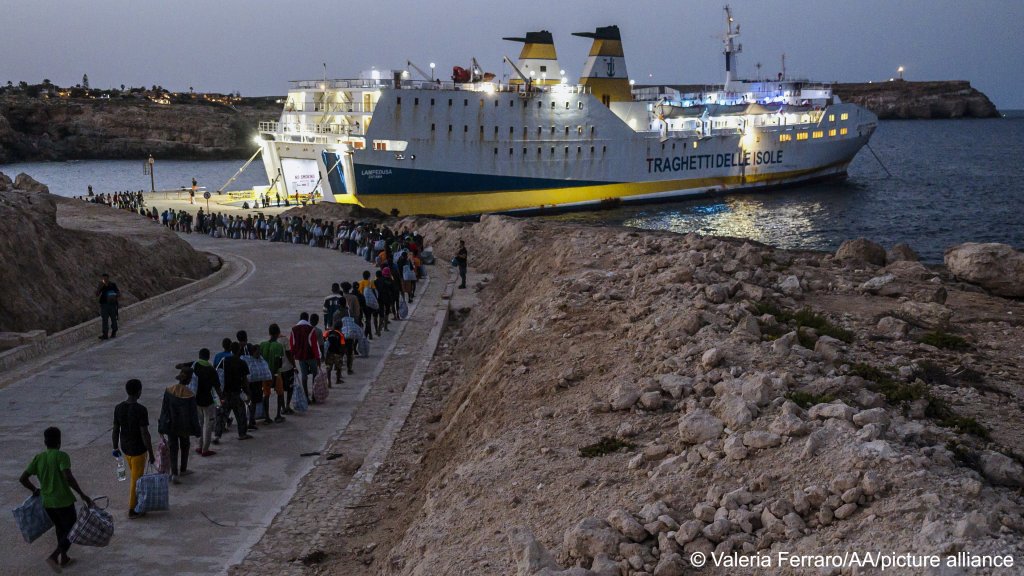
The groups, which included a total of 14 women, reported to rescue workers that they were from Egypt, Syria, Sudan, Guinea, Cameroon and the Ivory Coast. There were 15 landings on the island on Friday (September 15) with a total of 527 arrivals.
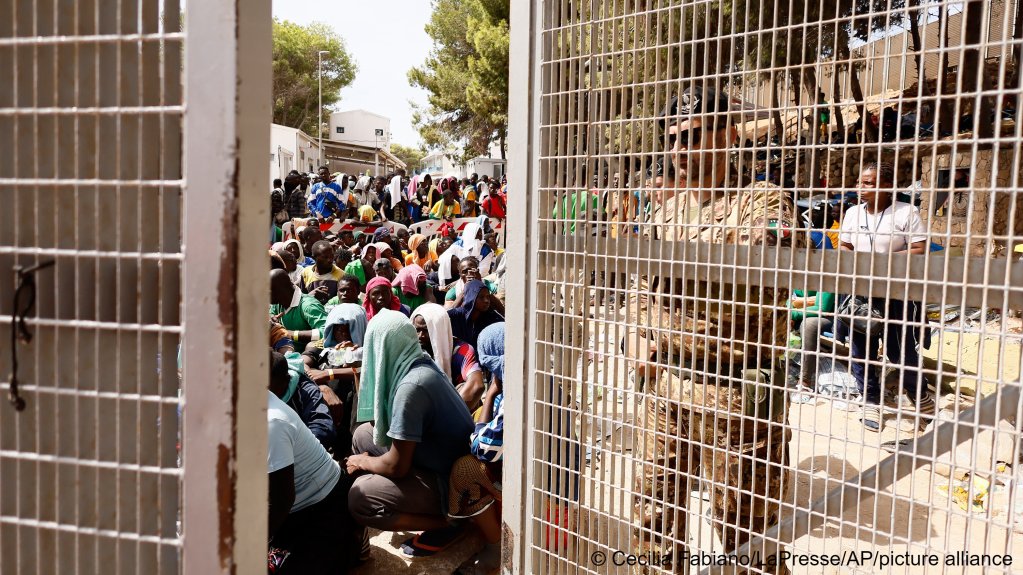
At the Contrada Imbriacola facility there are currently 2,796 guests. Several transfers by ferry to mainland Sicily have been scheduled for Monday afternoon and evening.
Also read: Thousands arrive amid warnings Italy's stance could cost lives
EU visit used as political opportunity for far-right
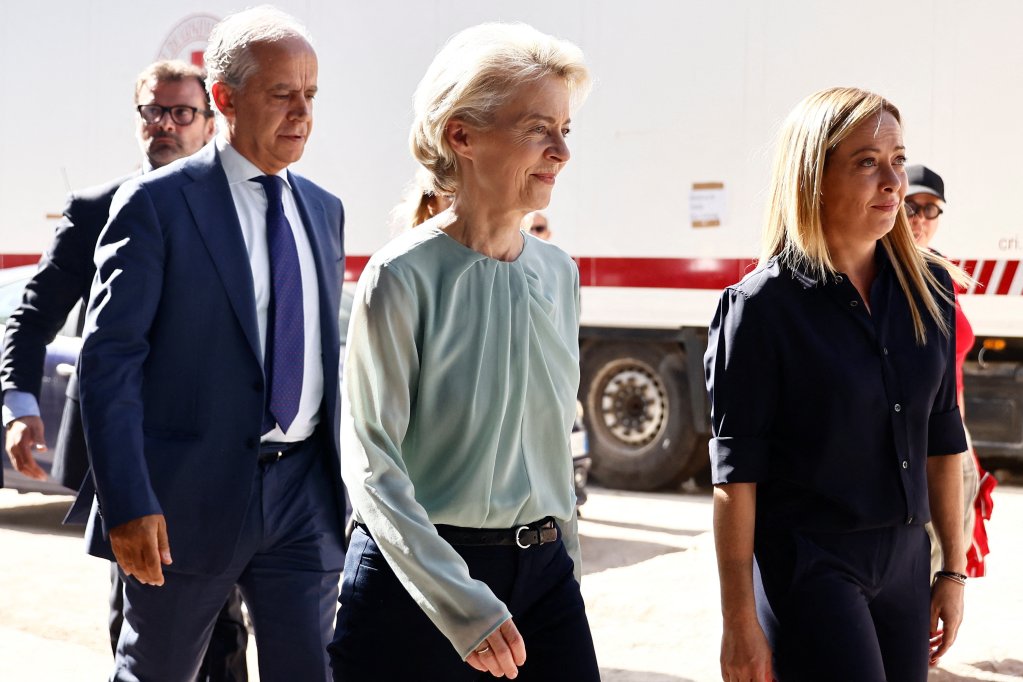
The president of the European Commission, Ursula von der Leyen, visited Lampedusa on Sunday at the invitation of the Italian prime minister, Giorgia Meloni. Von der Leyen was accompanied by the European Commissioner for Home Affairs, Ylva Johansson.
Meloni, together with von der Leyen and Johansson, arrived at a migrant reception center on the island on Sunday to review the situation. DW reported that when asked about how Italy was dealing with the high number of migrant arrivals, Meloni responded "I'm working on that," as she walked into the facility.
For the leader of the far-right League (La Lega) party, Matteo Salvini, von der Leyen's visit to Lampedusa is "positive," and he said that Meloni, who will accompany the president of the European Commission to the island, "will try to get and will get the maximum." On Saturday, prior to the visit, he accused Europe of being "absent, distant, distracted, deaf, arrogant. We have another idea of Europe..."
At a League rally held on Sunday to coincide with von der Leyen's visit, the French far-right leader Marine Le Pen targeted the head of the Italian government, Giorgia Meloni, for not going far enough on the issue of migration. She instead praisied Matteo Salvini’s anti-immigration policies when he was Italy’s interior minister in 2018, stating that he was "the only choice” in the upcoming election, while excluding Meloni’s Fratelli d’Italia party.
Also read: Lampedusa: Is an EU naval blockade possible?
EU hardens stance towards migration
Italian authorities, including the mayor of Lampedusa, have repeatedly voiced concerns over a lack of support from other EU states in relation to migration. Von der Leyen used her visit to announce a 10-point action plan for Lampedusa. "Migration is a European challenge and will receive a European solution," she said.
Under the new plan the European Union Asylum Agency (EUAA) and the European Border and Coast Guard (Frontex) will be deployed to Italy to manage new arrivals. In addition, the European Commission will negotiate ways of managing migration and returns with countries of origin. The announcement comes after EU's deal with Tunisia was signed in July in an attempt to curb migration from North Africa.
The policy has already had violent consequences for people seeking to reach Europe from the region, with a surge in violence and racism against black African migrants and asylum seekers. On Saturday, Tunisian police arrested hundreds of migrants in a crack down on people smugglers in the port of Sfax.
Also read: Tunisia expels hundreds of sub-Saharan African migrants from Sfax amid crackdown
Italian cabinet meet to discuss new measures
On Monday (September 18), the Italian cabinet met to discuss new measures to try and stop so many migrants arriving by small boat. According to the Italian newspaper La Stampa, Meloni declared during the meeting, that it needed to be the Italian government who decides who enters and "not the smugglers."
Meloni added that she would be aiming to build more repatriation detention centers known as CPRs in Italy. Most of these are situated near airports. She said these centers would be situated "far from Italian residential areas" and would, she hoped, have the possibility of detaining people for up to 18 months if they were found to have entered the country "illegally."
Meloni also promised new decrees to tighten up already existing rules. One of the new decrees would seek to make sure that more proof was needed to establish a migrant's age. Those found to be under 14, or deemed to be vulnerable women, would also benefit from special protection once arrived, said the prime minister.
Also read: Lampedusa: Chaos and tension amid transfers off the island
Germany u-turns on migrant policy
Faced with the arrival of the large number of migrants in Lampedusa, Germany has made a u-turn in its recent immigration policy by resuming the voluntary admission of migrants from Italy. This was announced by German Interior Minister Nancy Faeser, speaking of a "solidarity obligation."
According to Die Welt newspaper, Faeser told the German broadcaster ARD on Friday that the voluntary admission procedure had been suspended "because Italy has shown no willingness to take people back through the Dublin procedure," but added that "it is now obviously clear that we will fulfill our obligation of solidarity."
The European voluntary solidarity mechanism was agreed among a number of EU countries, including Germany, in June last year. Germany had initially promised to take in 3,500 asylum seekers from particularly hard hit countries on Europe's southern borders.
So far, 1,700 people seeking protection have been transferred through the solidarity mechanism to complete their asylum procedure in Germany. Of these, about 1,000 are from Italy and 670 from Cyprus.
Also read: Lampedusa: EU and Italian leaders announce action plan