
Storm Daniel washed away entire towns in Libya. The eastern coast of the North African country is a transit point for people coming from Egypt, Syria, and sub-Saharan Africa.
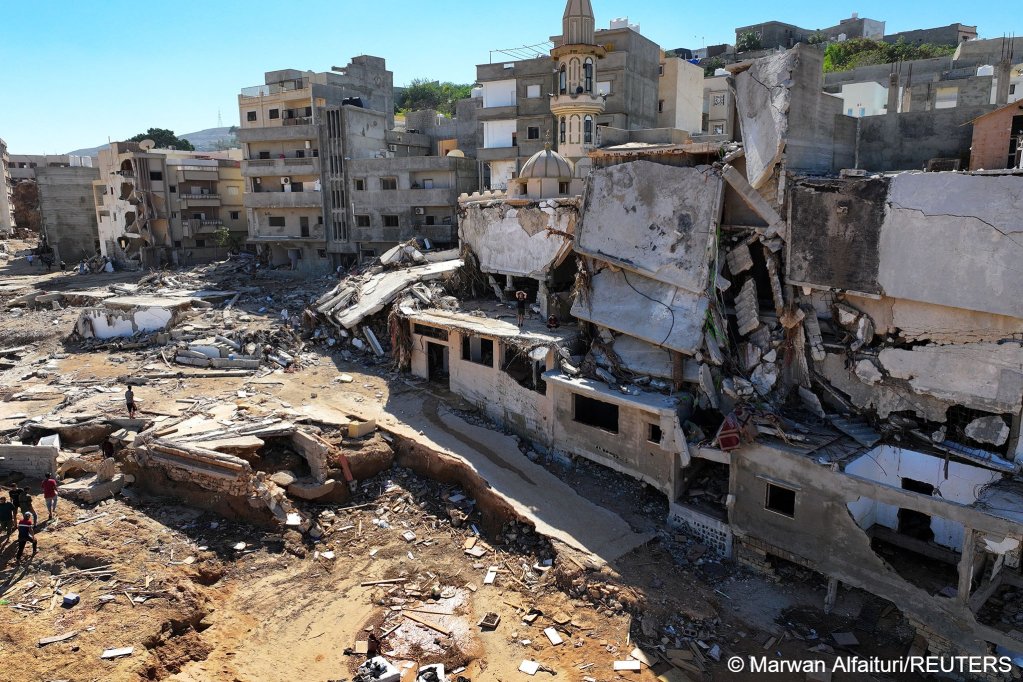
Days after the storm Daniel dumped catastrophic rains, Libya continues to grapple with the magnitude of loss and devastation.
"This disaster was violent and brutal. A wave 7 meters high wiped out buildings and washed infrastructure into the sea," Yann Fridez, head of the International Committee of the Red Cross (ICRC) Libya delegation, said in a statement.
The ICRC is delivering humanitarian aid to Derna, a northeastern town in Libya that lies on the Mediterranean coast east of Benghazi and is reportedly the most devastated by the storm.
"Now family members are missing, dead bodies are washing back up on shore, and homes are destroyed. The city faces immense emotional trauma... It will take many months, maybe years, for residents to recover from this huge level of damage," said Fridez.
The Libyan Red Cross confirmed at least 11,300 dead in Derna after two dams burst, unleashing flood waters that washed away entire neighborhoods. The mayor of Derna said that the number could be at least 20,000, Al Jazeera reported on September 14.
The International Federation of the Red Cross (IFRC), with its local societies such as the Libyan Red Crescent, have been on the ground from the onset of the disaster delivering humanitarian aid.
"Our local chapters are comprised of first responders and volunteers who are members of the community. They ensure the continuity of support. But even then, just from the scale of this disaster, we are completely overstretched," Tommaso Della Longa, spokesperson for the International Federation of Red Cross and Red Crescent Societies (IFRC) told InfoMigrants.
I'm very concerned about migrant communities in eastern Libya. They were just trying to survive – even before this disaster
Hub and transit point for migrants
Hanan Salah, Human Rights Watch (HRW) senior researcher for Middle East and North Africa, described eastern Libya as a hub for people on the move. As a transit point, Libya is a migratory path for people from Egypt, Syria, and other sub-Saharan African nations who want to enter Europe by crossing the Mediterranean Sea. People from Bangladesh and Pakistan reportedly make their way to Libya through Egypt, which lies on the country’s eastern border.
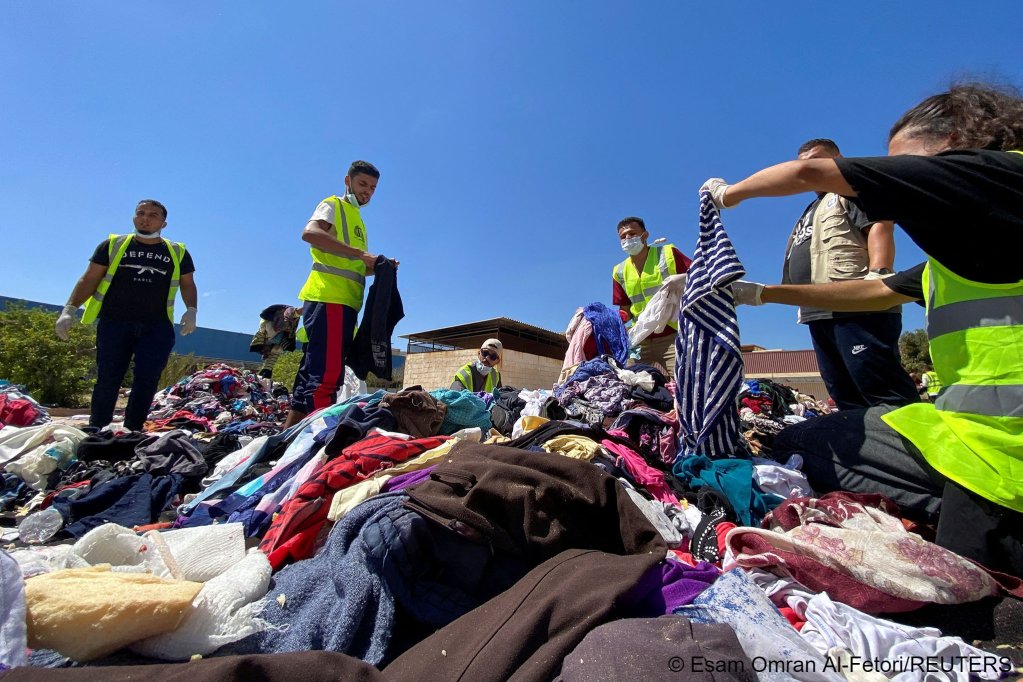
"I'm very concerned about migrant communities who are in the cities and in the towns in eastern Libya – especially their access to food, water, and basic needs. They were just trying to survive – even before this disaster," Salah told InfoMigrants.
Data from the International Organization for Migration suggest that there are more than 230,000 migrants who live in the eastern towns of Libya. Currently, there are no official figures for the migrants affected by storm Daniel.
"Another aggravating factor is that tracking people on the move is very difficult. If you're on the move, and you happen to be in this part of the country that is severely affected, where telephone and Internet lines are down, it will be even more difficult for international organizations and everyone else to know where you are," said Salah.
Held by smugglers, in detention facilities
On a visit to Libya last year, Salah described the living conditions of migrants as "horrific".
"People simply didn't see any way out. Many were alone or with very small children. They attempted to leave Libya by boat on multiple occasions and were taken back to abusive and inhumane conditions that no human being should be subjected to," said Salah.
Read more: Hundreds of Pakistani migrants freed after raid in Libya
Various rights groups have documented how smuggling networks run by transnational criminal gangs and militias force migrants into overcrowded "smuggling warehouses" crammed with hundreds of people. Armed guards reportedly subject migrants to violence and extortion.
In July, the United Nations expressed concern about enforced disappearance in the case of 120 migrants and refugees allegedly released by authorities from a warehouse in Tazirbu, in the Libyan desert and taken to an undisclosed location.
In a statement, the UN said this was not an isolated incident: "We are very concerned about the situation of many more migrants and refugees, including victims of trafficking, who have also been transferred to detention centers where no humanitarian agencies, lawyers or civil society organizations have been granted access."
Read more: No, migrants in Libyan detention centers are not more likely to be resettled in Europe
Tracking migrants difficult
Further aggravating the situation is a March decree by the Libyan government restricting the operations of domestic and foreign NGOs, which the HRW slammed as a crackdown on human rights. The decree, based on a 2001 law, came after months of reported harassment, detention, and prosecution of humanitarian workers.
Last August, international aid organization Médecins Sans Frontières (MSF) announced that it would end its operations in Tripoli amidst an "increasingly challenging environment for international organizations in the country." MSF attended to the healthcare needs of migrants, asylum seekers, and refugees held in detention centers and those living in precarious urban settings.
According to HRW, non-governmental organizations that traditionally have been working in Libya for a long time have been unable to access the country because of these restrictions this past year and a half.
"This is going to impact how quickly NGOs can set up and get to work. Really, there is no time to waste on this issue," said Salah.
Read more: Libya: MSF ends medical activities in Tripoli detention centers