
The large number of people arriving on the small island of Lampedusa has produced a logistical emergency, says the IOM's Flavio Di Giacomo. But it's important to see the numbers in context, in order to find solutions for the future.
In the Italian and international media in the last few days, headlines have come thick and fast about the numbers of migrants arriving on Lampedusa. Every few hours, newspapers and broadcasters are reporting "record numbers" of arrivals; politicians are declaring "states of emergency" and Italy’s Minister of Infrastructure (including ports), and leader of the League (La Liga) party, Matteo Salvini, branded the arrivals "an act of war," saying he was convinced that someone was "orchestrating" or "directing" the arrivals. Some Italian politicians have even gone so far as to describe them as an "invasion."
Figures last updated by the interior minister on September 13 showed that almost 124,000 migrants had arrived by boat in Italy since the beginning of the year. According to the IOM spokesperson for Italy, Flavio Di Giacomo, there are now around 7,000 migrants in the first reception center on Lampedusa, commonly referred to as the "hotspot."
"I was there when there were 3,000 and the situation back then was already dramatic," Di Giacomo tells InfoMigrants. "I can’t even begin to think how they are managing with 7,000."
The center is built to hold a capacity of 400: there is not enough space to put beds for 7,000, and the toilets can't possibly accommodate that number.
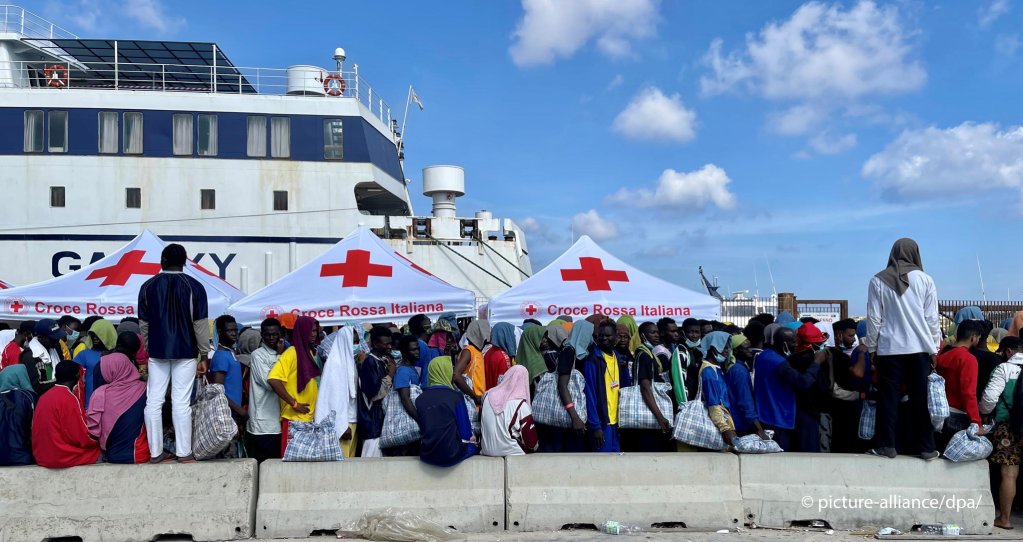
"On Lampedusa at the moment we are seeing a logistical emergency," says Di Giacomo. But it is still not the "collapse of society" as politicians in Italy’s government, like Salvini, have described it. "The number of arrivals in absolute terms is around the same as we saw in 2015 during the same period," he says.
Also read: France seals border with Italy as record numbers arrive in Lampedusa
124,000 is also nowhere near the million people who arrived mostly in Greece in 2015 and 2016. When you look at the whole population of Europe, more than 450 million, this is really just a drop in the ocean, Di Giacomo argues.
More arrivals concentrate on Lampedusa
So far this year as many as 70,000 migrants have arrived on Lampedusa, while in 2016 the total number was only around 9,400. This is because in 2015, vessels from the EU’s naval Operation Sofia, as well as several NGO rescue ships, were picking up migrants at sea and taking them to larger, better-equipped ports in Sicily, instead of Lampedusa.
Also read: EU-Tunisia accord causes clash in EU parliament
As Di Giacomo also explains, the route taken by the majority of migrants has changed. Previously, most migrants crossing the Central Mediterranean departed from Libya and were picked up by larger ships.
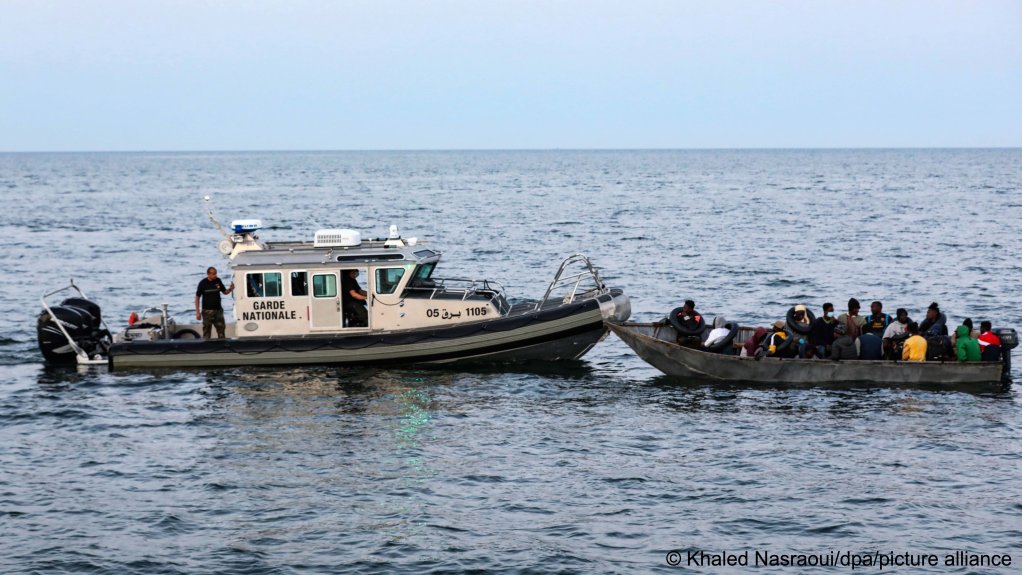
Today the main port of departure is Sfax in Tunisia, from where the nearest European territory, Lampedusa, can be reached in about eight to ten hours in a boat that is in reasonable condition.
The IOM has noted an increase in the number of migrants who crossed from Libya into Tunisia before taking to sea, says Di Giacomo.
Smaller boats require more rescues
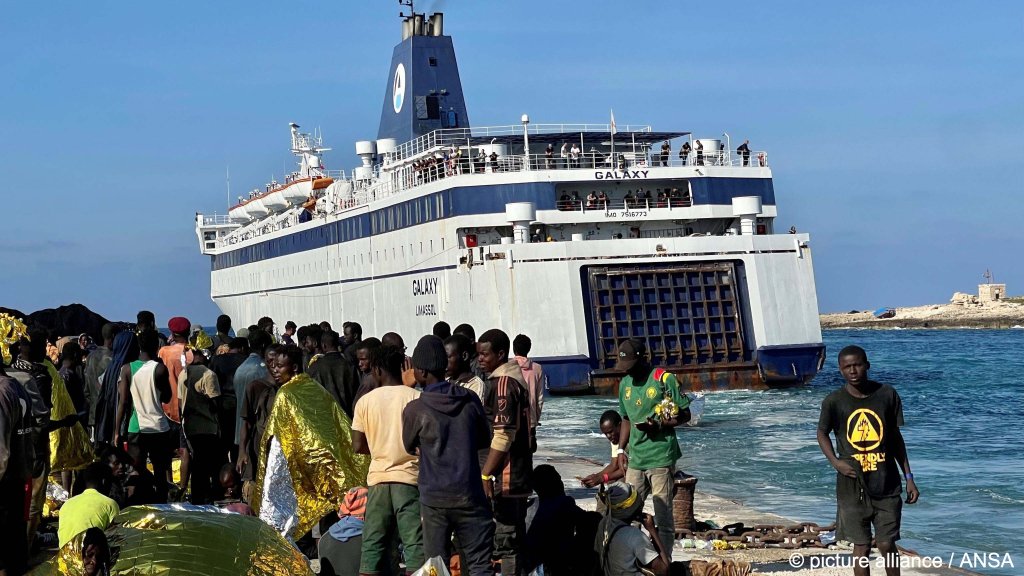
The size of the boats has also changed. The boats used to cross the shorter distance between Tunisia and Lampedusa tend to be smaller and hold around 40-60 people. Most of these arrive directly on Lampedusa, or get very near, making the nature of the rescue operation very different.
Also read: Five-month-old baby dies during 'chaos' of rescues
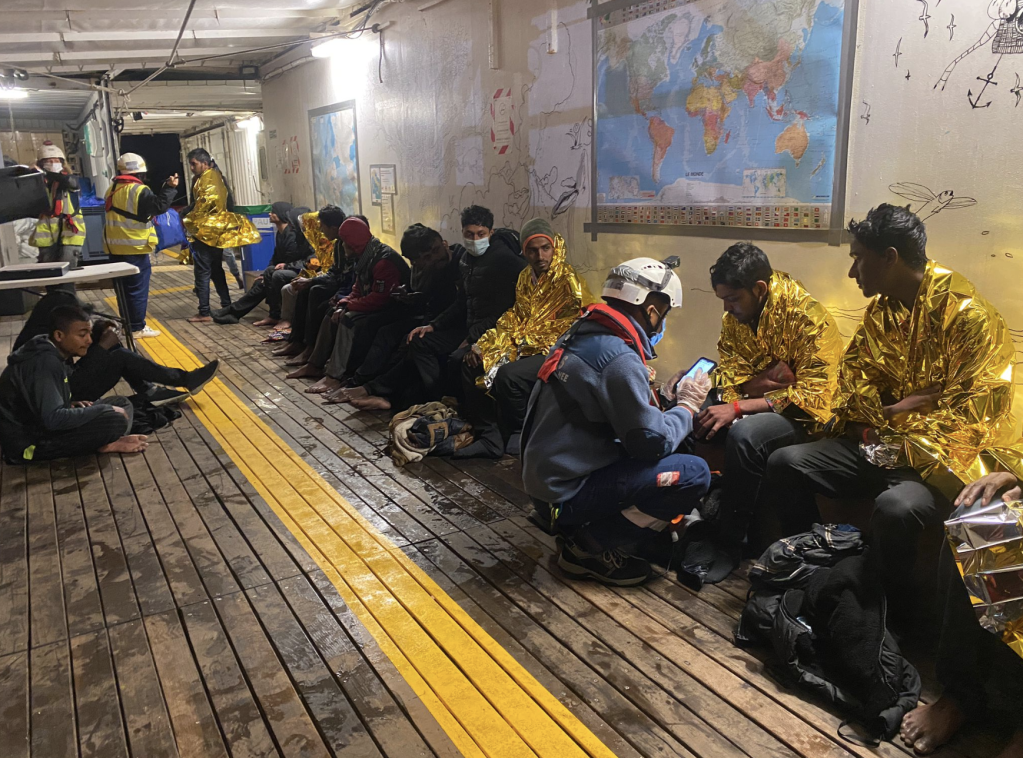
The smaller-sized boats, each carrying fewer people, mean that more rescue operations are needed. The Italian coast guard currently has to shuttle back and forth from Lampedusa’s harbor several times a day, as most of its vessels can only fit around 40-50 people on board, at most about 80, Di Giacomo estimates.
The Italian government's policy of forcing private rescue ships to limit themselves to one rescue and then head for a port, sometimes four to five days' sailing away, has also contributed to the difficulties. This slows down the number of rescues they can make.
"We need the NGO ships," says Di Giacomo. "Those big ships can rescue 500 people and then bring them to a big well-equipped port in Sicily, like Ragusa, Pozzalo or Augusta. They should definitely be part of the rescue system, even if there is lots of obstruction from the Italian government."
Transfers from Lampedusa towards the mainland
The transfer of migrants to the Italian mainland is an important part of the immediate solution, and Di Giacomo says the government has done this well. "We have to remember that prior to this week, we had about a week to ten days with nearly no arrivals, then they had virtually cleared the reception center on Lampedusa. If the arrivals ebb again then they would be able to make the transfers, but obviously if they keep coming then things start to get difficult for such a small center."
Relocation to other European Union member states is often touted as one of the solutions to help relieve pressure on certain countries, but this is unlikely to offer a solution in this case, Di Giacomo says.
He adds that declaring a state of emergency, as the mayor of Lampedusa Filippo Mannino did earlier this week, can be useful because it cuts down on bureaucracy and helps open up solutions, like finding people beds and places to stay quickly.
'Migration flows are not just an emergency'
Migration flows are not just an emergency, however. "It is becoming a normal part of life. Europe needs migrants, so we need to open up regular channels," Di Giacomo says.
"The whole approach to migration flows needs to change. Migration is being used as propaganda, and a political issue. We need to see migration as the biggest geopolitical phenomenon of this century, and start accepting it as something normal, and something that we need."
Instead focusing on numbers and headlines, European states and societies need to start looking more closely at the geopolitical context, according to Di Giacomo, and questions such as why people are leaving from Tunisia, rather than from Libya.
The answer to that question, in his view, is because it has become unbearable for many migrants to live in those countries.
While most people migrating from countries in Africa have always remained within Africa, in recent years countries of destination for jobs, like Tunisia and Libya, have become untenable for sub-Saharan African migrants, and so they are pushed to cross the Mediterranean in search of a more stable situation and in the hope of finding work.
Countries need to start increasing help and support in the departure countries, says Di Giacomo, not just closing down routes, but actually improving conditions so that people will again try to work there instead of making the crossing towards Europe.
Also read: Italy's regions urges answers as migrant arrivals surge in 2023