
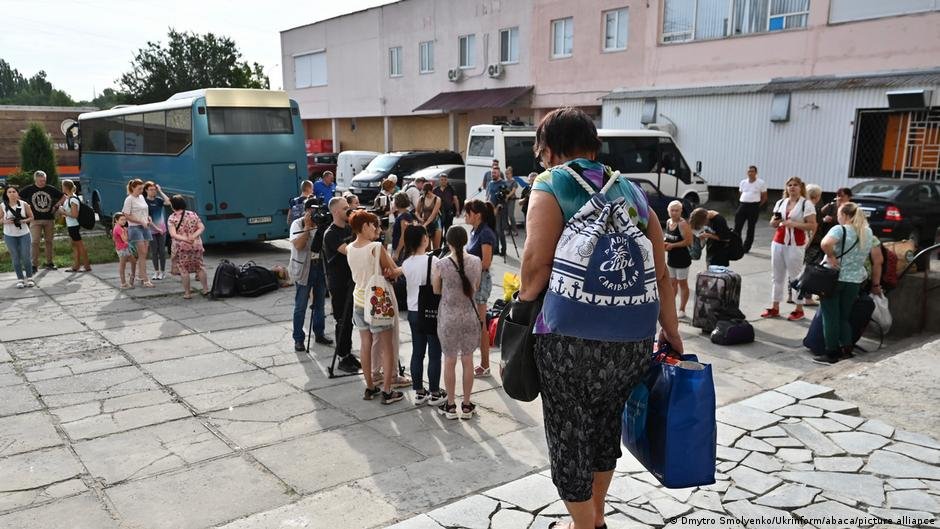
The number of refugees and asylum seekers living in Germany has hit a new record. Elsewhere in Europe, the number of people seeking protection is also increasing. Refugees and migrants resort to using the same routes as they have in the past, even though various governments have introduced countermeasures to prevent their journeys.
A total of 3.26 million people are registered in Germany's Central Register of Foreigners as being part of the asylum process. That number refers to the end of June 2023, and is 111,000 higher compared to numbers six months earlier.
The numbers include recognized refugees, war refugees, asylum seekers or so-called tolerated persons, many of whom have been living in Germany for years or even decades with a tolerated stay permit.
The newest numbers were revealed as part of an official answer by the Federal Ministry of the Interior to a question posed by Clara Bünger, a member of the Bundestag for the Left Party.
Read more: Running from the Taliban: More Afghan women granted refugee status in Germany
Conflict leading cause of migration
According to the government, there are a number of elements which impact this current number, in particular the conflicts in Afghanistan and Ukraine.
About 29,000 more refugees from Ukraine have come to Germany, setting the number of war refugees from Ukraine to just over one million.
The report also highlighted that there were about 4,000 additional asylum seekers as well as a few admissions on humanitarian reasons, especially from Afghanistan.
Read more: Afghanistan: What happened to Germany's local staff?
Almost 12% of rejected people have 'Duldung'
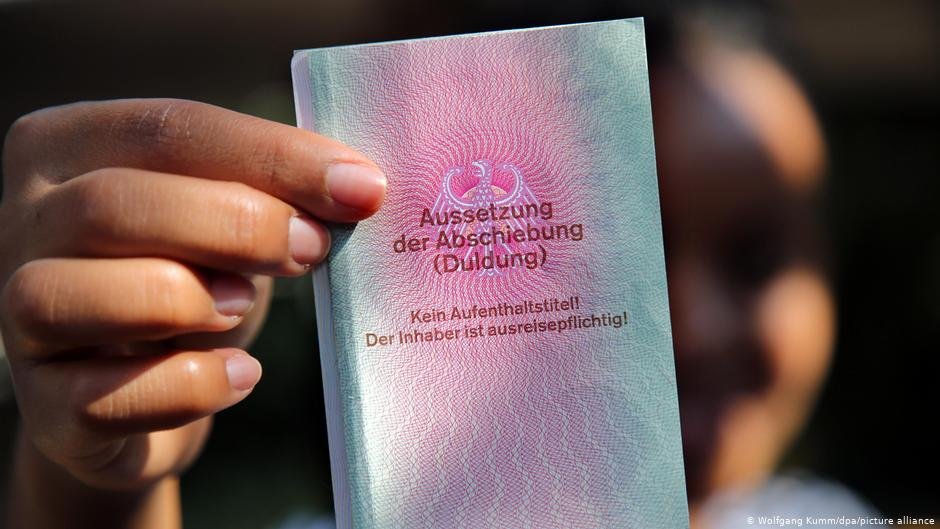
The Central Register of Foreigners also lists more than 279,098 people as being obliged to leave the country. This means that their presence is only being tolerated due to special circumstances.
About 80% of those required to leave the country have a so-called "Duldung" (toleration permit) as they cannot be deported at present, for example due to the security situation in their country of origin or other for legal or humanitarian reasons.
In other cases, people are tolerated because they have taken up training or employment in Germany, which would excuse them from being deported while still keeping them excluded from gaining asylum seekers' rights.
About a quarter of the tolerated persons in Germany do not have valid travel documents or cannot get these from the embassies of their countries.
List of safe countries of origin under reconsideration
Some politicians in Germany, like Christian-Democrat opposition leader Friedrich Merz, want to do something about the high number of people in Germany under a "Duldung," suggesting that the list of safe countries of origin should be expanded so more rejected asylum seekers can be deported home.
Merz suggested that Tunisia, Morocco, Algeria, and India should also be declared safe countries of origin. In a tweet dated two weeks ago, Merz also added Moldova to that list.
Only a few days later, the German cabinet passed a draft law by Interior Minister Nancy Faeser (SPD) to classify Moldova and Georgia as safe countries of origin.
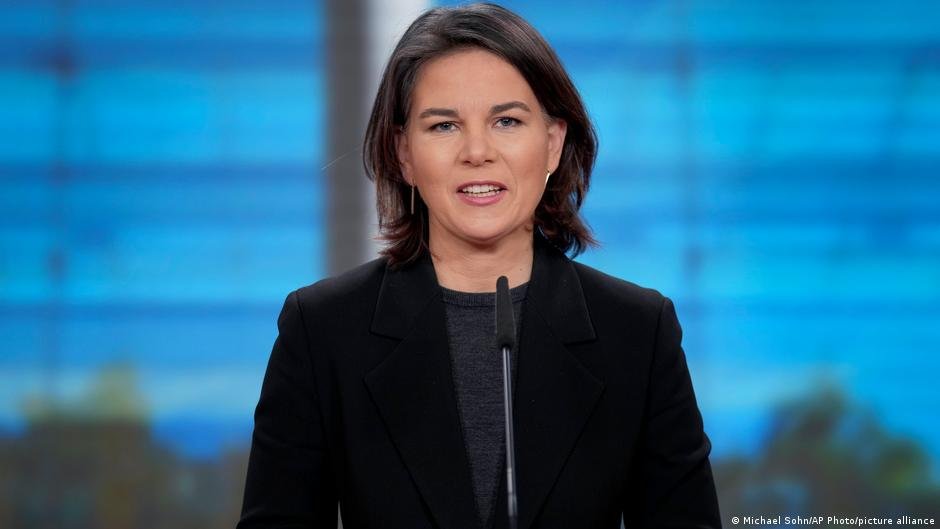
German Foreign Minister Annalena Baerbock, however, has expressed her opposition to expanding that list further, saying that such suggestions were mainly of domestic nature and should not be mixed with foreign policy.
Baerbock said she supports the inclusion of Georgia and Moldova on the list of safe countries of origin, as suggested by the federal cabinet. This will be debated by both houses of parliament later this month.
Read more: Germany will add Moldova and Georgia to list of safe countries of origin
But Baerbock told the Funke media group that those two states in particular were well on their way to becoming EU members and had been implementing far-reaching reforms when it comes to the rule of law, democracy and human rights.
Currently, Germany's list of safe countries of origin includes all EU countries, Ghana, Senegal, Bosnia-Herzegovina, Serbia, northern Macedonia, Albania, Kosovo and Montenegro.
Read more: German interior minister proposes making returns and deportations easier
Rise in migrant arrivals across EU
The European Union meanwhile says that the number of refugees and migrants coming to Europe in general is also on the rise. The European Union Asylum Agency (EUAA) presented its latest figures, saying that more than half a million people had applied for asylum in the first half of 2023 in the EU states as well as in Norway and Switzerland.
The majority of people using irregular means to comes to the EU are Syrian and Afghan nationals, EU Commission spokeswoman Anitta Hipper said.
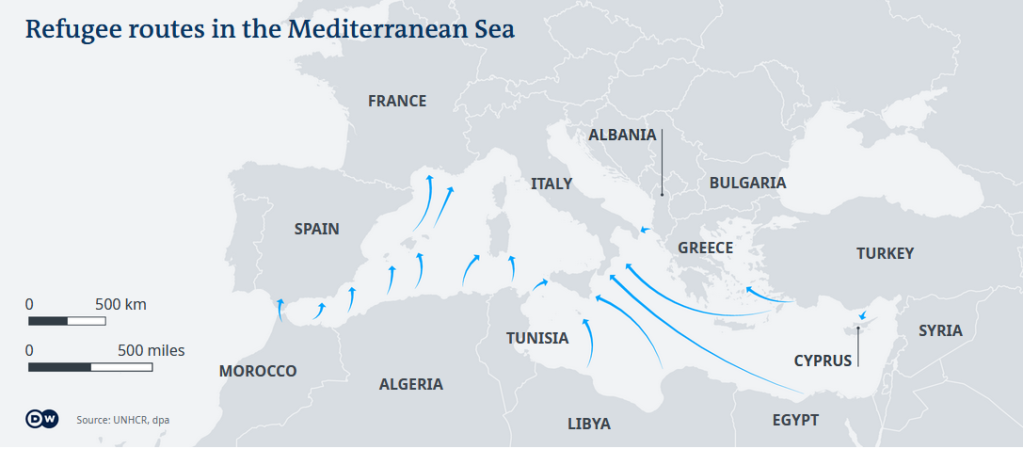
Most of them continue to use the Mediterranean Sea routes and the Balkan route despite the many fortifications and obstacles they face.
Both routes are considered extremely dangerous, as migrants face inhumane conditions during their journey. On the sea route, hundreds of people drown each year; the Mediterranean Sea in particular is considered to be one of the most perilous migration routes in the world.
According to the Organization for Migration (IOM), more than 2,300 people have already died or gone missing while trying to cross this year.
The number of unreported cases is assumed to be significantly higher.
Read more: Libya: 601 migrants sent back to Libya in last seven days
EU deals with Libya and Tunisia failing
The EU has recently signed migration agreements with departure countries like Libya and Tunisia to ensure that people are prevented from reaching Europe -- in exchange for large sums of money. In many cases, those policies even backfire, with both countries facing serious accusations of grave human rights abuses when dealing with migrants.
Despite these deals, the number of refugees and migrants arriving in the EU continues to rise, according to the report, failing to deter people from embarking on migration journeys.
According to the latest published figure, the number of arrivals is 28% higher than the comparable figure from the first half of 2022.
Commission spokeswoman Hipper meanwhile announced that action plans already exist for regulating migration via the central Mediterranean route and the Western Balkans. A plan for the eastern Mediterranean is also planned, she added, without providing further details.
Read more: EU countries agree on plan for stricter asylum reforms
with AFP, EPD