
A spanish refugee aid group has called on authorities to suspend plans to transfer 168 migrants to Senegal. The group says Spain could be breaking international law by returning the migrants without due process.
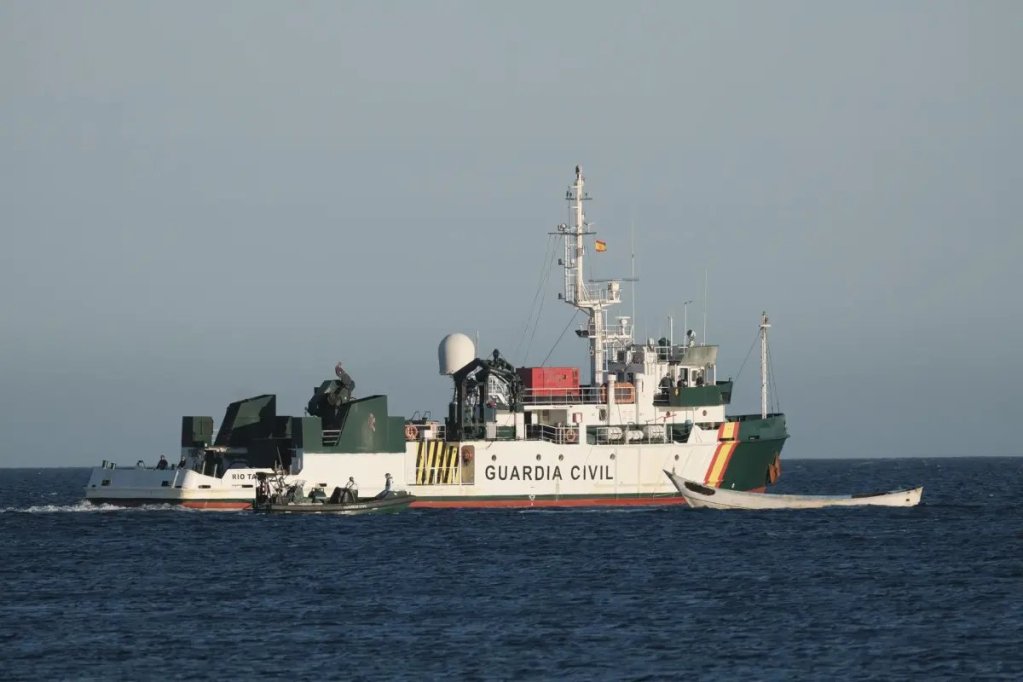
The Spanish Commission for Refugees (CEAR) says 168 migrants who were rescued by a patrol boat last Thursday (August 24) should not be returned to Senegal. The NGO claims the migrants are under Spanish jurisdiction and under the effective control of Spain’s national police agency, the Civil Guard.
According to CEAR, some of the migrants may qualify for international protection, and they should therefore be given information about the procedure and transferred to Spain, which is the competent authority to consider their claims.
The organization stressed that everyone is entitled to an individualized assessment of their claim, and a failure to guarantee these rights could mean the migrants faced "collective expulsion" in violation of international law.
"The [European Court of Human Rights] places special emphasis on guaranteeing that people are not returned to countries where their rights and lives may be in danger," CEAR said in a statement on Tuesday. It referred to recent major political instability in Senegal, which has seen the arrests of thousands of people, including the opposition leader Ousmane Sonko, sparking violent protests.
"Returning these 168 people to a country like Senegal, which is going through a very delicate political and social situation, could entail a serious violation of rights," said CEAR’s director-general, Estrella Galán.
Also read: Senegalese fishermen: 'Barcelona, or die trying'
Ordered back to Senegal
The group of 168 migrants are being transferred to Senegal, where most of them are from, after neighboring Mauritania refused to allow them into its port. The migrants had been rescued last Thursday as they were attempting to reach the Canary Islands from Senegal.
They were taken on board a Spanish Civil Guard ship, the Río Tajo, where they remained for five days anchored in Nouadhibou Bay. Conditions on board the ship deteriorated, with some migrants reportedly mounting a hunger strike and authorities on board firing shots into the air to prevent possible rioting.
Following negotiations between Mauritania and Spain on Monday, the Civil Guard union announced an end to the stand-off, saying that the migrants would be returned to Senegal. They were due to arrive on Wednesday.
Also read: Senegal villagers mourn dead after latest migrant shipwreck
'Failure of border outsourcing'
In recent years Mauritania has become an increasingly important strategic partner for Spain, which has provided the West African nation with over €10 million per year to prevent migrants from departing to Europe.
Morocco has also received at least €123 million from Spain in the past five years in return for migration control, according to Statewatch, a UK-based organization that monitors civil liberties, human rights and democracy.
CEAR said such agreements, which it called "border outsourcing," are made at the expense of human rights. The latest case of the Río Tajo shows that "not even the huge amounts of money that the African country receives have been enough for them to open their ports to people rescued in their waters," the CEAR statement said.
The organization said Europe should be enabling legal and safe pathways rather than continuing to pursue "immigration policies that have proven to be unsuccessful."
Also read: Concern at EU's growing push to return rejected asylum seekers