
Rather than a point of departure for Europe, Morocco has become home for many sub-Saharan Africans. Though many migrants still dream of moving to Europe, many have decided to stay on.
There are a reported 70,000 to 200,000 sub-Saharan migrants in Morocco, many of them undocumented. They arrived years ago planning to reach Europe. But the EU’s policy of externalizing borders made it harder to travel on. Morocco seemed more welcoming, although its migration policy remains ambiguous. Some migrants suffer exploitation, and social and cultural integration are not a given.
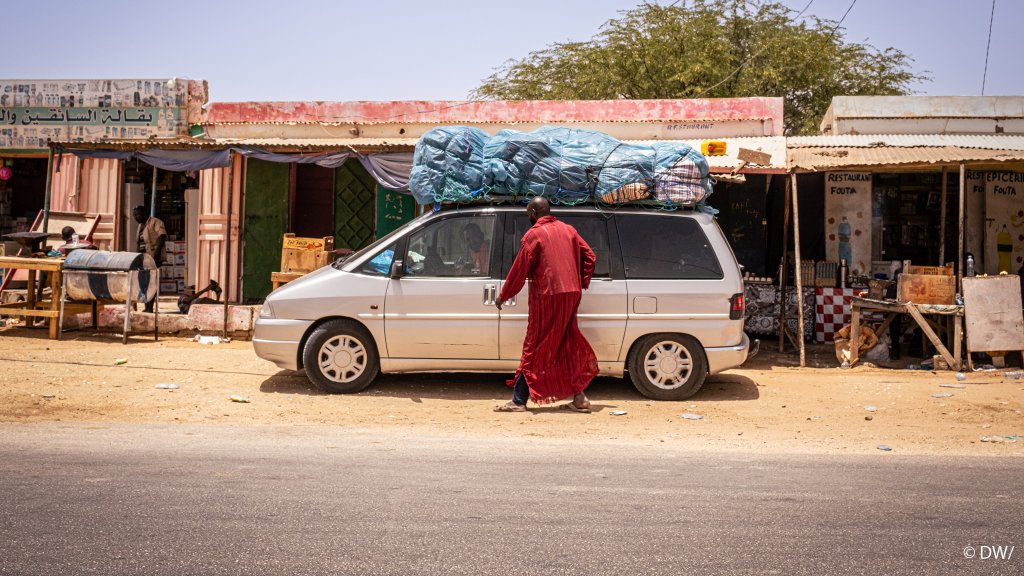
Along the road from Dakar to Casablanca
A minivan on its way to Morocco transporting goods and people along the road from Rosso (on the border between Senegal and Mauritania) to Nouakchott. Minivans leave Dakar several times a week for the 3,000 km drive up the coast to Casablanca and back. Many migrants, including Senegalese, start their journey to the Mediterranean here or run import-export businesses along the route.
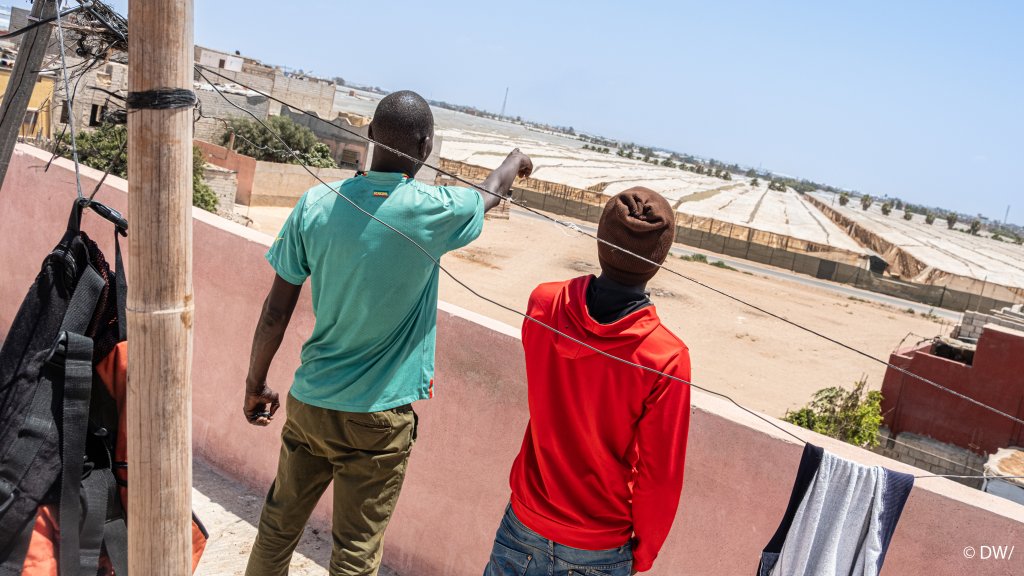
Tough working conditions
Ousmane Djom with a friend on the roof of a building in Ait Amira, a municipality in the south of Agadir. In the background, hundreds of greenhouses signal the success of Morocco’s "Green Plan" that turned the region into a hub for agriculture. Many young sub-Saharan Africans work here for around €6 daily. Almost no one has a valid residency permit and working conditions are tough.
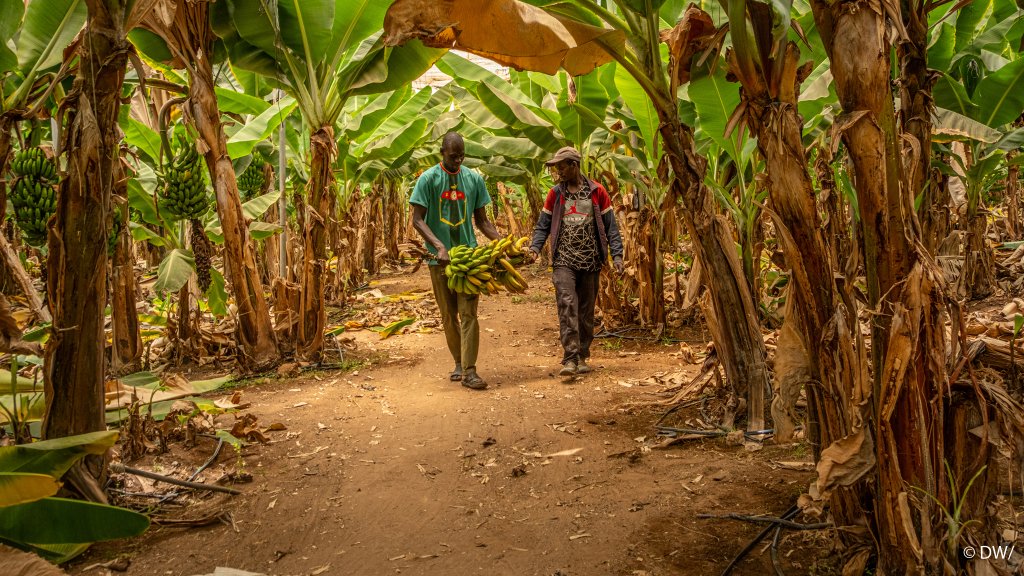
No papers, no protection
Djom and a colleague walk through banana plants in one of the giant greenhouses. Working without official papers and lacking legal protection is common in other sectors, such as construction and fishery. There’s a certain tolerance for migrants who have overstayed their visas, benefiting industries that employ large numbers of low-cost, undocumented workers.
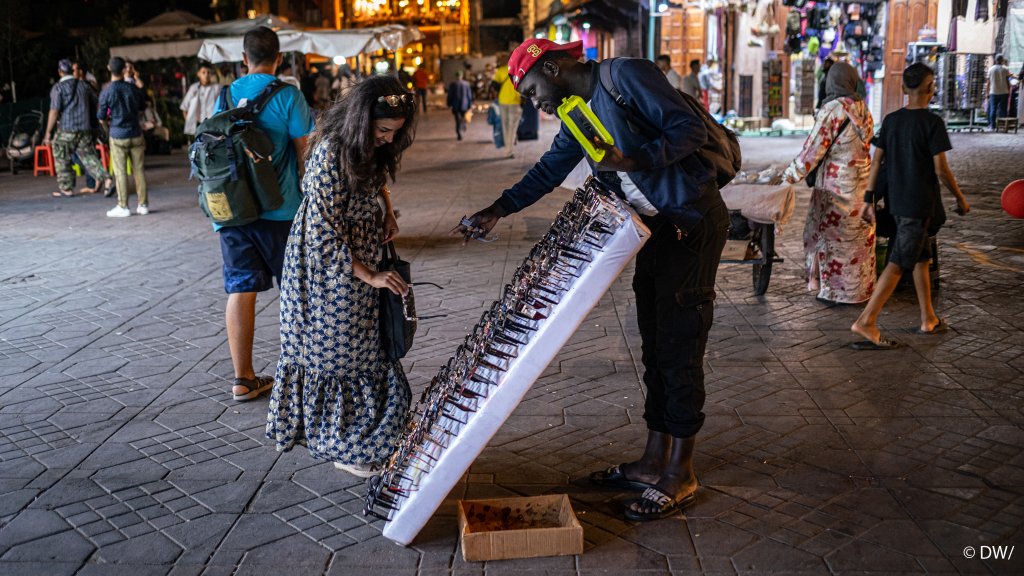
Making a living in Marrakesh
The Senegalese community, which is the largest among sub-Saharan migrants and still growing, is well organized, especially in urban centers like touristy Marrakesh. Here, it is easy to join the street trade as a first job – like this Senegalese salesman on the famous Jemaa el-Fnaa Square.
Solidarity among migrants
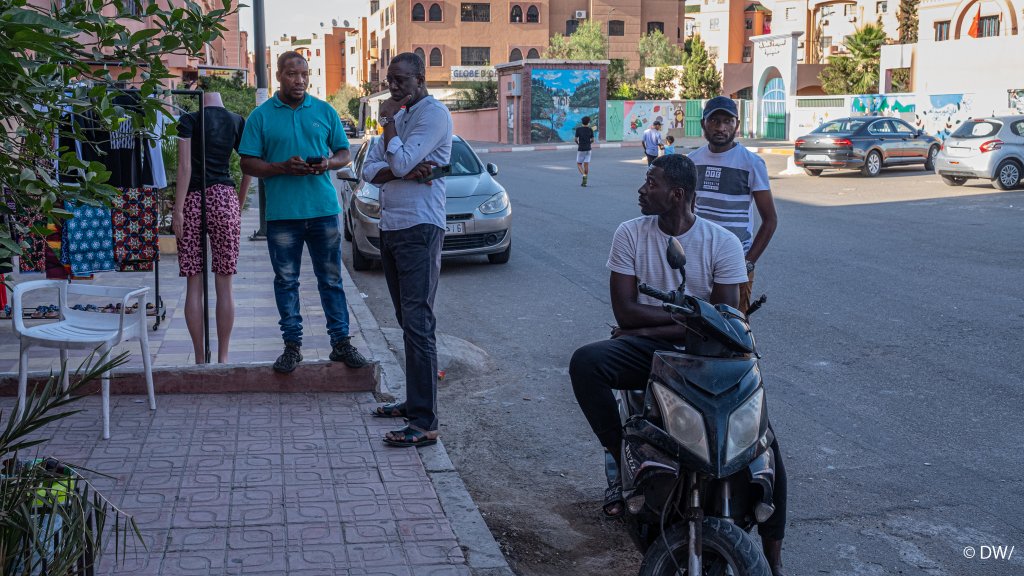
Babacar Dieye, President of the Association of Senegalese in Morocco (ARSEREM), talking to other members in the Dar Sahada district of Marrakesh. The association and religious networks help members find housing, understand administrative procedures and access essential services. ARSEREM has 3,000 members. The Mouridiyya Islamic Sufi Brotherhood has 500 members in Marrakesh alone.
Still dreaming of Europe
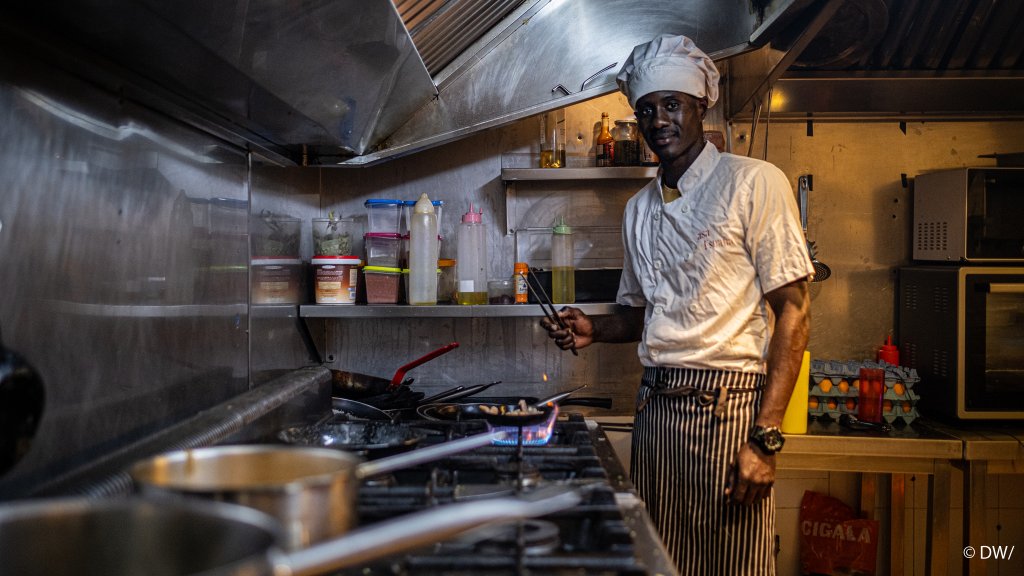
After working hard in many underpaid jobs across Morocco, Omar Baye found employment as a chef in a restaurant in Agadir. "I didn't come to Morocco to stay. I tried in vain to reach Spain [irregularly by boat] for three years," he said. Although he is now a documented immigrant and has started a family, he has not given up on his dream of moving to Europe.
The perks of speaking French
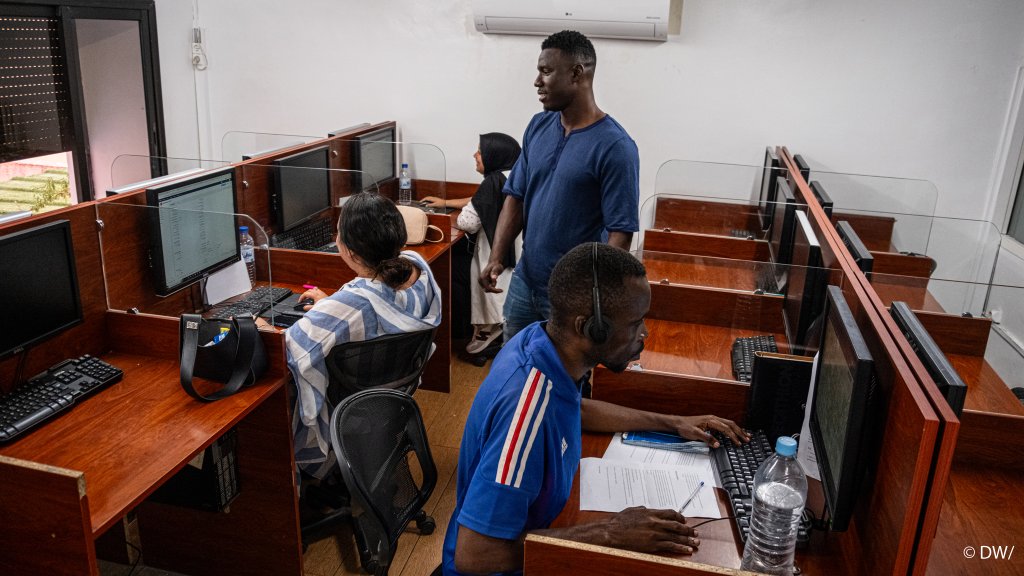
For years, Babacar Diomandé (standing) has worked in a call centre in Marrakesh. Now, he leads a small team for a trading company. Thousands of migrants work in call centers for a monthly salary of up to €55. Companies mainly deal with the French market, making it increasingly difficult to hire Moroccans, who have turned away from the language introduced during the period of French colonial rule.
Routine racism
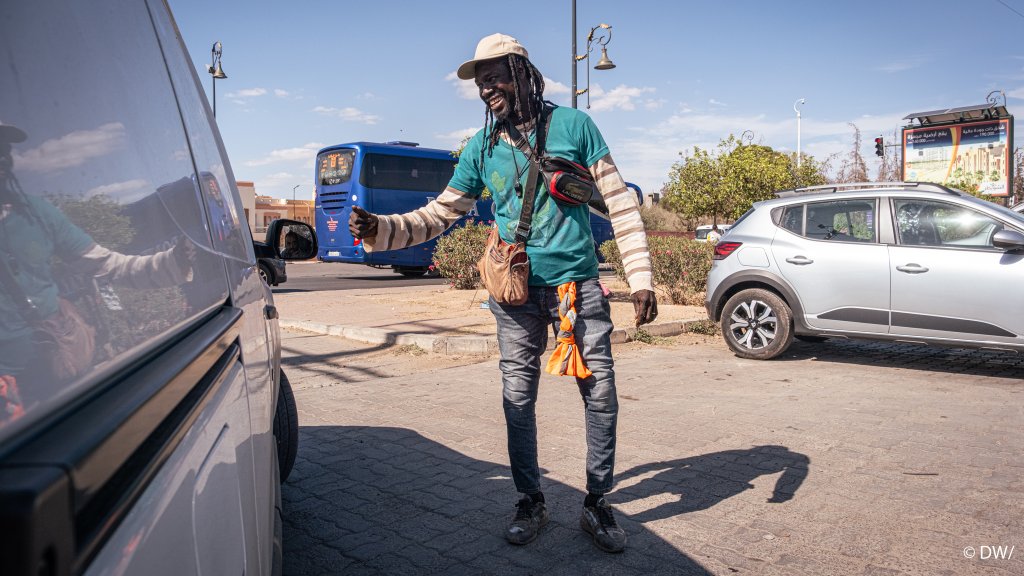
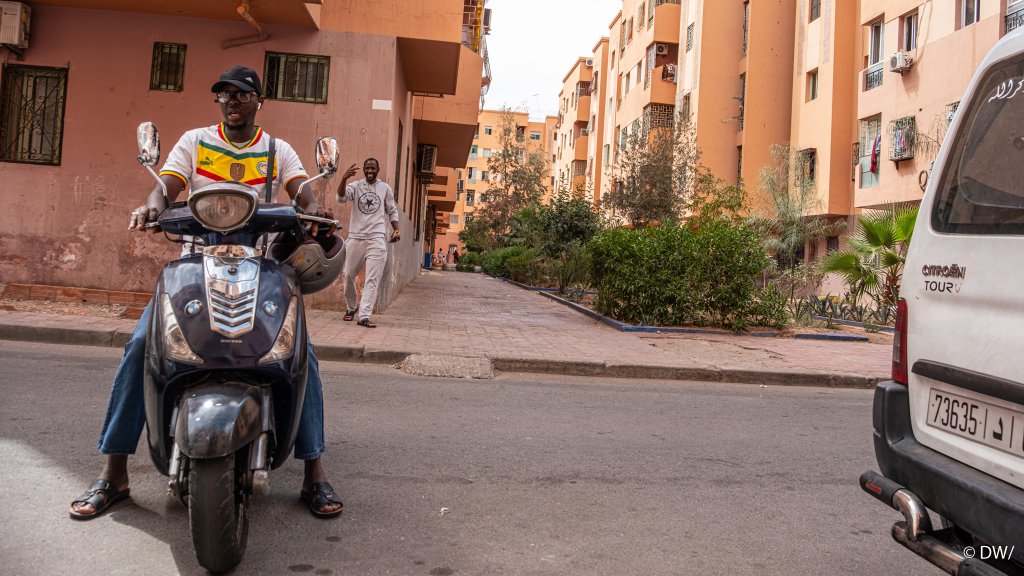
Mohamed Cheikh runs a parking lot on the outskirts of Marrakesh. He obtained a residency permit early because he married a Moroccan woman. He says that the community still does not accept mixed marriages and such marriages must often remain secret. Cheikh has a good relationship with his customers but still experiences many forms of racism.
Social tensions and violence
Yahya Aidara opened a restaurant and a business in Marrakesh importing products from Senegal. He has many Moroccan friends today, but he "had so many disputes with sellers in the past," he says. Morocco has a 13% unemployment rate. 30% of Moroccans aged under 24 have no work. Where competition is fierce, tensions between the local population and migrants sometimes lead to violence.
Encouraging integration
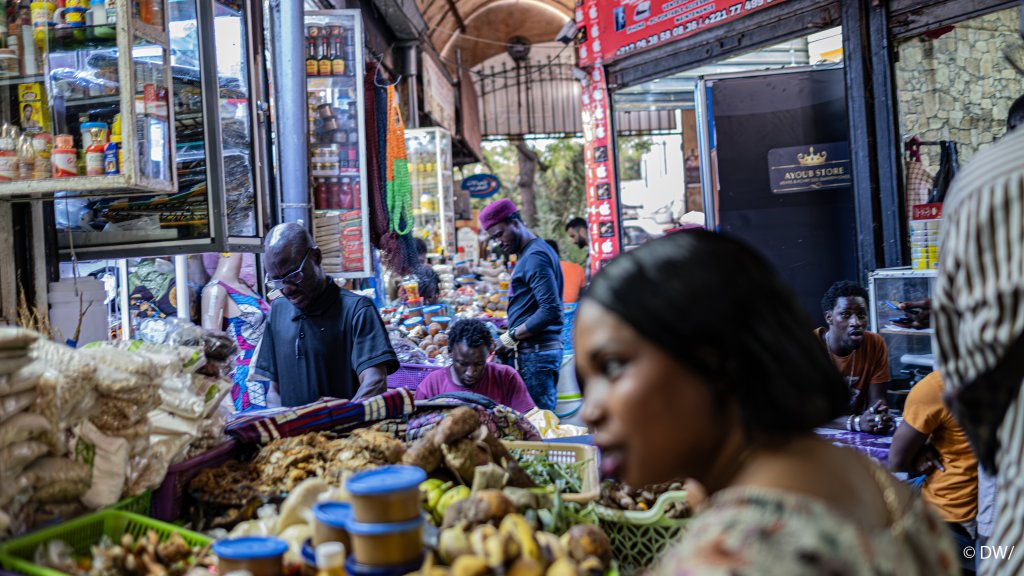
An area of Casablanca’s Medina market is nicknamed "marché sénégalais" because of its many Senegalese traders. The increase of migrants settling in Morocco pushed Rabat to rethink its integration strategies. Since 2014, two regularization campaigns allowed more than 50,000 foreigners to obtain residency permits. In 2018, the African Union named Morocco the 'African champion of migration'.
Migrants need more support
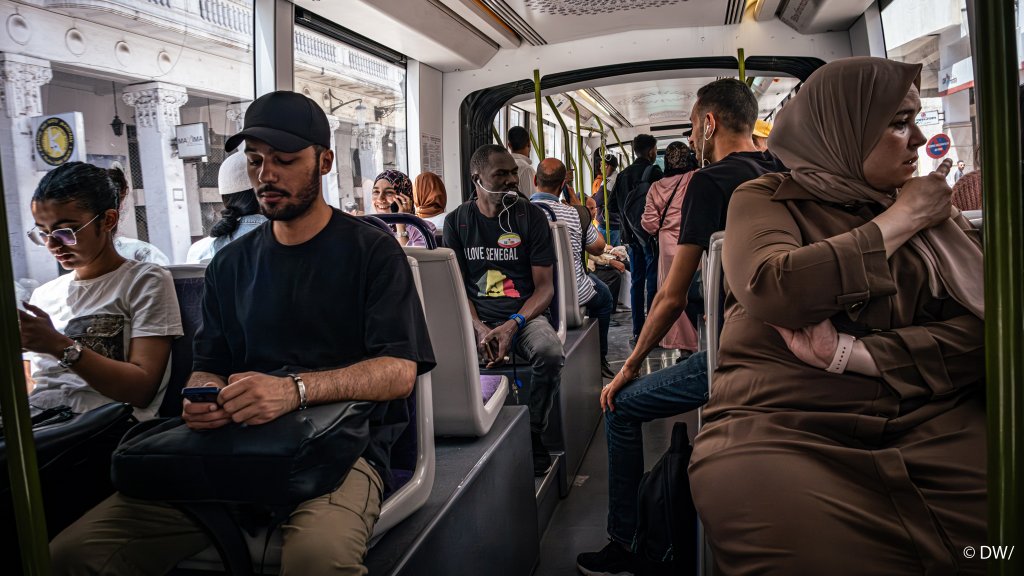
A young Senegalese (center) listening to music on the tramway in Casablanca. Between 2014 and 2022, the EU allocated €2.1 billion in cooperation funds to Morocco to strengthen its border and manage migration. However, the country's legal framework for immigration is still based on a 2003 anti-terrorism law and lacks funds for integration policies.
Report/images: Marco Simoncelli/David Lemmi
First published: August 28, 2023
Copyright DW - All rights reserved
DW is not responsible for the content of external websites
Source: dw.com