
Sea-Watch's SAR ship Aurora has been impounded for the next 20 days by Italian authorities.
Berlin-based humanitarian organization Sea-Watch slammed Italian authorities for grounding its Aurora sea rescue ship after a 37-hour standoff with coordination officials that "endangered the lives" of crew and migrants aboard.
On Friday (August 18), the Aurora rescued 72 people in distress in the Central Mediterranean. Sea-Watch said Italian authorities repeatedly denied them permission to disembark in the nearest port of Lampedusa, Italy.
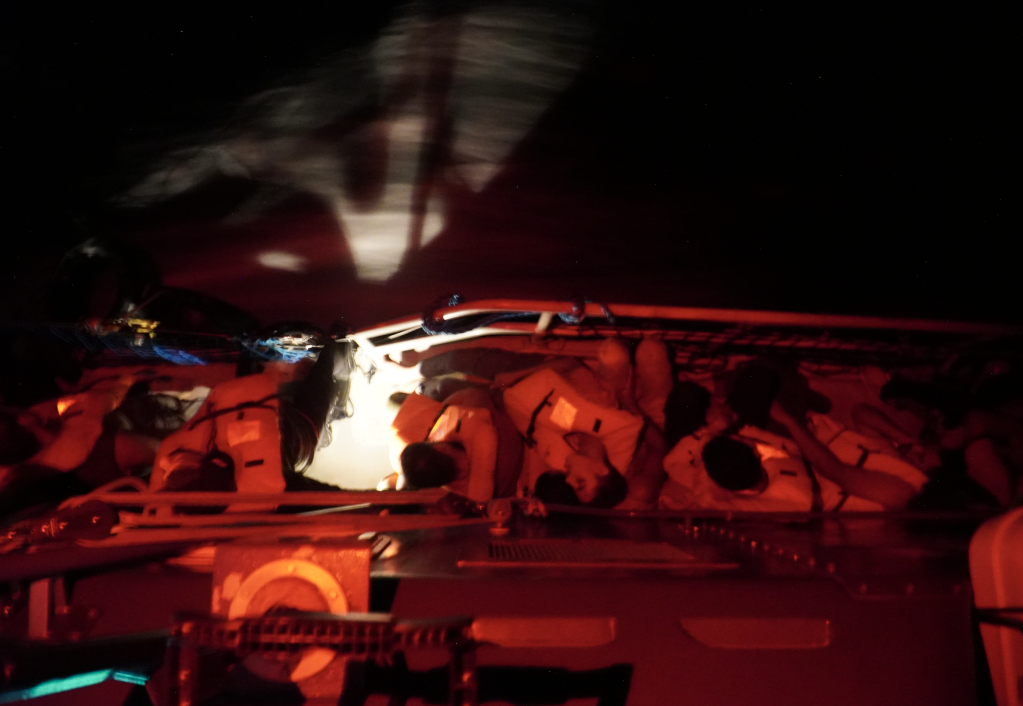
Instead, the vessel was redirected to Trapani, located four times farther away. After 40 hours of waiting, the Aurora was finally allowed to disembark in Lampedusa, where it was subsequently impounded by Italian authorities.
Based on the Italian government decree on sea rescue, the Aurora will be impounded for 20 days and its crew fined between €2,500 and €10,000.
In June, Italian authorities impounded the Aurora under similar conditions: the vessel disembarked at Lampedusa after being directed to a port further away.
Read more: Another Mediterranean migrant rescue ship detained in Italy
Cruel political game at sea
Sea-Watch spokesperson Giulia Messmer recounted the harrowing 37-hour standoff to InfoMigrants: Italian authorities repeatedly directed the Aurora to disembark at ports as far away as Tunisia, she said, while the ship ran dangerously low on drinking water and fuel and health conditions of passengers aboard worsened.
Rescue operations started on August 18 under a scorching sun, with temperatures soaring to 46 degrees Celsius. The 72 rescued people were at increasing risk of dehydration, while one had already fallen unconscious due to the extreme heat.
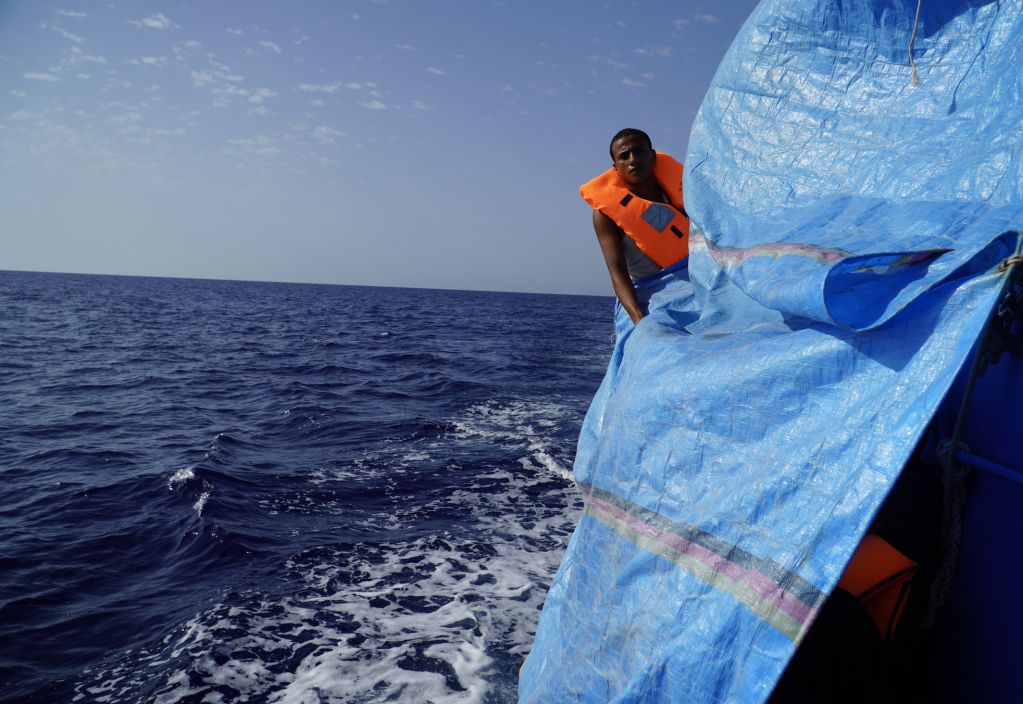
"The Italian authorities unnecessarily endangered our guests and our crew by forcing us to stay for a total of 37 hours in the Central Mediterranean," said Messmer.
Despite this, even a medical evacuation was denied. The Italian authorities insisted the Aurora head to Trapani, denying permission to disembark in Lampedusa, which was much closer.
According to international sea conventions, the nearest suitable port must be assigned for the disembarkation of persons rescued at sea.
However, Lampedusa, which is a common port of entry for people crossing the Mediterranean to enter Europe, was explicitly ruled out by the rescue coordination center.
“It is very clear that Italy and the European Union are hindering civil rescue efforts at sea. They are playing a very cruel political game,” said Messmer.
After the Aurora crew repeatedly stated that Trapani would be impossible to reach, the Aurora was directed to request permission to disembark from Tunisian authorities.
“Sea-Watch emphasizes the violation of international law by disembarking rescued persons in Tunisia as the country cannot be recognized as a Place of Safety,” the humanitarian agency stated in a press release.
Read more: Why is the Tunisian president going after sub-Saharan migrants?
Most perilous crossing in the world
The Mediterranean Sea is regarded as the most dangerous sea crossing in the world. According to estimates by the International Organization for Migration, in this year alone, more than 2,200 drowned along the route.
The United Nations Children’s Fund (UNICEF) estimates that about nearly 300 children -- or about 11 children every week -- have died this year attempting the crossing.
Controversial law
In January, Italy passed a decree penalizing rescue operations carried out by humanitarian organizations such as Sea-Watch. The law mandates ships that rescued migrants from a boat in the Mediterranean to sail to the port assigned to them by Italian authorities without carrying out further rescue operations.
Critics say the legislation violates international sea rescue laws and increases the risk of deaths in the already treacherous waters of the Central Mediterranean. In July, five organizations filed a complaint with the European Commission, saying the decree puts lives at risk.
The organizations included Doctors Without Borders (MSF), SOS Humanity and EMERGENCY, which are involved in search and rescue efforts in the Mediterranean. Others included the Association for Juridical Studies on Immigration (ASGI) and Oxfam Italia.
Aside from the Aurora, other NGO ships have been detained in Italy for carrying out rescue operations, including the Louise Michel, the SEA-EYE 4 and MARE*GO, and the Geo Barents vessel operated by MSF.
Read more: Italy's new sea rescue law: NGOs file complaint with EU Commission