
Tunisia and Libya have announced that they would share the responsibility for hundreds of migrants stuck at the border between the two countries. The announcement followed a series of high level meetings on Wednesday between the two country's Interior Ministers alongside large delegations.
Tunisia's Interior Ministry spokesperson Faker Bouzghaya told the French news agency Agence France Presse (AFP) on Thursday (August 10) that Tunisia would "take charge of a group of 76 men, 42 women and eight children" who were stranded in the volatile border region.
The government official added that the group was to be taken to reception centers in the towns of Tatouine and Medenine, where they reportedly would be provided with healthcare and psychological aid.
Meanwhile, the Libyan Interior Ministry announced that it would take the remaining 150 - 200 migrants. A spokesperson for the UN Migration Agency IOM said that those looked after by the Libyan authorities would not be taken to detention centers in the country but instead to places where the IOM and Red Crescent operate.
The Libyan Interior Ministry issued a statement following the agreement, saying they hoped that this would "put an end to the crisis of irregular migrants stranded in the border area," reported AFP.
Also read: Libya, more migrants found dead at border region
Contradictory accounts over border events
Since mid-July, humanitarian organizations and UN agencies have been reporting that hundreds of migrants were found at Tunisia's borders with its neighbors Algeria and Libya.
The organization Human Rights Watch believes that at least 1,200 Black Africans were "expelled or forcibly transferred by Tunisian security forces" to these border regions.
Tunisian authorities have denied bussing hundreds of migrants to these areas after allegedly rounding them up in cities across Tunisia. However, eyewitness accounts, journalists and humanitarian organizations have provided evidence to the contrary.
Also read: Migrants between life and death in the Tunisian-Libyan desert
Joint patrols in no-go area
Both countries said they would launch joint patrols in the border area to avert similar scenarios in the future. These joint patrols would also be designed to "secure the border," reported AFP.
However, earlier this week, a Libyan border guard had explained that it was difficult to patrol the area and find migrants who might be stranded in the desert, since there were only a few roads to cover hundreds of kilometers of land in a sparsely populated area where militias are known to operate.
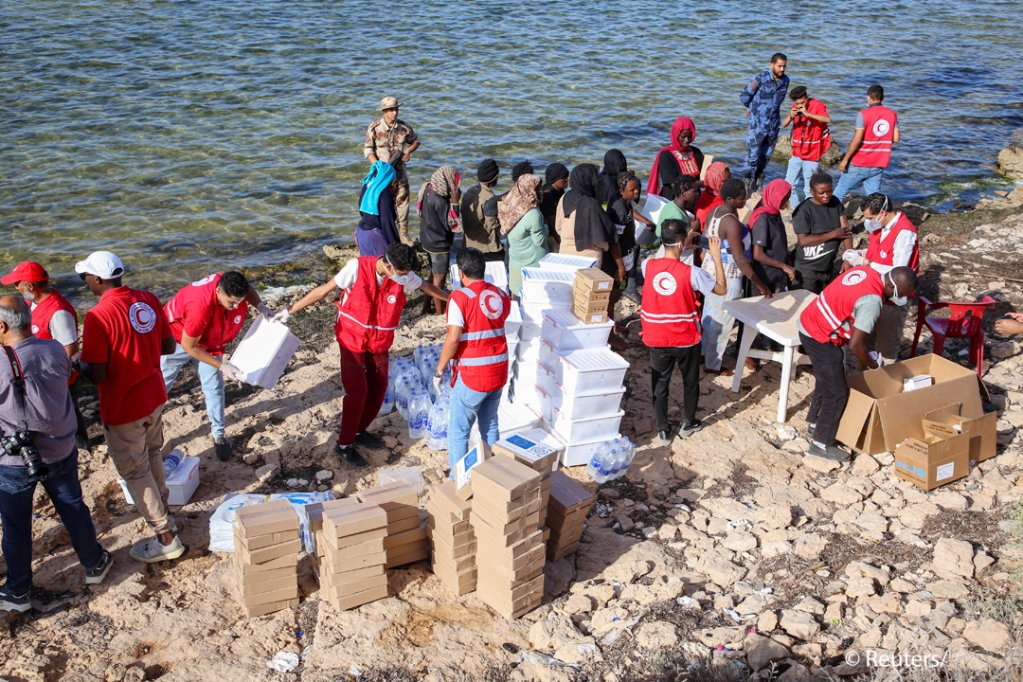
Tunisian Red Crescent helps 800 migrants
The Tunisian Red Crescent confirmed on July 12 that they had offered help to around 630 Black African migrants who were found around the Tunisian-Libyan border, and a further 200 on the Tunisian-Algerian border.
AFP reported that at least a further 350 migrants were stranded in the Tunisian-Libya border region at the beginning of August.
At least 27 migrants have been found dead in the region since the beginning of July, according to Libyan border guards. This account was backed up by a Libyan migrant rights organization working in the area.
A further 73 migrants, reports AFP, are still missing.
Also read: EU-Tunisia deal, encouraging the people smugglers?
Racial tensions throughout the year
Racial tensions flared up in Tunisia once more at the beginning of July after a Tunisian man was killed following a fight between Tunisians and Black African migrants.
This was not the first casualty resulting from tension, fights and attacks between the two groups.
On February 21, Tunisian President Kais Saied made a series of racist remarks to the National Security Council in which he blamed "hordes of" Black African migrants in Tunisia for being at the root of the country's economic and security issues, "with all the violence, crime and unacceptable practices that entails."
Tens of Black African migrants have recounted experiences of being beaten, abused, thrown out of their houses and jobs since then, as documented by organizations like Amnesty International.
At least one Cameroonian migrant has also died in clashes between locals and migrants.
Also read: Sub-Saharan Africans flee violence in Tunisia
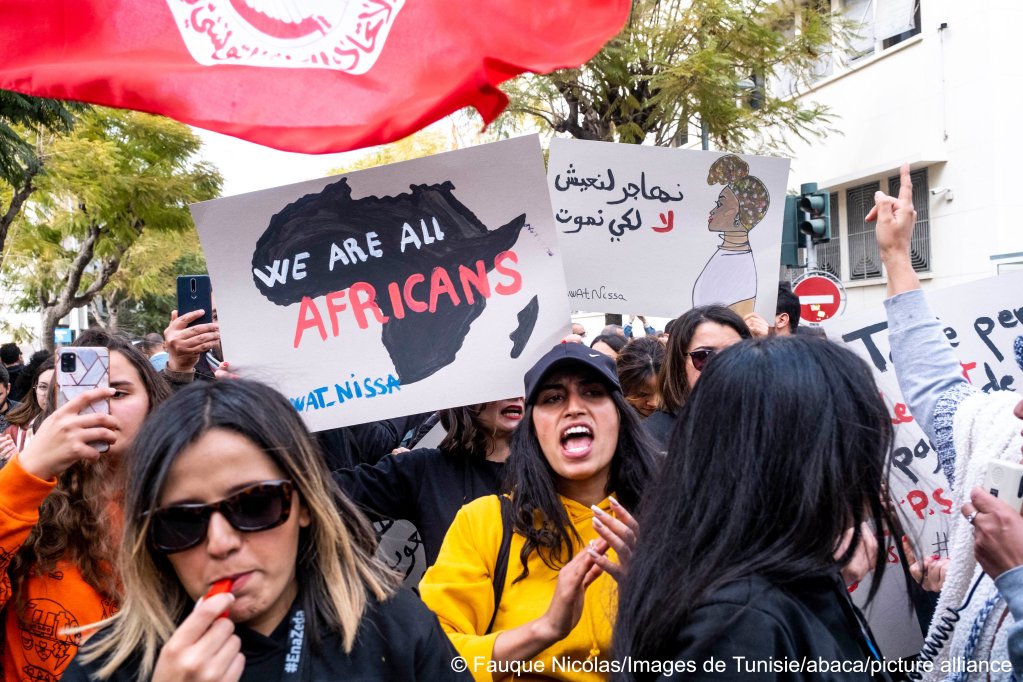
'Gripped by fear'
Heba Morayef, Amnesty's Director for the Middle East and North Africa, said that in the light of Saied's incendiary comments, "the community of Black African migrants in Tunisia is now gripped by fear of assault or being arbitrarily arrested and summarily deported."
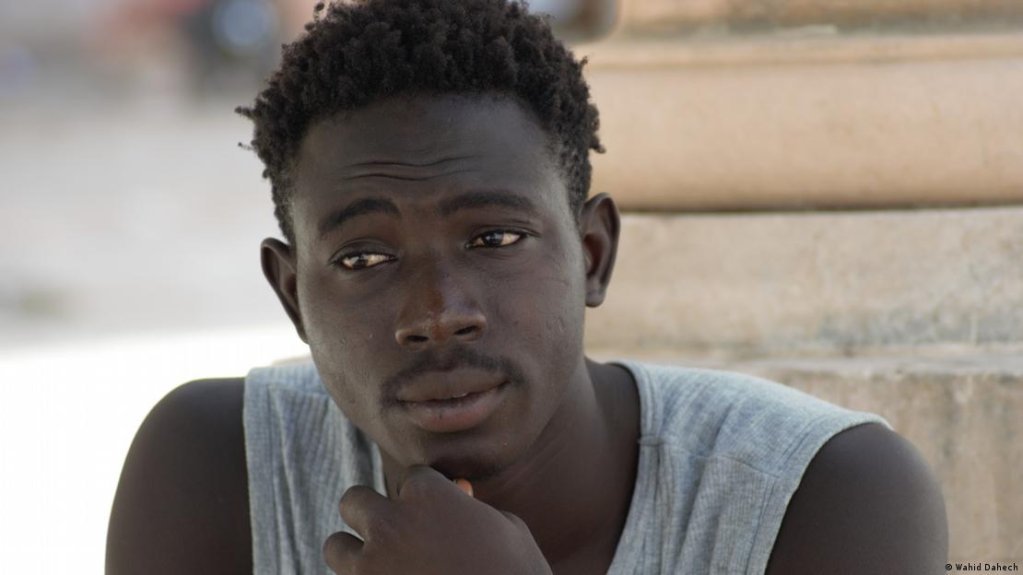
Lamine Mane from Gambia told DW that he had been sleeping on the main square in the southern port city of Sfax for days in July -- out of fear.
Others have taken the anti-migrant sentiments in Tunisia as reason to expedite their departure from Tunisia, attempting the dangerous sea crossing to Italy after losing their jobs and livelihoods in Tunisia.
Since the beginning of the year to August 10, more than 94,000 migrants already arrived via small boats on Italy's shores, with the majority setting off from Tunisia, overtaking Libya as a primary country of departure towards Italy.
A large proportion of the migrant arrivals in Italy are made up of sub-Saharan African migrants; according to Italian authorities, nationals from Guinea and Ivory Coast account for more than 23,000 of those arrivals so far this year.
Meanwhile, Tunisian authorities in late July said that they had recovered at least 901 bodies from the sea following failed attempts to reach Italy by small boat. The IOM's Missing Migrants project, however, says more than 1,800 people have now died attempting to cross the central Mediterranean route this year.
The route has been described as the world's deadliest by the UN.
With AFP and AP