
According to Libyan border guards, the bodies of at least 27 migrants have been found at the Tunisian-Libyan border in recent days. One woman, who said she had been pushed out to the border by Tunisia, told her story to Reuters.
Human Rights activists in Libya have confirmed the number of dead bodies cited by Libyan border guards, reported the German news agency dpa. Libyan media meanwhile reported that children were also among the dead, wrote dpa.
Their exact causes of death are unknown, however, temperatures in this area can exceed 40 degrees Celsius, and many migrants in this situation report having to travel for days with little or no food, water or shelter.
On Wednesday (August 9) the National Human Rights Committee in Libya accused Tunisian authorities of deliberately abandoning people in the desert area as hundreds of sub-Saharan migrants reported in recent weeks that they had also been taken to the desert in the same manner.
Concern over new trend
Human Rights Watch have meanwhile referred to this practise of pushing migrants into this remote area as a form of "collective expulsion." Last month, the UN Migration Agency IOM and the UN Refugee Agency UNHCR have both expressed "deep concern" for the safety of hundreds of migrants, refugees and asylum seekers in Tunisia.
The Tunisian government, however, categorically denies engaging in such practices. Tunisian Interior Ministry spokesperson Faker Bouzgaya told Reuters that "Tunisia rejects all accusations of expelling African immigrants."
"People who meet the conditions for legal entry into Tunisia will be allowed in. Tunisia is not responsible for what happens outside its borders," Bouzgaya added.
Also read: More migrants' bodies found near Tunisia border
Abandoned in the middle of nowhere
"It was just a horrible feeling to walk in the middle of nowhere," 26-year-old Sudanese nurse Tafaul Omar told the Reuters news agency.
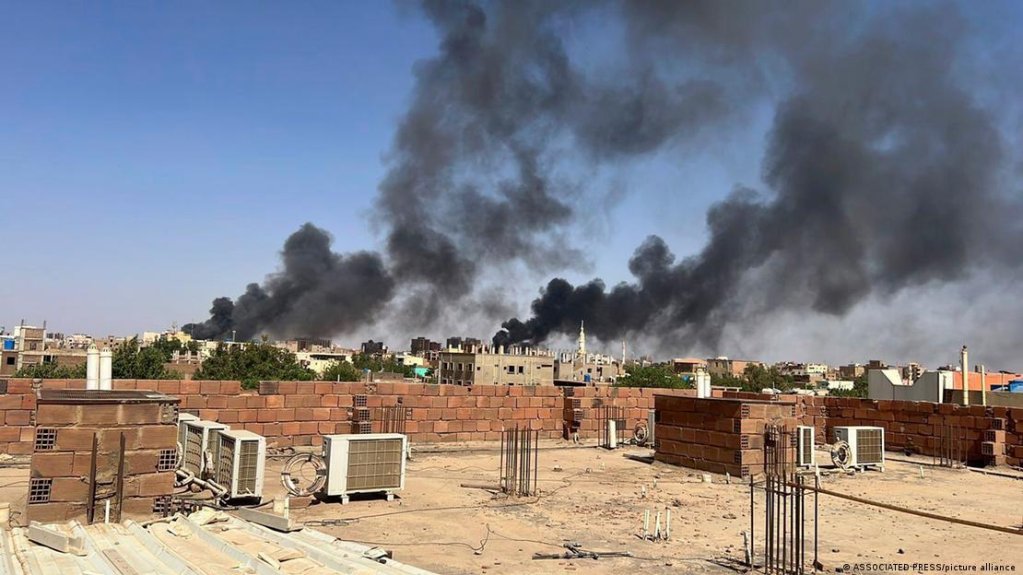
Omar and her husband Yaseen Adam were forced to flee their home in Khartoum in April after fighting broke out in the city and her father was killed in shellfire. They had to travel through Chad and Algeria before reaching Tunisia -- all while Omar was pregnant.
Omar said that in recent weeks, she had been living with her husband in southern Tunisia where he had been working as a laborer to save up money to make the trip to Libya.
She claims that last week, police came and arrested them alongside several other migrants, and drove them to the border where the men in the group reportedly were beaten and had their phones taken from them before being abandoned there.
Reuters has not been able to independently verify their accounts.
Also read: Migrants between life and death in Libyan desert
Worried for her unborn child
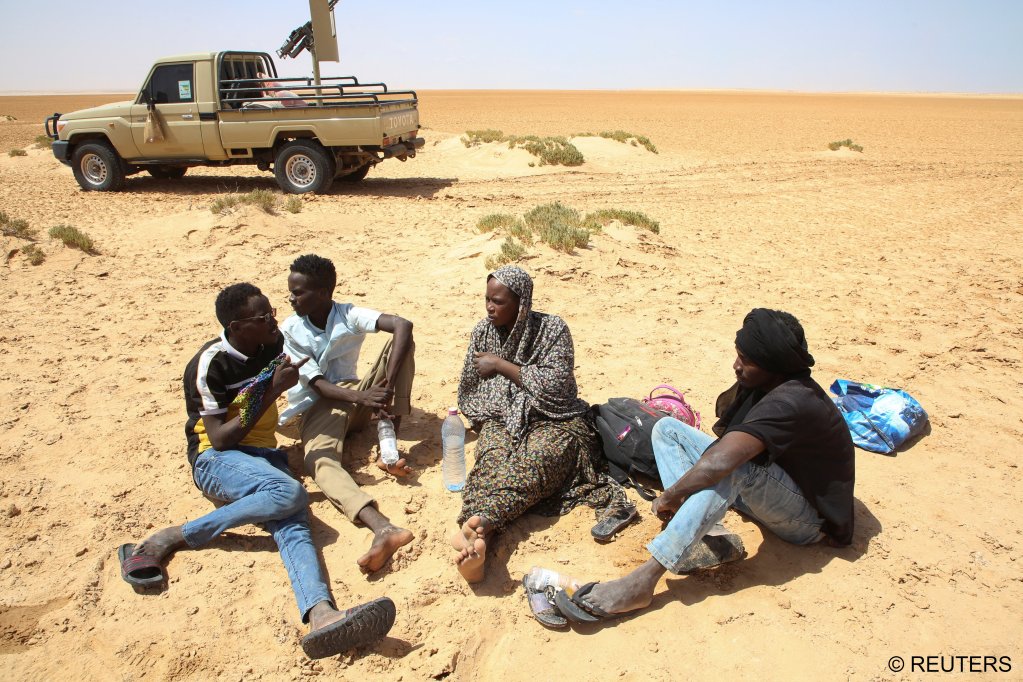
Omar and her husband then found themselves in the middle of nowhere alongside other men and women from Sudan, Senegal, Ghana and Mali. The group had to walk around four hours in the desert before they came across a Libyan border patrol.
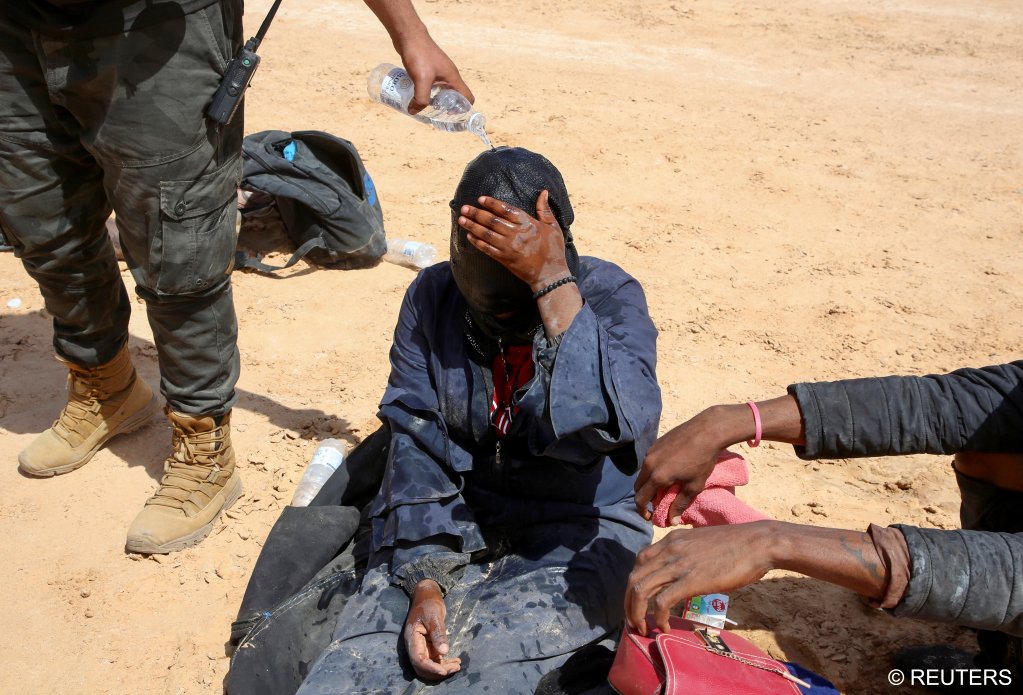
Reuters reported that the group was found "lying on the ground resting… their heads covered with scarves against the sun and a strong sand-filled wind" and their lips were visibly "chapped and ashen."
The news agency said that Omar looked exhausted and that she feared the effects the whole ordeal could have on her unborn baby. She was weeping, as she shared her account of events.
The Libyan patrol told Reuters they would transfer Omar's group to a government facility in Alassa, where the IOM is also operating.
Also read: Sub-Saharan Africans flee violence in Tunisia
'I just want to return'
Another couple in the same group from Ghana meanwhile told Reuters that they were losing hope that their fortunes might yet improve.
"I just want to return to Ghana," said 23-year-old Kufi Mousa. "They expelled me and my wife and let us walk in the desert facing terrible conditions." His 20-year-old wife Blessing David also said she was pregnant.
Like Omar, the couple in their early twenties had also traveled through Algeria to reach Tunisia three months ago. They were hoping to travel on to Europe but had not made enough money to do so when they were reportedly remanded by Tunisian authorities and taken to the desert.
Also read: Tunisia's oppressive course threatens human rights, Amnesty warns
A vast, militarized zone
Giacomo Terenzi from the IOM in Libya told Reuters that the situation at the border is "very complicated."
"It seems there are around 350 migrants still stranded in Ras Ijder [a coastal area about 35 kilometers from Alasaa]." This is also near the area where Omar and the group she was with were found, Terenzi explained.
Most of the border lands between Tunisia and Libya are in fact classed as a no-go zone. The region is militarized, as armed militias are known to operate there. From Tunisia, there are not many actual roads leading to the border -- just kilometers of sand and wilderness.
One Libyan border guard named Ali Wali told Al Jazeera that their teams find it difficult to locate people in the area, which is one of the reasons why help might sometimes come too late.
"It's a wide desert, and groups of migrants walk in all directions."
Also read: EU-Tunisia deal, encouraging the people smugglers
Danger in every direction
Being discovered by Libyan border guards in the desert region, however, is not necessarily good news either. The situation for migrants in Libya is not better than in Tunisia.
Many of them are taken to detention centers run by militias, where they are subjected to violence, torture, extortion and in some cases slavery and sexual violence.
Migrants who have traveled through Libya also report repeatedly being exposed to detention and extortion cycles before they are finally able to get on boats to Europe -- which they may never reach.
The IOM's Terenzi meanwhile told Reuters that Omar's group would not be sent to one of those infamous detention centers.
This article was largely based on a Reuters feature by Ahmed Elumami, with additional reporting by Latifa Guesmi and writing by Angus McDowall.
With dpa