
The UK government is facing delays to its plans to move migrants and asylum seekers in the UK out of hotel accommodation and in to alternatives, like a floating barge and former airforce bases.
Concerns about fire safety have reportedly led to a delay in moving migrants and asylum seekers in the UK on to the floating barge, the Bibby Stockholm, now moored in Portland Harbor in Dorset.
The Assistant General Secretary of the Fire Brigades Union, a trade union representing firefighters in the UK, Ben Selby, released a statement late on Monday (August 1), in which he said: "unlike this government, fire does not descriminate. Forcing asylum seekers into accommodation that has not been properly fire risk assessed is a reckless approach to the safety and well-being of both vulnerable refugees and firefighters."
In his statement posted on Facebook, Selby went on to say that the government’s declaration that they felt the barge to be a "cheaper option for housing asylum seekers," was a "damning indictment of the prevailing attitude that saving money is the highest priority, with people’s lives treated as collateral damage."
Some campaigners worry that, if not properly fire-tested, the barge could become a "floating Grenfell," (a reference to a public housing tower block which caught fire in 2017 in London, resulting in 72 people dying and more than 70 injured.) Public underfunding and a lack of proper safety precautions were later cited as part of the reasons the fire took hold in the first place.
FBU urges government to rethink plans
Selby said that everyone has "the right to live in safe accommodation" and that the FBU backs "calls urging these plans are abandoned immediately." On Tuesday, the government's transport minister Richard Holden went on Sky News to say that the government was running "final checks at the moment."
When asked whether these final checks might be addressing any fire safety concerns raised by the FBU, Holden repeated again, "it’s going through final checks at the moment. With anything you would want them to be properly checked out." The minister added that he was unable "to put a timeframe on it," about when the barge would finally be ready, and safe, for asylums seekers to move in.
Also read: UK Illegal Migration bill to become law
Initially the government had promised that the barge would be ready to hold asylum seekers in early summer. Pushed by reporters at Sky News about how long the actual time frame might be, Holden said, "I cannot comment on the ongoing process of checks and things that have to take place but it is my understanding [it is] in its final checks."
'Quasi-detention' on the Bibby Stockhholm
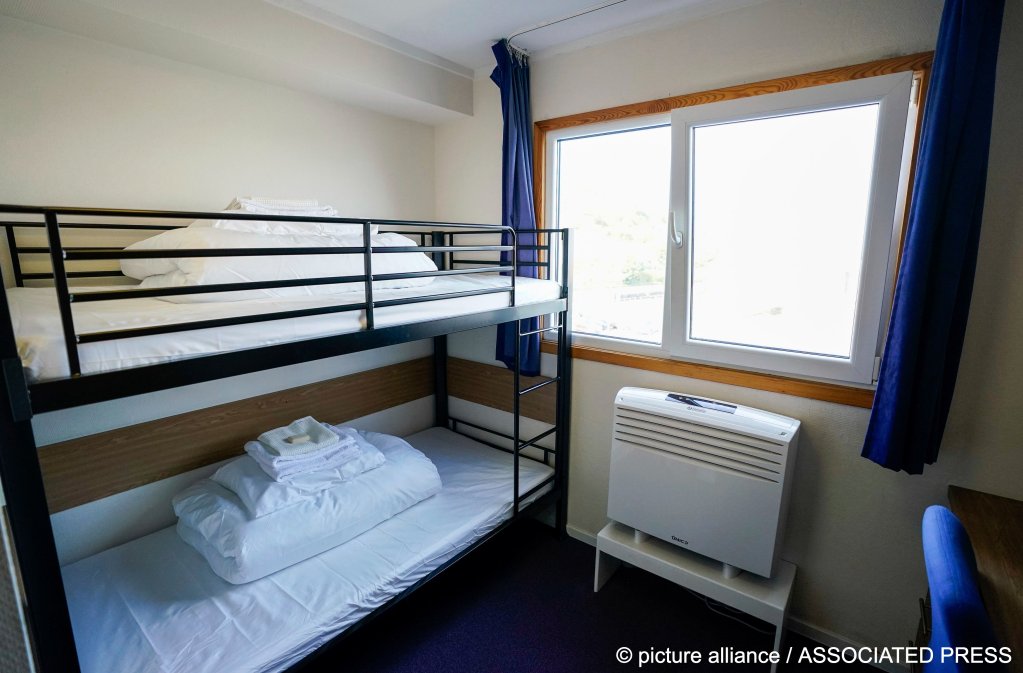
According to the Guardian newspaper, about 40 asylum seekers have so far received letters stating they will, when the barge is ready, be transferred to the Bibby Stockholm. The barge is intended to hold around 500 asylum seekers when full, in cabins with two bunk beds.
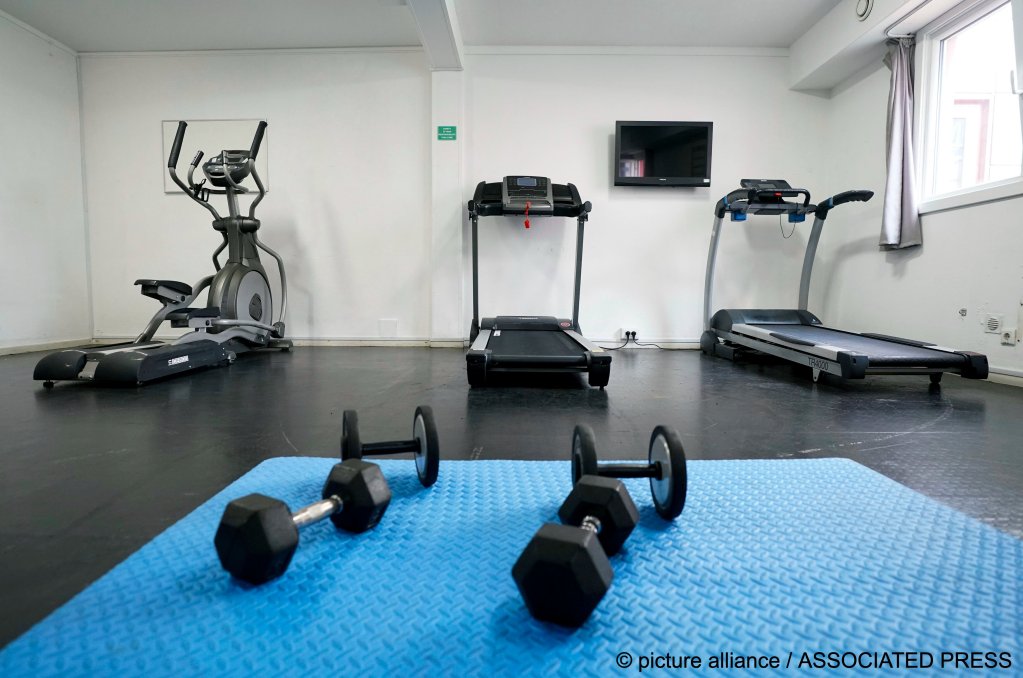
A recent press tour held by the government and reported in the Guardian, unveiled the refitting that the vessel underwent in order to hold the maximum number of asylum seekers. Guardian reporters said that the flat screen televisions left in each room from when the barge housed oil workers off Scotland would not be set up to work, with asylum seekers being encouraged instead to congregate in shared areas to watch TV rather staying in their rooms. The press tour showed how each room had a window to the outside world.
However, in an open letter to the company that owns the Bibby Stockholm, Bibby Marine, the UK’s Refugee Council and more than 50 organizations and campaigners, said that those on board would be effectively in a state of "quasi-detention."
Delays to accommodation on air bases
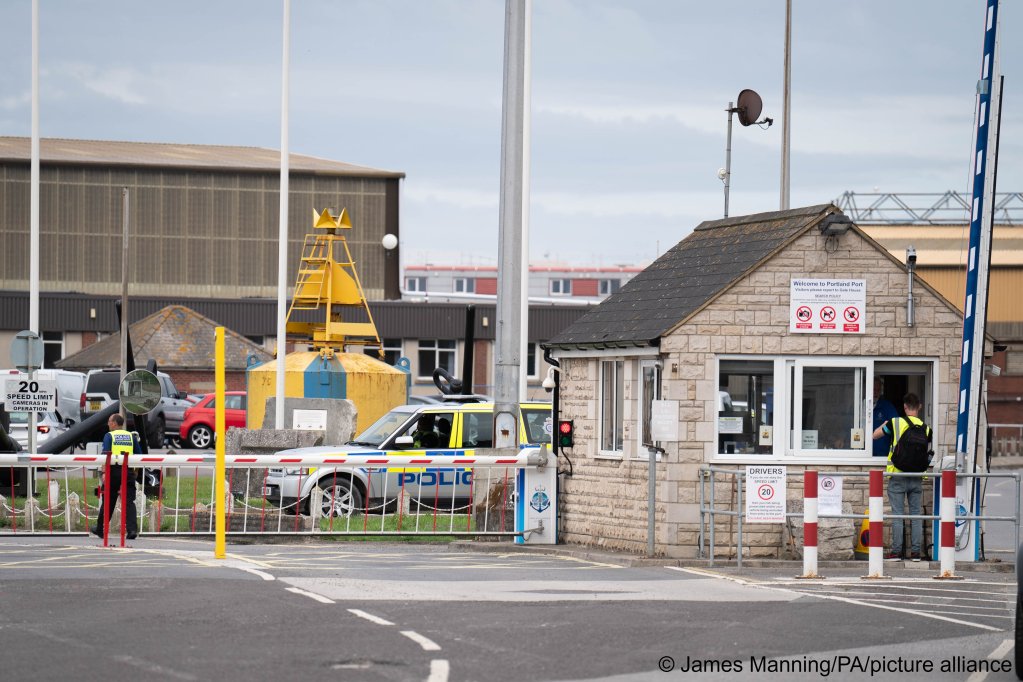
Portland Port is partly a military base and so security is high around the area. The port authorities have already said that asylum seekers staying on the barge "will not be free to move around the port." They confirmed to the campaigners that they will either be “kept on the Bibby Stockholm or in a secure compound adjacent to the barge.”
The letter went on to point out that getting from the port in to the nearest town would also be difficult due to its remote location, with few facilities in the surrounding area. Furthermore, asylum seekers on the barge will reportedly receive £9.10 per week (€10.80) which will not allow them to get very far away from the port.
Also read: Concerns raised over military barracks used to house migrants
Although there are bus shuttles for cruise ship passengers from Portland harbor into Weymouth it is not clear whether the shuttle will also operate for residents of the Bibby Stockholm. If they were to use the local bus services, which take between 30 and 40 minutes to go from Portland to Weymouth, then a pack of ten single trip tickets would cost £35 (€40.74) which would work out at £7 (about €8) for a return in a day. According to the website of the local bus company, a day ticket for the whole region on the buses costs £13 (€15.14). Walking the four plus miles in to Weymouth would take most people over an hour.
United in Anger
Residents in Dorset are also united in their anger about the barge, although for different reasons. Some denounce prison-like conditions, calling for those who have fled war and danger to be offered a better welcome in the UK, and others worry that a large group of young male migrants with nothing to do could be a danger to the local population, potentially increasing the crime rate in the area.
Both groups have taken to holding regular demonstrations around the site. One local resident, named as Heather, who joined her local branch of Stand up to Racism to protest when she heard the barge was coming to Portland, told the French news agency Agence France Presse (AFP) "There were people saying 'they're going to commit crimes, they're going to rape your children, your children won't be safe', I was really upset," she added. Another man felt it was the government that was using the topic of migration to "divide us."
Delays at air base in Scampton
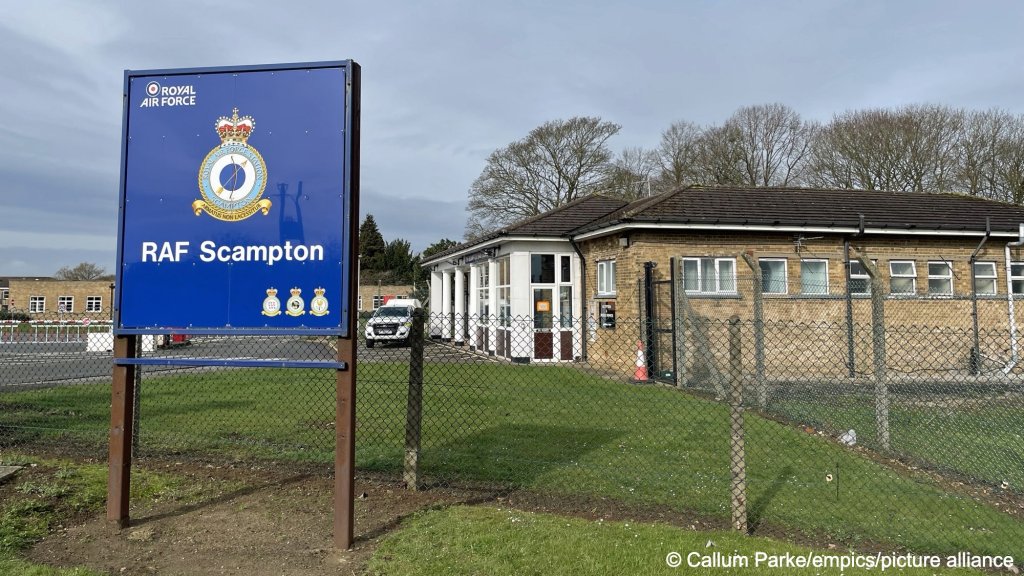
Delays also seem to have beset another of the British government’s new accommodation plans. Plans to move around 2,000 migrants on to a former Royal Air Force (RAF) base in Lincolnshire, RAF Scampton, have also been delayed, reported the news force for the British forces, Forces.net on August 1.
AFP reported the delays were because there were not enough qualified staff found to manage the water, gas and electricity on site. The plans appear to have been delayed until at least October, reported Forces.net, after the works experienced "setbacks in conducting surveys on the 14 buildings designated for migrant accommodation."
When pressed about the new timeline, a government spokesperson said "I can’t get into running commentary on expected timelines but eventually the site will accommodate almost 2,000 people."

TB cases detected at Essex site
The British newspaper The Times reported that the government is planning to move more migrants into another RAF base at Wethersfield in Essex, eastern England, "despite a number of positive results for turberculosis being detected at the site in Braintree, Essex," stated Forces.net.
The British government is still insisting that accommodation on these kinds of sites will provide a cheaper alternative to housing asylum seekers and migrants in temporary hotel accommodation, which it says costs around £6 million per day (around €7 million). However, even if eventually cheaper per head, the options listed by the government so far will fail to make much of a dent in the tens of thousands of asylum seekers currently housed in hotels.
Also read: Storm worsens around migrants housed on former military barracks
Opposition in Wethersfield
Wethersfield is set to house at least 1,700 adult male asylum seekers eventually, but many local residents have been opposed both to the housing of asylum seekers on military bases in quasi-detention and to the housing of them in their local rural area.
So far, according to the BBC, there are 46 asylum seekers at Wethersfield and four days ago, several people tested positive for TB. At the time the cases were reported, the government said that officials were busy testing whether the cases had developed into active TB. All migrants should have undergone initial health screening checks on arrival in Dover.
Sky news also reported that the government had been hoping to charter two further barges but these had to be sent back to the company that owns them because they were not given permission to dock at a port in the UK.
In the last seven days, up to July 31, just under 200 people have actually crossed the Channel and arrived in the UK, according to the government’s figures. However, that might be more to do with the recent bad weather, heavy rain and winds in the area than to increased controls on either side of the Channel.