
Women and young girls facing the threat of female genital mutilation (FGM) can apply for asylum in Germany and the EU on the basis of two different legal grounds. InfoMigrants spoke to the rights group Terre des Femmes to find out more.
The German minister for equality, Aminata Touré (Green Party), has called for Germany to fully recognize female genital mutilation (FGM) as grounds for asylum.
If the German government wants to implement the Istanbul Convention without reservation, she told the German paper Neue Osnabrücker Zeitung today, "the rights of refugee women and girls must now also be given greater consideration and gender-based violence must be recognized as grounds for asylum."

Touré also called for women and girls to be better informed about their rights.
"The mere fact that many of those affected are not fully aware of their rights or do not dare to openly address the issue can reduce their chances in the asylum process," the minister said, adding that staff at the Federal Office for Migration should be specially trained to be sensitive regarding the issue.
According to estimates, tens of thousands of women who have undergone FGM live in Germany, and these figures are on the rise. The women's rights organization Terre des Femmes (TDF) estimates there are now more than 100,000, with a further 17,700 girls currently at serious risk.
According to the United Nations Children's Fund (UNICEF), more than 200 million girls and women across the world have experienced FGM.
Also read: France: how do you apply for asylum based on female genital mutilation (FGM)?
How does the German law address FGM?
FGM includes all procedures involving the removal of the external female genitalia or other injury to the female genital organs for non-medical reasons. The harmful practice is often carried out on girls under the age of 18. FGM is not prescribed by any particular religion and has no health benefits, it can be the cause of life-long physical and psychological trauma.
Under German law, performing FGM is a criminal offense (section 226a of the Criminal Code) and carries a prison sentence of up to 15 years. Germany's Federal Ministry for Family Affairs, Senior Citizens, Women and Youth has developed a downloadable document that girls at risk can carry with their passport when traveling to their home country from Germany -- the Letter of protection against female genital mutilation.
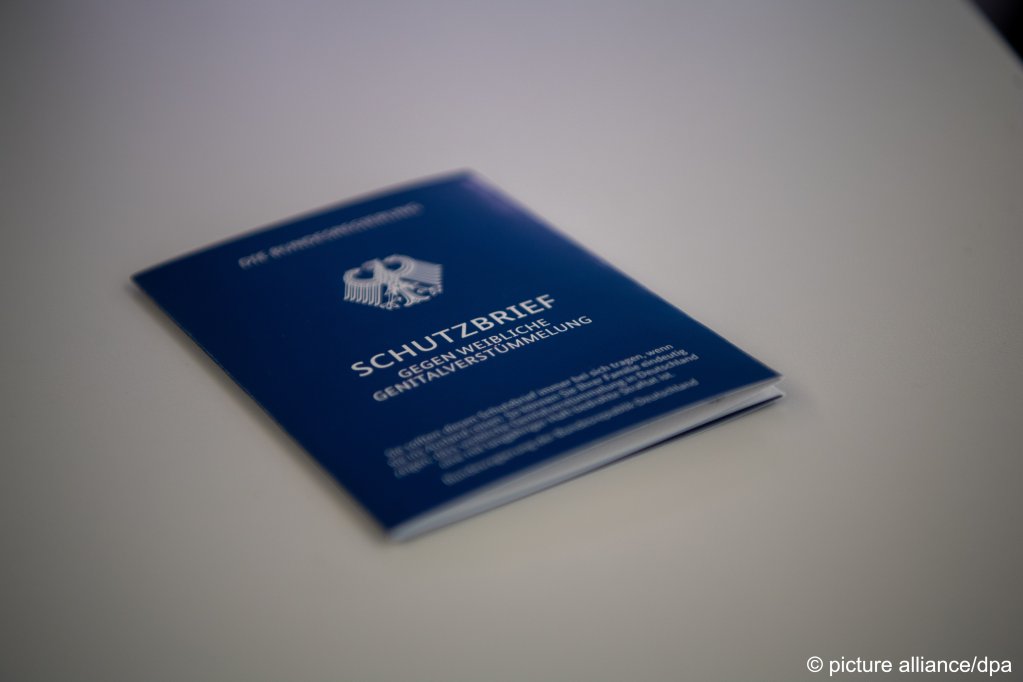
The document provides information on the criminal liability of FGM, including when carried out abroad. It seeks to protect women, girls and their families against FGM when they return to countries of origin during holiday periods, for example. The letter seeks to help families who may face social and family pressure in their countries of origin and serves to raise awareness about the practice in general.
However, FGM remains largely taboo, making it especially difficult for affected women and girls to receive asylum in Germany on these grounds, even they have theoretically been entitled to do so since 2013.
Wider protection in the EU
In 2013, the Common European Asylum System (CEAS) -- a legal regulation created to ensure uniform asylum jurisdiction within the EU, was expanded. Since then, an imminent risk of FGM or FGM that has already taken place has been a ground for granting asylum in Germany and all EU member states.
This change in German asylum law was preceded by the 2011 Istanbul Convention, a Council of Europe convention on preventing and combating violence against women and domestic violence.

The expansion allows victims and those at risk of FGM to apply for asylum in Germany and the EU on two different legal grounds:
- Asylum can be granted on the basis of gender-based persecution in the EU. As FGM is a gender-based type of persecution targeting women and girls and is particularly prevalent in certain regions and among certain ethnic groups, these factors must be taken into account during the asylum process. In relation to children, asylum may also be extended to parents whose daughters are at risk of FGM and are fleeing persecution for refusing to have the procedure performed.
- Asylum may be granted on the basis of a threat of torture or inhumane, degrading treatment, which includes FGM under international law.
Speaking to InfoMigrants, Lilith Dost, a policy specialist in TDF's department for female genital mutilation, explains that the situation can be complicated by the fact that often the persecution and threat of FGM often originates from one's own family and/or social community, meaning from non-state actors.
However, the German Asylum Act recognizes persecution by non-state actors if, for example, there is no law against FGM in the country of origin or if states are unwilling or unable to implement the laws.
Hurdles in the asylum process
The CEAS has followed the Istanbul Convention, which aims to protect women from violence. However, Dost notes that there are still a number of hurdles in the asylum process that prevent women affected by FGM from receiving adequate asylum protection in practice.
In many cases, the reality is that only the threat of FGM is recognized as grounds for asylum, but not FGM that has already taken place. Women who have already suffered FGM are often only granted a ban on deportation -- without consideration of the long-term consequences, says Dost.
The chances of obtaining asylum are higher if women who have already been subjected to FGM can prove that they have been subjected to type III FGM. This is known as infibulation ---where the vaginal opening is narrowed through the creation of a covering seal formed by cutting and repositioning the labia minora, or labia majora, sometimes through stitching. In these cases, there is a further risk of de- or refibulation, especially after childbirth or before marriage.
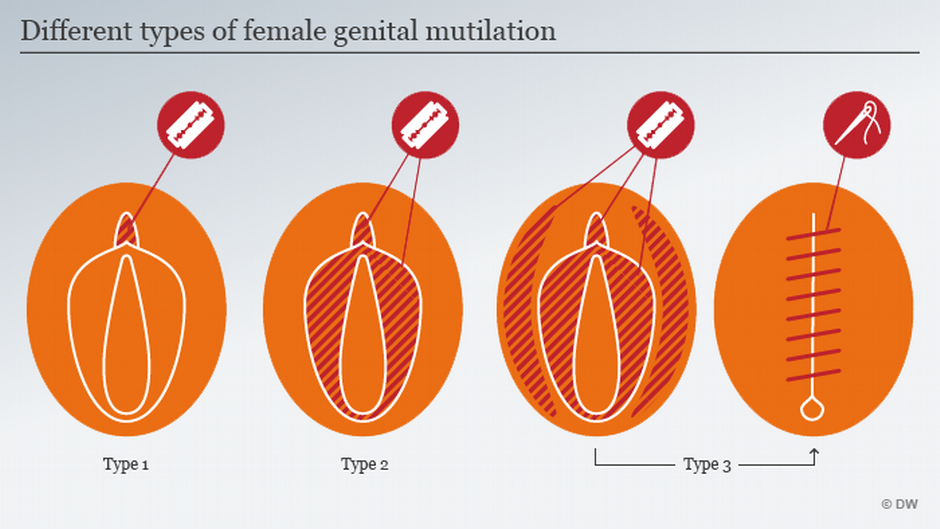
In 2020, the Federal Office for Migration and Refugees (BAMF) stated that in cases where the woman has be subjected to type I or type II FGM, "no further interventions are to be feared for the applicant in her home country", therefore she is not at risk of further gender-based persecution or inhumane, degrading treatment.
These distinctions can cause administrative issues, says Dost, as many asylum-seeking women who have suffered FGM do not know which type of mutilation was performed on them. They must provide the BAMF with a medical certificate within a few weeks proving that type III was performed on them. Dost notes that in addition to long waiting times, and often a lack of health insurance, they are confronted with insufficiently trained medical personnel.
She further points out that "since FGM is not part of basic medical and gynecological training, doctors are often unable to identify the exact type of mutilation, which can have fatal consequences for the women's asylum procedure".
In addition, Dost says that during the asylum procedure, FGM is "not sufficiently considered" by the BAMF. Although the BAMF intends to explicitly ask asylum seekers about existing or threatened FGM, FGM often goes unnoticed. Even when staff are aware that FGM is the norm in the asylum seekers' countries of origin, they do not sufficiently and repeatedly inquire whether the person has been affected.
Also read: Female genital mutilation feels 'like living in a dead body'
Lack of awareness about right to asylum on FGM grounds
Affected asylum seekers are often not aware that FGM they have suffered or are threatened with could justify a right to asylum and therefore do not mention it, says Dost. Due to the lack of interpreters, the issue can be lost in translation -- potentially with detrimental consequences for their asylum application. In addition, shame or insecurity on the part of the asylum seekers may also play a role, or the belief that FGM is accepted as 'normal', rather than a form of gender based violence.
In general, various criteria are taken into account by the BAMF while assessing each case with an emphasis on the risk of further mutilation in the asylum seeker's home country. These could include the applicant's age, her family's or husband's views on FGM, whether she has undergone reconstruction of the vulva, and how widespread FGM is in the region she comes from.
Dost explains that German courts will often refer to internal protection options within the applicant's home country and reject an asylum application, even though the country of origin is not in a position to offer sufficient protection to affected women and have neither condemned FGM nor taken active action against it.
Dost notes that one of the main issues surrounding FGM in the asylum context is "a lack of knowledge, both on the part of the women affected or at risk and on the part of the staff of the asylum authorities".
Best practices
TDF is demanding more special training for BAMF employees, to train them to explicitly inquire about the countries of origin and to deal sensitively with those affected. In addition, the organization is asking for asylum seekers who have left their home country because of the threat of FGM to be properly informed in their native language about their asylum rights.
"Women should also be told beforehand that they have the right to female hearers and interpreters, to ensure that affected persons feel safe to talk openly about their experiences with FGM," Dost told InfoMigrants.
The organization also emphasized that female interpreters must also receive special training so that they can provide asylum seekers with the best possible support. Dost notes that "if FGM is not mentioned until later in the asylum procedure, this should not have a negative impact on the asylum procedure, as it is a taboo subject for many women and it can be very difficult for them to talk about it."
Furthermore, TDF demands that countries in which FGM is widespread should no longer be classified as safe countries by the courts and that affected women should therefore not be forced to return to them. Women affected by FGM should have access to legal and psychological counseling and therapy, be housed away from people who pose a threat to them, and access to education and the labor market should be ensured.