
The UK government is considering to offer amnesty to migrants who have already arrived in the UK via the Channel as part of its efforts to pass the 'Illegal Migration Bill' into law, perhaps even before the summer recess.
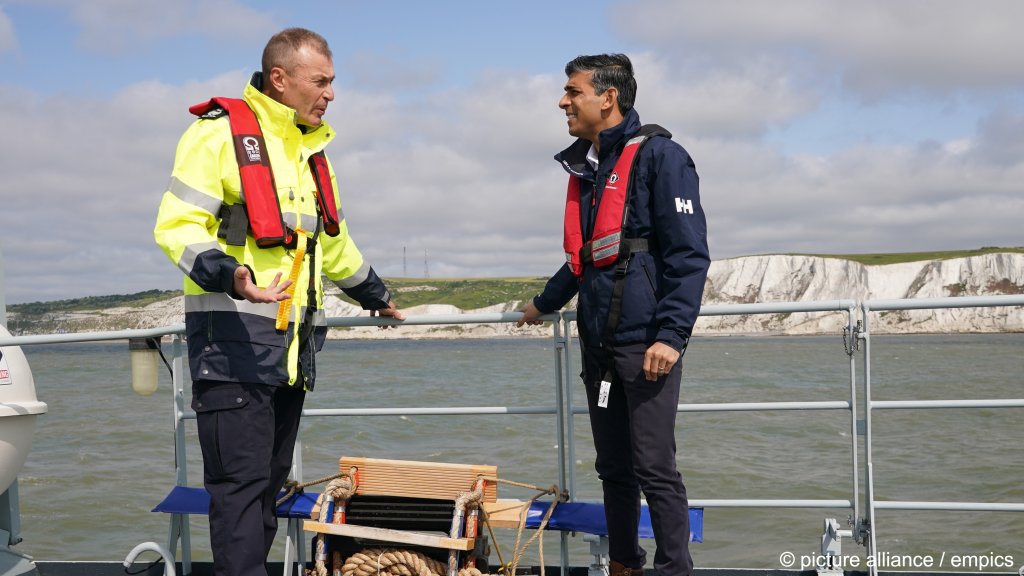
MPs in the British parliament are preparing to vote on Tuesday (July 11) about whether or not the government’s "Illegal Migration Bill" can be passed into law. Prime Minister Rishi Sunak has said he is prepared to "throw absolutely everything" at trying to stop small boats crossing the Channel and the bill is one of the ways he thinks he will suceed.
Last week, however, the bill was defeated 20 times in Parliament's upper house, the House of Lords. It returns to the Commons for its final stages heavily amended. Now the government is expected to make some concessions to the amendments, one of the main ones being to offer an amnesty to migrants who have already crossed the Channel. This would mean that those who have already arrived would still be eligible to seek asylum in Britain by the current means and only those who arrive after the bill becomes law would be blocked from doing so if they arrived by "illegal" means, such as small boats across the Channel.
Also read: The Illegal migration bill meets stiff opposition in the House of Lords
Concessions
Previously, the UK’s Home Secretary Suella Braverman, one of the main proponents of the bill had said that if the bill became law, all those who had arrived and might be currently applying for asylum would be blocked from doing so, even retrospectively.
Parliament’s Upper House, the House of Lords, passed the bill on Monday (July 10) and it now goes back to the Commons for final debates before being put to the vote. It already passed its first stages in the Commons earlier this year, but suffered 20 defeats in the Lords, resulting in numerous amendments.
Also read: Is the UK government planning to house migrants on cruise ships?
These amendments were expected to hamper the government’s efforts to pass the bill as quickly as possible. However, typically the Lords will concede to the lower house in the UK parliament because it is made up of elected, as opposed to appointed individuals. Ministers are hoping that offering the amnesty concession might push the bill through the voting stage and allow it to gain Royal Assent "within days", according to the right-wing tabloid Daily Mail.
'An unambiguous message'
According to the center-left newspaper The Guardian, the government has not given a deadline for when they hope the bill will pass. A spokesperson for Rishi Sunak said, "we haven’t set that timeline previously. I’m not going to do so now. We want to move it through as quickly as possible, recognizing that of coure there’s significant views on either side of the debate. We will listen as we have done here, but our priority remains to secure royal assent."
The government considers the bill as one of the main planks in its pledge to "stop the boats" crossing the Channel. The Conservative Lord Murray of Blidworth, who presented the bill in the upper house, said that if the government is to stop the boats, "it is imperative that the scheme provided for in the bill is robust and sends the unambiguous message that, if you enter the UK illegally, you will not be able to build a life here; instead, you will be detained and swiftly returned, either to your home country or to a safe third country."
One of the principle amendments required by the Lords was relating to the rights of children under the bill and whether or not, and for how long, they could be detained.
Also read: UK and France focus on limiting Channel migration
'A bad bill'
Lord Scriven, a Liberal Democrat peer, criticized the Home Office for acting towards the upper house with "complete discourtesousness." He said that the Home Office had provided the Lords with a "late impact assessment, a late child impact assessment and they tried to keep us here for long hours to do our job, which is to scrutinise effectively."
Lord Scriven said he felt the amendments made in the Lords would make the bill "more effective" as well as "more compassionate and kinder in how we treat some of the most vulnerable people who seek asylum on these shores." His hopes were that the Home Office would return the bill after the final stages in the House of Commons, with "a bit more compassion, kindness and effectiveness, and a lot less rhetoric."

Baroness Jones of Moulsecoomb, a Green Party politician, added that she thought the bill was a "bad bill" but that the Lords' efforts had done "our best…to improve it." She commented that she didn’t think the bill would work in stopping the boats, and that she wished the government had "more common sense."
Another Liberal Democrat peer, Lord Paddick, said he was opposed to what he regarded as an "illegal...and immoral bill." He pointed out that the hope from the government had been that the bill act as a deterrent, yet, despite the proposed retrospectivity of the bill, "record numbers crossed the Channel in June and again this weekend."
Also read: 'Immigrants from all over the world are coming to the UK'
Home office has created current crisis according to one critic
Lord Paddick said that he was disappointed that the government didn’t seem to be able to offer any alternatives to their bill. He pointed out that "some 15 years ago claims for asylum were higher; the backlog of claims awaiting decisions was a fraction of what it is today; and the number of those being removed was far greater."
Lord Paddick concluded that "the only immigration crisis in the UK today is one created by the Home Office, and a bill targeted at criminalizing asylum seekers, rather than people smugglers, is bound to fail."

Also read: UK government aims to cut legal migration
According to the Daily Mail, the proposed amendments to the bill no longer include retrospective measures. Suella Braverman, quoted in the paper, stated that these amendments would help the legislation pass through parliament swiftly while sending a "clear message that the exploitation of children and vulnerable people, used by criminals and ferried across the Channel, cannot continue."
In addition to the proposed amnesty, Braverman also offered to increase safeguards regarding the detention of unaccompanied child migrants, reported the Daily Mail. Pregnant women would also only be detained for a maximum of 72 hours under the amended proposals.
Thousands crossed in last few days
According to a government press release, migrants who arrived since March 7, when the bill was first introduced in parliament, would still face a ban on re-entering the UK once they had been removed, as well as be excluded from settling or obtaining citizenship in the UK.
According to the British government, over 12,000 migrants have crossed the Channel to the UK this year, which is around 500 fewer than during the same period last year. In 2022, the French reportedly prevented nearly 33,000 crossings, which was an increase of "over 40% on the number of crossings prevented in 2021."
Since its inception in July 2020, the UK-France Joint Intelligence Cell (JIC) has "dismantled 76 organized crime groups", states a UK Home Office press statement. And in 2022, the JIC "secured the arrests of around 400 suspected people smugglers."
Critics of the bill, including charities and organizations that work with migrants, asylum seekers and refugees, sent an open letter to the government on Tuesday. In it, the groups said the bill "closes the door on refugees, punishing people who had little other choice but to risk their life reaching the UK."
Also read: UK plan to stop small boats 'is working'