
For the first time in Germany, a politician from the AfD party has been elected to the post of district leader. The anti-immigration and anti-Islam party had previously been declared as a right-wing extremist organization by the country's intelligence agency.
The victory of the Alternative for Germany (AfD) party in Sunday’s election in the Sonneberg district in the eastern state of Thuringia was a decisive one.
The party’s candidate, Robert Sesselmann, won 52.8% of the vote, becoming the first ever AfD politician to head a government in Germany — albeit a small district one.
A local government representative does not have much power, however, the leaders of the AfD are now setting their sights on much larger political goals, hoping also to build on the highest level of support that the party has enjoyed in its 10-year history.
According to polls, about 19% to 20% of eligible voters say they would give their vote to the far-right party. Riding on this wave of popularity, the AfD says it plans to nominate a chancellor candidate in the 2025 federal election.
Observers believe the party also has a realistic chance of becoming the strongest political force in three states in eastern Germany, which will be holding regional electionsnext year.
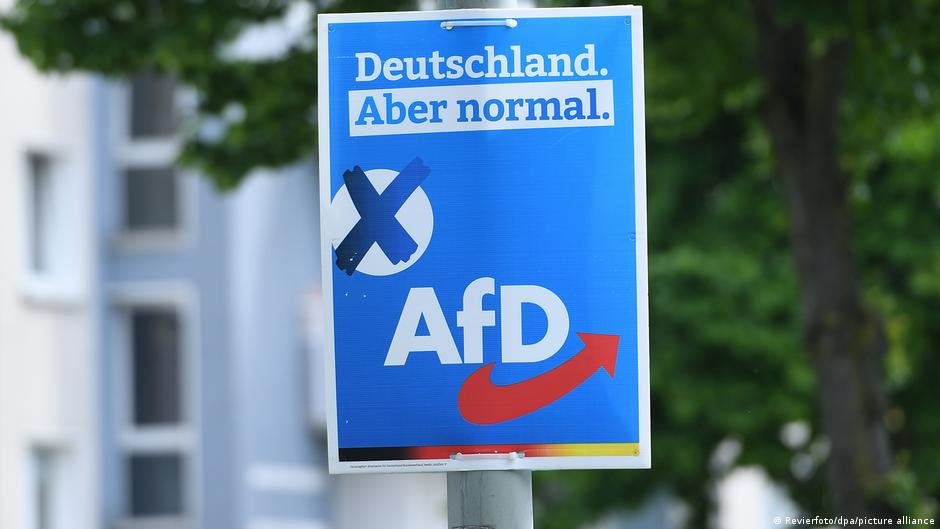
AfD co-leader Tino Chrupalla has hailed this small election success as "just the beginning!"
The party also received public support from notorious German neo-Nazi activist Michael Brück, who congratulated the AfD on his Telegram channel.
Supporters unconcerned at 'extremist' label
Analysts say the AfD is tapping into fears among German voters about recession, migration, and the impact of environmental conservation measures on the economy.
These concerns appear to have outweighed various scandals within the AfD in recent years, including the mishandling of party donations and the involvement of a former AfD parliamentarian, Birgit Malsack-Winkemann, in an extremist plot to overthrow the government.
Germany’s domestic intelligence agency said this month that far-right extremism posed the biggest threat to democracy in Germany, and warned voters about supporting the AfD.
Also read: Germany: How support for the right is rising along with migration
AfD success a 'historic low'
The election result at the weekend has prompted strong reactions from many quarters in Germany. The president of the Central Council of Jews in Germany, Josef Schuster, expressed deep shock at the result.
"This is a watershed that this country’s democratic political forces cannot simply accept," he told Germany’s RND media network.
Germany’s national anti-discrimination commissioner, Ferda Ataman, meanwhile described the vote on Sunday as "a historic low for the country," adding that a lot of people were worried and fearing for their future in Germany.
The current leader of the state of Thuringia, Bodo Ramelow of the Left party, said the AfD’s success showed that the far-right populism as seen already in the United States, France and elsewhere in Europe had now also taken hold in Germany.
Prior to the election, German Interior Minister Nancy Faeser had blamed the AfD for stoking anti-immigrant attitudes which have led to a rise in attacks on migrants and refugees — a claim the party has denied.
Also read: 'People of Deutschland': Everyday racism in Germany
Extremist language
The AfD was originally formed as an anti-EU party, however, its popularity grew after 2015, and it entered the Bundestag, Germany’s lower house of parliament, in 2017. One of the most important policies of the party is its staunch opposition to immigration.
Over the years, senior members of the party have made a number of extreme racist and xenophobic statements.
In 2016, then party co-chair Frauke Petry told a regional paper that police should "use firearms if necessary" to "prevent illegal border crossings," which caused a scandal.
Beatrix von Storch, a AfD member in the European Parliament, made similarly incendiary remarks, saying that "people who won’t accept STOP at our borders are attackers," adding Germany had to defend itself against such “attackers" — even if this meant shooting at women and children.
Christian Lüth, a former AfD press officer, expressed an even more extremist position, saying that migrants could be shot — or gassed.
With epd, Reuters, AP