
The EU's planned reform of the bloc's asylum system, with stricter controls and accelerated procedures at external borders, doesn't take into account the complexity and development of escape paths, a migration expert has told InfoMigrants.
EU countries last week agreed on a Common European Asylum System under which countries would accept a share of asylum seekers or pay into a fund managed by the European Union to care for migrants.
The goal of the plan is to reduce the number of irregular migrants arriving in the EU by means of tougher asylum and migration policies across the bloc.
The compromise proposal, which was the result of intense negotiation, has been subject to criticism since it was announced on June 9. Migration researchers, NGOs and other bodies have criticized the reform for being legally problematic as well as inadequate to end Europe's migration policy crisis.
Moreover, experts say that the Common European Asylum System is steeped in a notion of escape and migration paths that largely fails to take the actual development of the routes into account. In reality, the routes migrants take to Europe have become more complex and confusing.
Whereas a majority of those migrants who arrived in Greece, the Western Balkans and central Europe in 2015-16 came on an almost direct path, according to Media Service Integration, migrants and refugees currently take wide detours and remote routes.
This is why experts like Humboldt University Berlin migration researcher Bernd Kasparek believe that only some migrants would arrive at the planned 'asylum centers' under the proposed asylum reform. Most would in fact take longer and more dangerous routes in order to circumvent these 'hotspots'. This interview by InfoMigrants' Benjamin Bathke has been edited for length and clarity.
InfoMigrants: The German Migration Council (Rat für Migration), of which you are a member, last week pointed out that the European Common Asylum System reform could not be implemented "in a way that complies with human rights." Which red lines does this new approach cross from your point of view?
Bernd Kasparek: Three issues are really important here. The first issue, which we think is imperative, is that there is access to asylum at the European external borders.
There's jurisprudence supporting this argument, which really says that if migrants or asylum seekers get in touch with, for example, police units of an EU member state, it should be possible to lodge an assignment application or at least indicate that you would like to do so, so that you can be taken to the mainland and then you can be processed and so forth.
With these planned asylum centers, it will be much more difficult for many people to access the European asylum system. Because either they will be outright rejected, or their asylum application will not be processed properly. The argument for the latter is that if you have passed through a so-called safe third country, you could have stayed in that safer country because it's safe by definition. So you can be deported to that country.
If all you communicate is 'We don't want you,' people will find other ways. Suddenly we have this cat and mouse game
The second problem is that a lot of people with nationalities whose recognition rate is less than 20% will be put into an an accelerated procedure, which is supposed to take only 12 weeks. In this procedure, it will not be possible to demonstrate your claim to asylum properly as they will not have access to NGOs and lawyers, among other things. So even if you are able to lodge your asylum claim and explain your reasons, all the procedural guarantees will not be there.
The third problem is that the so-called solidarity mechanism is so far limited to 30,000 people who will be redistributed. Moreover, you can buy yourself out of this for just €20,000. My biggest gripe with this mechanism is that it does not take into account the subjectivity of each asylum seeker.
The stated goal of the EU's planned reform is reducing irregular migrant arrivals. Why is the plan not adequate to deal with mass irregular migration from your point of view?
The number of forcibly displaced people currently stands at close to 110 million globally. Most people do not come to Europe but instead stay close to their home countries. So the people who do come here seek protection, and based on my research, I can say that in the vast majority of cases, they have very good reasons to leave their home countries.
In the end, the argument the EU is making is this: 'We will create conditions at the edges of Europe that are worse than where people come from.' This policy is fundamentally opposed to anything the European Union should stand for. But it's supposed to send a message that Europe is not there for everybody.
What does that mean for migrants and the routes they take to reach the EU?
If all you really communicate is 'We don't want you,' people will find other ways. Suddenly we have this cat and mouse game at the border.
This is something we have seen for the last 20 years. It's a misconception that there are only two, three or four main routes to Europe. If we look at them very closely, you understand they are usually not straightforward routes but a lot of different shorter paths being traveled. We know that journeys to Europe take many, many months, even up to years because people get stuck, they need to backtrack or try something new.
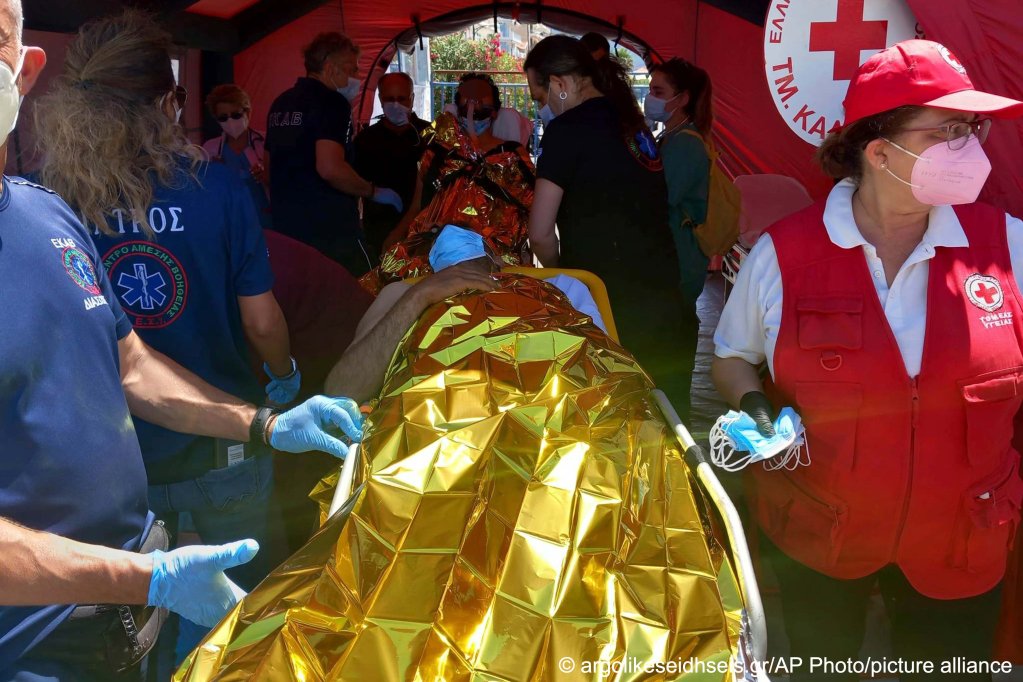
This week's shipwreck off southern Greece is a result of people saying: 'We need to bypass Greece' as a result of the policy of Greece of pushbacks and detention. And so now we suddenly have migrant boats trying to go from Lebanon or Turkey all the way to Italy.
Is there a correlation, or even a causal relationship, between the EU policies and escape paths becoming longer and more dangerous?
It's directly caused by these kinds of new obstacles being placed in the flight paths. The arrivals on the Greek Aegean Islands, which are mostly in the focus of people, have been going down over the last years. Is it because fewer people are going there, or is it because more pushbacks are occurring?
At the Evros river border between Greece and Turkey, a land border that's much more accessible than the Aegean, we have seen more movement of people trying to cross lately. It's a very different kind of regional deterrence working in that region. There is not a European hotspot there. So there's suddenly a different way into Greece. But as Greek police and border guards are pushing people back there too, more migrants will try to enter EU country Bulgaria instead, which is a different path with other obstacles. Especially in the Balkans, the routes are shifting all the time.
So in summary, people take the path of least resistance, but the resistance gets increasingly stronger?
Absolutely. This is also why suddenly border policies are becoming so much more important in the European Union. Because that is exactly the rationale: 'We need to add more border protection in a lot of places,' which corresponds with the massive expansion of EU border agency Frontex's budget, size and competences over the last five years.
There's a longstanding tendency in European migration policies to overemphasize the EU's external border, which is admittedly really, really long: 'We need the border as a mechanism of migration control.' The idea is that if you are in control of the border, you're also in control of migration.
Does this message have the desired external effect, that is reducing irregular migration?
Apparently not. People come here in increasingly larger numbers. Of course you can spend a lot of money on border guards, fortification, technology and so forth, but in order to halt irregular migration, we'd really have to isolate ourselves completely from the rest of the world and become like North Korea.
I think everybody agrees this is something the European Union cannot do. We have more than 300 million entries and exits every year, including business travelers, tourists, researchers -- and let's not forget that one third of the people who apply for asylum in Europe also come with a valid visa.
We need to have this conversation in a structured, rather than an apocalyptic, manner
The analogy for stopping irregular migration I always use is the prohibition in the United States in the 1920s and 1930s: You suddenly make something people have arguably been doing for millennia -- drinking alcohol -- illegal. But prohibition led to the rise of organized crime.
This is exactly what we see today as well: Organized groups that make huge profits from getting migrants from A to B, while not being very respectful to them. Of course you can always say: 'OK, now we have to fight the crime.' But it's a crime you have created yourself. In the end, the US understood that these mafias would only go away if they stopped the ban on selling alcohol.
No matter if you want to tackle alcohol consumption or irregular migration, you have to tackle the root causes instead of making the sale of alcohol or migration a crime
Which measures to curb irregular migration are actually effective?
We need to offer people more legal pathways to come to Europe. And I think then we can have a proper conversation about migration and say: 'Under what conditions can this happen, and what is the mood in the EU about this?'
Europeans should have a say in who's coming here, but we need to have this conversation in a structured rather than an apocalyptic manner. And we need to have a conversation with migrants themselves, too. Only sending the signal 'you're not wanted here' is not a conversation.