
The NGO Doctors without Borders (MSF) says the crew of its Geo Barents rescue ship witnessed Libya's coast guard intercepting 50 migrants on a boat in distress and returning them to war-torn Libya. Returned migrants face extortion, torture and other human rights abuses in the north African country.
According to Tweets posted by the medical humanitarian charity Doctors without Borders (MSF), which operates a private rescue ship, Geo Barents in the central Mediterranean, the Seabird reconnaissance plane operated by fellow humanitarian rescue organization Sea-Watch early Thursday morning (June 8) alerted the crew of the Geo Barents to the presence of a "small blue wooden boat carrying approximately 50 people" in international waters off Libya.
The Seabird then observed the Libyan coast guard moving people from the boat in distress to the "vessel operated by the Libyan Coast Guard" and the migrant boat was then set alight, MSF said on Twitter. "Later, a Libyan Coastal Security vessel arrived," the charity added.
Before the Geo Barents arrived on the scene around an hour after it received the alert from the Seabird, the crew saw "smoke rising on the horizon," which MSF says indicated a second boat was also on fire.
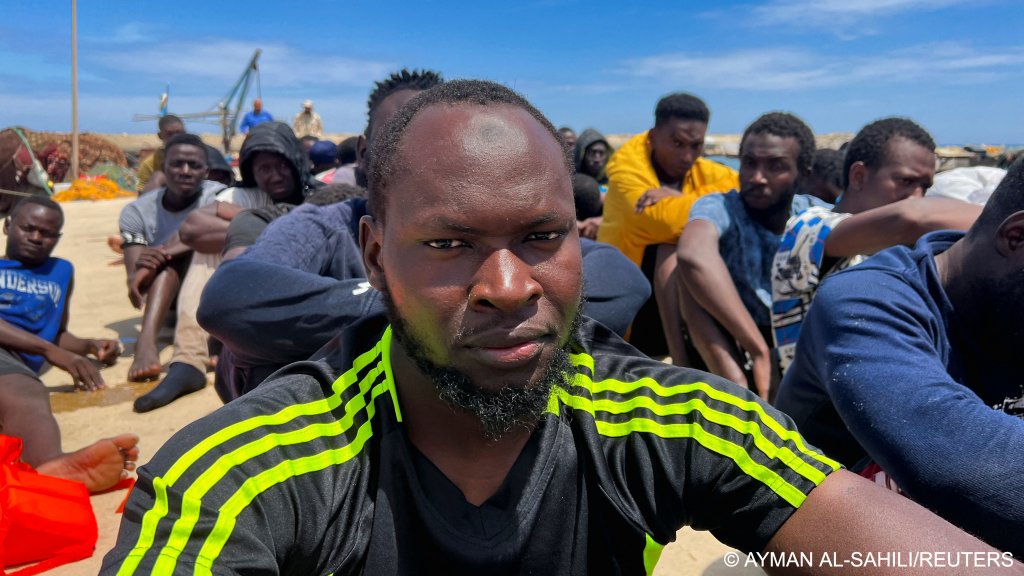
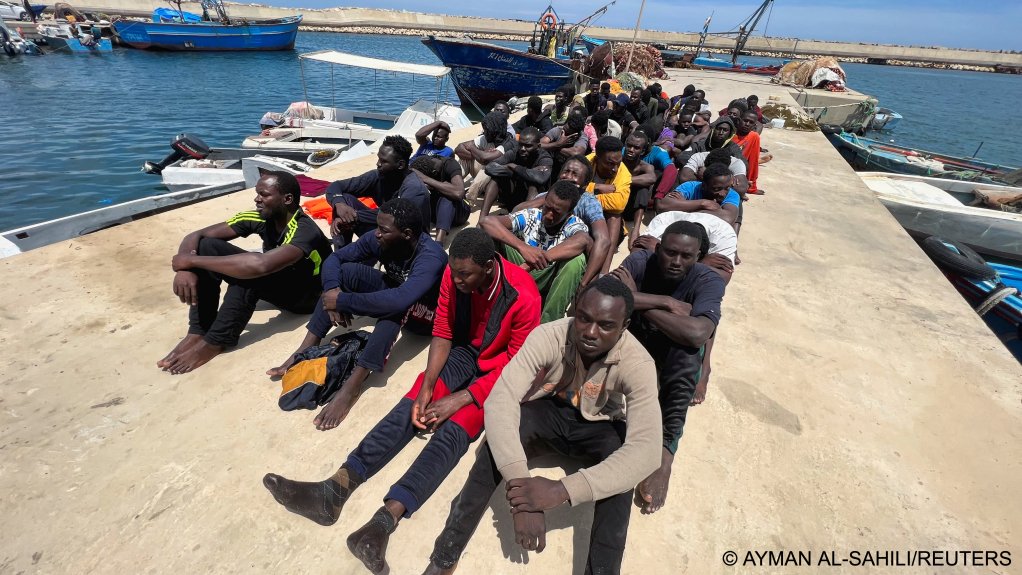
Pictures from the news agency Reuters shows a group of migrants arriving in Garaboli in northwest Libya at some point on Thursday (June 8). It wasn’t immediately clear if the Libyan coast guard set the second migrant vessel on fire or why, but NGOs say they have been witnessing this practice for a while.
Charities like MSF and other international organizations have repeatedly condemned the practice of the Libyan coast guard taking migrants found at sea back to Libya. Numerous reports and testimony confirm that many of the migrants taken back there are often reimprisoned and subject to numerous rounds of ransom demands and payments before they are released and allowed to pay to board another boat crossing the Mediterranean.
Despite mounting evidence in this regard, the European Union and Italy have provided funds and training to the Libyan coast guard in order to help them police the migrant situation more effectively.
Sea-Watch, moreover, says it's highly likely that the EU border agency Frontex, which operates drones in the area, was aware of the boat being in distress over an hour before the Seabird discovered it; however, a Sea-Watch spokesperson claims the agency did not inform the Geo Barents crew.
"By tracing the track of the migrant boat, we were able to determine that the Frontex drone was at the boat in distress around one and a half hours before the Seabird arrived," Sea-Watch's media air officer Paul Wagner told InfoMigrants. "The sad and enraging thing is that it's common practice in the central Mediterranean that Frontex prioritizes preventing people from reaching Europe over saving their lives. In this specific case, we assume that it was Frontex that informed the so-called Libyan coast guard despite the Geo Barents being the closest vessel to the boat in distress."
In the past, including in written statements to InfoMigrants, Frontex has denied similar accusations, saying they do not provide information to the Libyan coast guard and use their drones to monitor the situation in the Mediterranean to ensure everyone's safety in the area.
Read more: Eritrean recounts being repeatedly returned to Libya
Controversial coast guards
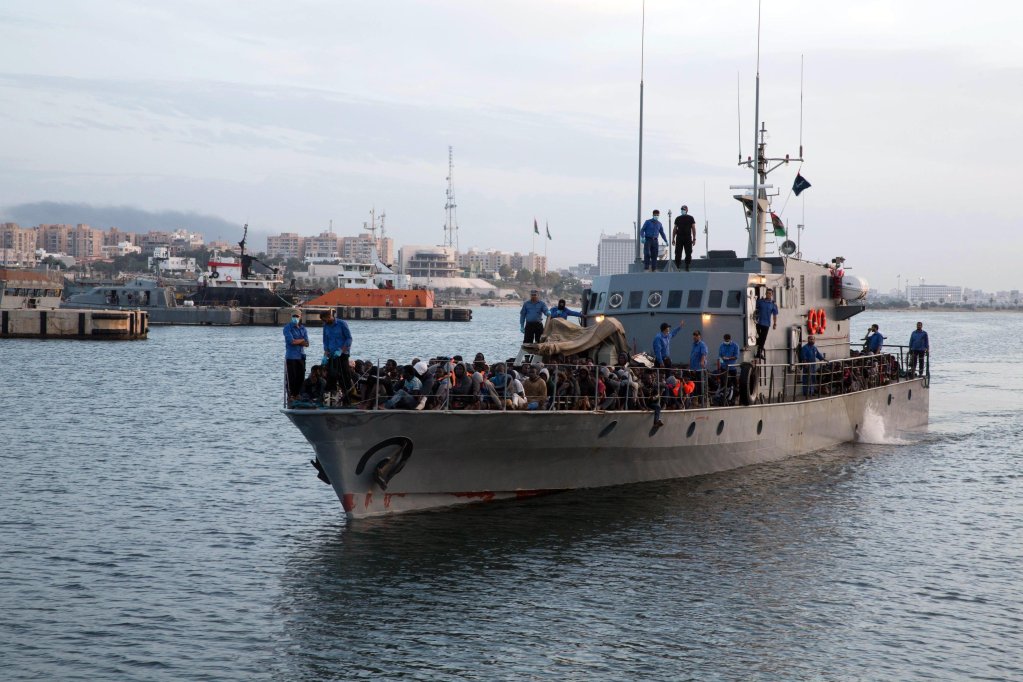
The coast guards of both Libya and neighboring Tunisia are equipped and financed and trained by different EU countries to help the units intercept and return migrants before they can reach European shores.
Since 2015, the European Union has given more than $450 million (about €417 million) to Libya's coast guard to help curb these departures, while also providing assistance through its border agency Frontex with aerial surveillance that the organization Human Rights Watch also says enables the Libyan coast guard to find migrant boats in the first place.
Migrants intercepted by the Libyan coast guard are brought back to Libya, where they are usually placed in detention centers run by the government.
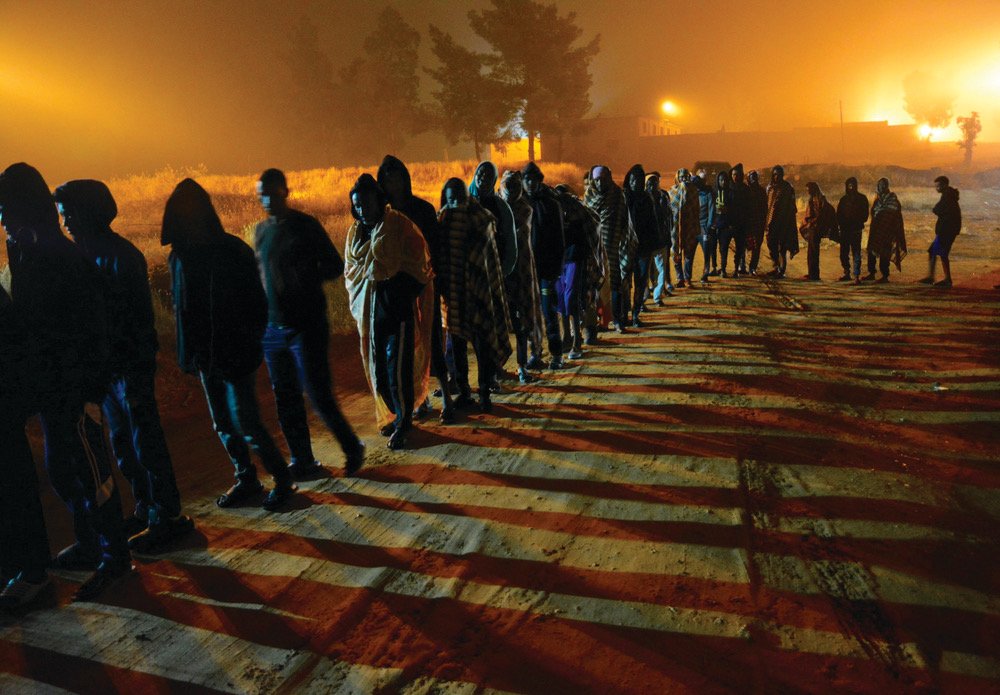
According to the UN and many NGOs, the conditions at these facilities are incredibly poor. Over the years, numerous reports have outlined severe hygiene shortcomings and widespread malnourishment.
In addition to official facilities, some Libyan detention centers are also run by smuggling gangs and other criminal organizations. The situation at these facilities is reportedly far worse than at the official facilities, with sexual assault, slavery, extortion, torture and murder recorded across the board.
In April, the UN Human Rights Council declared there are "reasonable grounds to believe that crimes against humanity have been committed against Libyans and migrants throughout Libya since 2016."
Read more: Libyan coast guard fired shots over rescue ship, migrants, NGOs say
Tough times for private sea rescue
Following her election victory last September, Italian Prime Minister Giorgia Meloni began to implement her promised hard line on immigration and private sea rescue in the Mediterranean.
A new national law, which conflicts with international legal obligations, limits the number of rescue operations ships can carry out before docking at a port assigned by the Italian authorities.
Earlier this month, German sea rescue vessels Sea-Eye 4 and Mare*Go were each detained for 20 days.
MSF and its Geo Barents migrant rescue ship, which disembarked 605 migrants at the Italian port of Bari including 151 minors on May 31, was fined €10,000 and also given a 30 day detention earlier this year.
Since the beginning of the year, more than 1,000 migrants are believed to have died trying to reach Europe via the Central Mediterranean route. The real number is estimated to be a lot higher due to the numbers of unreported cases regarding crossing attempts.