
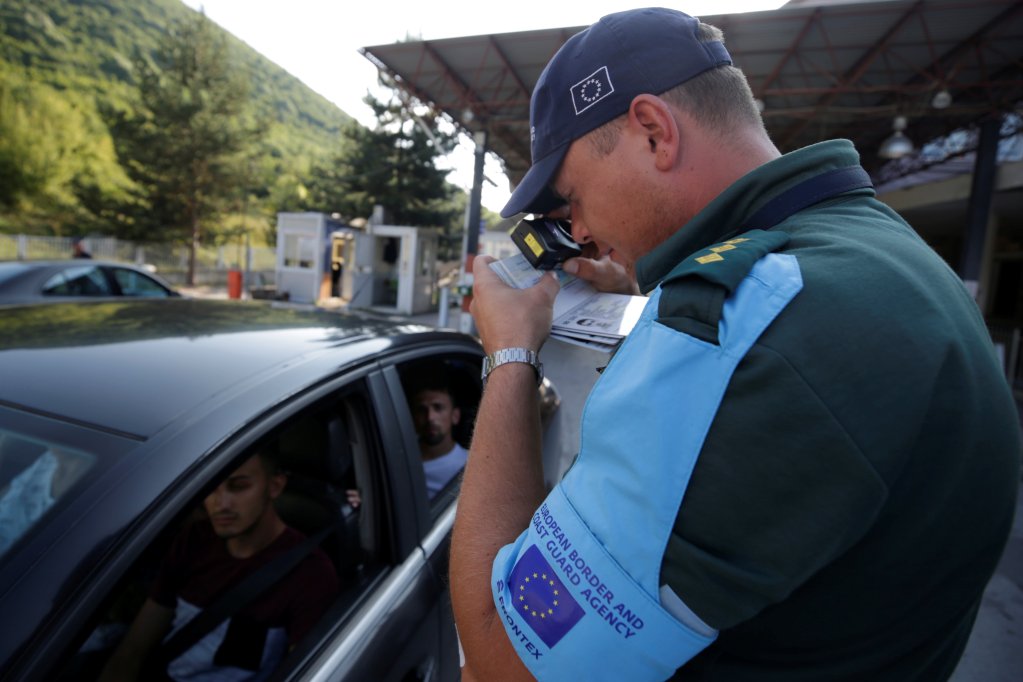
Frontex, the European Union's border and coast guard agency, is collecting information from migrants that could end up identifying vulnerable people seeking sanctuary from persecution in their homelands, according to a report by the EU's data protection watchdog.
The European Data Protection Supervisor (EDPS) has announced that it is launching an investigation into whether Frontex gathered information that it is not entitled to collect and illegally provided those details about migrants to the EU's police agency Europol.
Frontex said on Thursday (June 1) that it conducts "debriefing interviews" with migrants entering Europe without authorization "on a voluntary and anonymous basis." It said the interviews aim to collect information about migratory routes and cross-border crime and help to plan its operations.
But in a report submitted to Frontex last week, the EDPS said that some debriefings reveal "a combination of distinguishing features about that individual and their journey that would be sufficient to render those individuals identifiable."
The data protection supervisor said this means the information gathered would allow for the identification of the interviewee and therefore amounts to "personal data" under EU laws, and it has "serious doubts" about whether the debriefings respect the regulations relating to such data.
Vulnerable of individuals targeted for data collection
The EDPS said Frontex's interview process "does not take sufficient account of the high vulnerability of the individuals targeted for data collection."
It also insisted that Frontex "cannot guarantee the voluntary nature of the interview as they are conducted in a situation of deprivation (or limitation) of liberty, and are aimed at identifying suspects on the basis of the interviewee's testimony."
It added that the debriefings "may result in the interviewee providing a self-incriminating testimony."
The supervisor also said that Frontex "may not systematically, proactively and on its own collect any kind of information about suspects of any cross-border crimes." It said that only Europol -- the EU's justice agency -- and the 27 member countries can do that.
More specifically, the audit report accused Frontex of "automatically exchanging the debriefing reports with Europol without assessing the strict necessity of such exchange."
Also read: EU border guards to target irregular migration in Montenegro
EDPS to open investigation into the data exchange
The EDPS said it has decided to open an investigation into the data exchanges with the EU's police agency "which may result in the exercise of enforcement actions."
The data protection supervisor is demanding that Frontex address many of its concerns by the end of this year. "The EDPS will carry out a close follow-up. If need be, enforcement powers may be exercised," it said in an eight-page executive summary of a larger audit report published on its website on Wednesday, May 31.
Similar findings were revealed last year by media outlet Balkan Insight, which said Frontex had largely ignored the warnings of its own data protection officer, Nayra Perez, who had repeatedly stated that the PeDRA expansion could not be achieved by breaching compliance with EU legislation.
Frontex welcomed the report "as a contribution to further improve the agency's activities in line with data protection regulations and fundamental rights." The agency said it would try "to comply with the recommendations and develop an action plan to implement the necessary changes in our operations."
Caterina Rodelli, EU policy analyst at the NGO Access Now told the pan-European news website EURACTIV that the audit report "challenges the fundamental legality of risk analysis systems used against migrant people, and it highlights the serious harms that derive from their use."
Speaking to EURACTIV, Rodelli also noted that the EDPS report signified an important step in setting a limit to Frontex’s "disproportionate power", which comes at a pivotal moment of risk assessment regarding data collecting tools regarding migratory flows.
Illegal pushbacks
In recent years, Frontex has been repeatedly accused of taking part in illegal pushbacks of migrants and other abuses --- allegations it denies.
Pushbacks, where people are forced away from a border before they can exercise their right to apply for asylum are considered violations of international refugee protection agreements. Under those rules, people should not be expelled or returned to a country where their life and safety might be in danger due to their race, religion, nationality, or membership of a social or political group.
Last year, Frontex was subject to an investigation which indicated it covered up pushbacks of migrants in Greece. The agency responded by acknowledging a number of wrongdoings and shortcomings, but claimed that these are "practices of the past."
A new director, Hans Leijtens, was appointed in January and promised a new era of transparency at the agency, after his predecessor resigned.
Leijtens said that "there is nothing secret about Frontex" and that he would promote a nothing-to-hide approach and put an end to "defensive attitudes." Leijtens said: "We can't do our work when we are not trusted."
However, Frontex continues to face allegations of cover-ups, inaction and further abuses, pointing to deeper cultural and systemic issues within the agency despite its new leadership.
Also read: EU border agency to support more deportations from Greece
With AP