
After six years of absence, Doctors Without Borders (MSF) is back in Calais. The NGO hopes to provide "medico-social and psychological" support to migrants already facing serious physical and psychological trauma.
More than six years after their departure from Calais, Doctors Without Borders (MSF) returned to the northern coast of France in April.
"The needs related to the physical and mental health of exiles are still there and are even greater [than before]," Serena Colagrande, a spokesperson of the medical NGO, told InfoMigrants.
The MSF team has been traveling for over a month to the various places where migrants reside, mainly to the informal camp on rue de Judée (Judée street) where around one hundred people currently live.
The team is made up of a psychologist, a nurse, a social worker and two cultural mediators (a Sudanese who speaks Arabic and English and an Afghan who speaks Dari and Pashto). The team hopes to reach a vast public "weakened" by exile, life on the streets, administrative uncertainty and “harassment by police".

In Calais, MSF hopes to "identify the most vulnerable cases" and compensate for the absence of the State. The health situation in Calais has deteriorated considerably in recent years and associations have found themselves helpless in the face of the sheer magnitude of the problems migrants face.
The government’s “zero fixation point” policy in particular has led to the marginalization of migrants. The Ministry of the Interior no longer tolerates the presence of camps. In the north of France, camps are dismantled on an almost daily basis and police frequently confiscate migrant belongings (tents, blankets, etc.), according to certain associations.
Read more: Eritrean migrant found dead in Calais
The consequence: "Exiles are moving further away" from public areas, said Serena Colagrande.
"There may be fewer people than during the 'jungle' period" but their distress has increased," she said.
In total, between 400 and 600 people are present in Calais today (compared to 10,000 people at the height of the 'jungle' period).
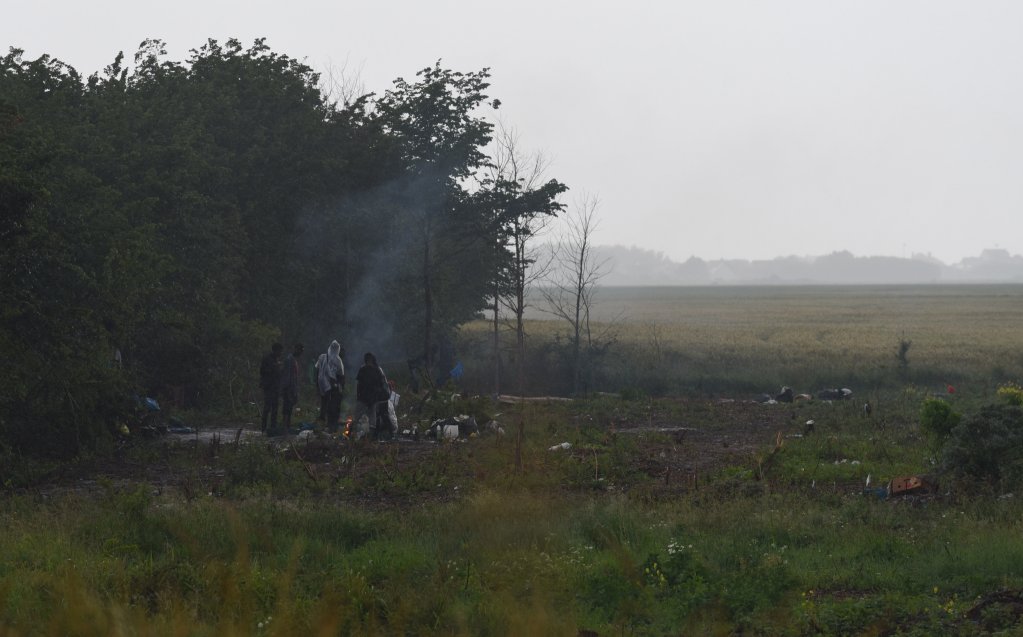
In addition to the physical ailments (falls from trucks, cold, infections, etc.) and the psychological pain of exile, "mental aimlessness" had been taking its toll on migrants. “There are, for example, migrants who have failed in their multiple attempts to cross, they no longer have any contacts and they no longer have money to pay the smugglers. They find themselves wandering. These people are far away from any kind of treatment."
"Before depression was taboo"
Even more surprisingly, "migrants are increasingly asking to see psychologists," said Serena Colagrande. The subject of depression used to be rather "taboo" but now exiles feel the need to speak, she said --- and especially about migrant boats that have sunk in the English Channel.
"I’m thinking of a woman who lost her children. They drowned in front of her during an attempt to cross the Channel. Since then, she has been permanently going over this trauma she experienced in her mind."
According to psychologists and psychiatrists interviewed in recent years by InfoMigrants, the state of "transit" between two countries also prevents individuals from settling down and therefore from overcoming traumatic experiences.
Read more: Dehydration, trauma - the health risks migrants face
MSF knows that its aid is far from sufficient. "It's a modest contribution on our part, but we hope to detect the most urgent needs with this small team."
Once the most vulnerable migrants have been identified, the NGO redirects them to the appropriate structures, in particular Secours Catholique, but also to the Maison entraide du Secours Catholique where consultations with a psychologist are offered.
Thousands of exiles continue to flow into the Calais region. A record number of more than 43,000 migrants have made the journey across the Channel in makeshift boats so far this year.