
Countries across the European Union are grappling with its worst housing crisis in decades. Migrants are feeling the sharp end of the housing shortage.
Europe is imploding as it struggles to find solutions to its massive housing crisis.
In Germany, the projected housing shortage is expected to reach 700,000 by 2025. It is the worst housing crisis the country has seen in 20 years.
In the Netherlands, about 845,000 homes need to be built by 2030 to meet the country’s demand.
The equal housing advocacy group Abbé Pierre Foundation estimated France’s homeless population to be at least 300,000, thrice as many as in 2001.
All across the European Union, an increasing number of people are struggling to find a roof over their heads.
Are migrants really the cause?
The shortage of housing collides with the surge of migration into European shores which first reached record highs in 2015.
In 2021, an estimated 2.3 million immigrants entered the EU, an increase of almost 18% compared to the previous year.
According to data from the European Union, with 217,735 applicants registered in 2022, Germany accounted for 24.7 % of all first-time asylum applicants in the EU. It was followed by France and Spain with 137,510 and 116,135, first-time asylum applicants respectively.
Across EU capitals, thousands of migrants and asylum seekers made the streets their home.
In Belgium, about 1,600 recognized refugees remain in reception centers while more than 200 migrants have set up camp on the streets near the city’s canal.
Germany pledged additional property for about 4,000 refugees to ease the current housing crisis in a move to cope with the shelter needs of more than one million refugees. In addition, the German federal government also agreed to increase the lump sum paid to the 16 state governments to deal with refugees by €1 billion ($1.1 billion) for the year 2023.
Even before the peak in migration levels, there were public sentiment surveys that showed that over half of those who were polled viewed immigration as the biggest contributor to the housing crisis.
However, a study by the London School of Economics and Political Science indicates that a number of intersecting factors that range from changing social norms and governance all contribute to the housing shortage.
Though the study focused on skilled worker migration to the United Kingdom, the study provides a general overview that shows that lack of social housing, an increase in life expectancy, and more households delaying marriage or living together have all contributed to a demand for housing that outpaces supply.
Double standards in housing
For migrants, building more residences does not necessarily present a solution. Studies show racist discrimination in the housing market is a widespread problem despite legal protections like the European Union Anti-Racism Directive.
Ukrainians fleeing the war were granted expedited access to housing through the Temporary Protection Directive while long-term asylum seekers languished on waiting lists.
A study by Cooperative City, a group of urban policy experts and researchers, showed that in Germany, people willing to rent out a flat or temporarily share their private space tend to prefer doing so only for white Ukrainians.
The Federal Anti-Discrimination Agency in Germany found that racist discrimination occurs even under conditions that are renter-friendly.
"The risk of being discriminated against will be increased once again considerably if there is a visible affiliation to the Muslim or the Jewish religion," read the report.
In another report, the anti-discrimination body said that the implementation of the EU Anti-racism Directive in the area of housing was a legal vacuum.
Also facing a workforce shortage
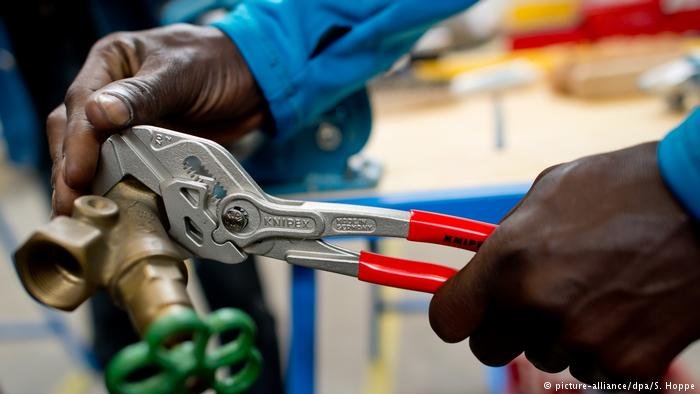
In addition to the housing crisis, Europe is also grappling with a shortage of skilled workers in industries such as transport, construction, and agriculture. Data from the European Commission shows those most employed in these sectors are immigrants.
Faced with a growing aging population and a declining birth rate, European countries are looking at migrants as a solution to fill workforce gaps in various industrial and service sectors but are also implementing measures to curb migrant arrivals.
Several European countries have relaxed migration policies to attract skilled workers badly needed to sustain their economies, pointing to a need to align effective housing policies with fair and humane migration legislation.
The European Parliament in its report on access to decent and affordable housing for all encourages Member States to increase public investment to eradicate homelessness and house deprivation by 2030.
Also read: Italy, Greece, Czech Republic, and UK: Aligned on tougher migration laws