
Relatives of migrants who have gone missing while trying to reach Europe have held a protest in the Moroccan capital, demanding that authorities investigate the fate of their loved ones.
A group of protestors gathered outside the foreign ministry building in Rabat on Thursday (May 4), some holding pictures of family members who have gone missing while trying to reach Europe by sea.
The relatives are calling on Moroccan authorities to step up their efforts to find out what happened to those who disappeared after attempting the crossing.
One of the organizers of the demonstration, Fatima Ouahbi, told the news agency AFP that nearly 800 migrants have gone missing since 2014. "Most are Moroccans but there are also Sudanese, Syrians or people from sub-Saharan Africa," she said.
Fatiha Mellouk, from Mohammedia near Rabat, was also at the protest. She said her 25-year-old son had "tried getting to Spain in the hopes of finding a better life."
"I don't know whether he is dead or alive," she said. "I urge those responsible to find our children."
Fate of hundreds unknown
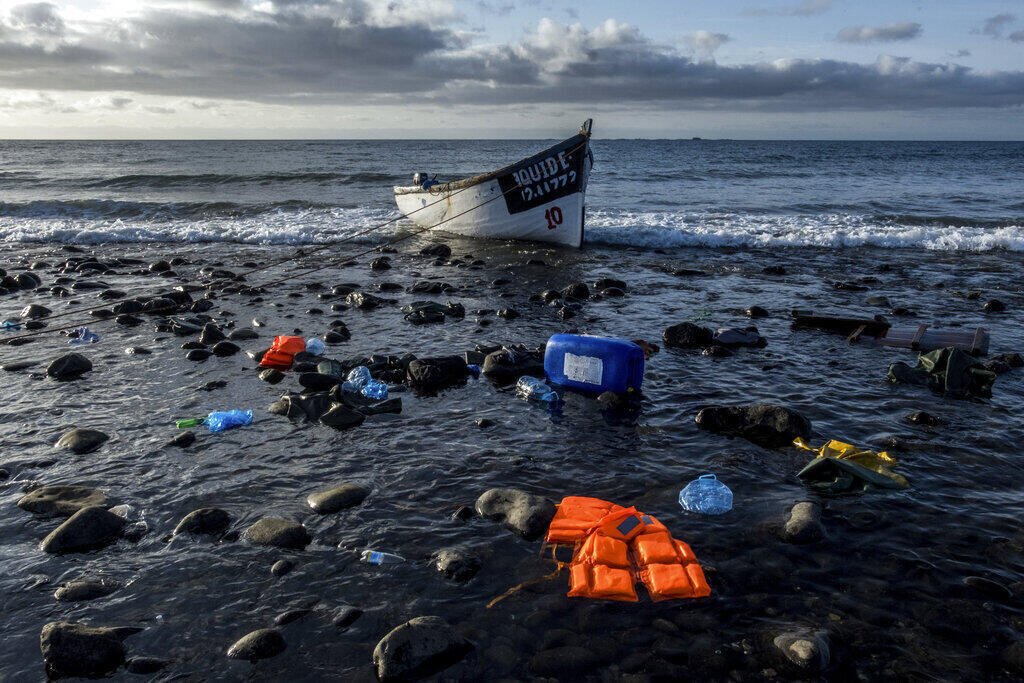
Morocco is a transit country for migrants trying to reach the Spanish mainland via the Western Mediterranean Sea, or the Canary Islands – also part of Spain – in the Atlantic Ocean.
Read more: Deaths en route to the Canary Islands
The fate of hundreds of people who have left from Moroccan shores or attempted overland crossings into Algeria, Tunisia or Libya remains unknown, according to Hassan Ammari, president of a local migrant support group AMSV (Aide aux Migrants en Situation de Vulnérabilité).
Some missing migrants are known to have been detained in North Africa or on the Balkan route to Europe, said Ammari. His organization also staged a protest in February demanding greater efforts to identify those who died attempting to cross into the Spanish enclave of Melilla last June.
About 2,000 people, many of them Sudanese, tried to break through the fortified border into the Spanish territory on June 24 last year, resulting in as many as 37 deaths, according to the human rights organization Amnesty International.
Dozens of those who were involved in the stampede remain unaccounted for, their family members say. In regular posts on Facebook, the Moroccan Association of Human Rights publishes the photos of migrants missing since the incident in an effort to help relatives locate them.
Family members of missing migrants at the protest in Rabat earlier this year demanded that the European Union assist Moroccan authorities to speed up the process of identifying the dead, also calling on the bloc to allow families to obtain visas to search for their children and loved ones.
Relatives of missing migrants have also held large-scale protests in the Tunisian city of Zarzis over the failure of authorities to investigate their deaths.
With AFP