
Migrants are trying to leave Tunisia in ever greater numbers, leading to hundreds of deaths in the past few weeks. Many are rounded up by authorities and returned to Tunisia, with the coast guard claiming to have arrested over 1,800 migrants since Sunday.
In recent days Tunisian authorities have stopped hundreds of people trying to cross the Mediterranean. The coast guard said Wednesday (April 26) that in the previous two days alone it had stopped 17 crossings and intercepted 524 migrants, mostly from sub-Saharan African countries.
More than 70 other Tunisian nationals who had been 'preparing' to make the sea crossing were also arrested, according to the German news agency dpa.
This was in addition to around 1,240 migrants who had been arrested earlier in the week, it added. It was not clear whether they were charged with any offences or detained.
According to the Associated Press (AP), migrants who are picked up by the Tunisian National Guard are not treated as having committed an offence and are released when they reach port.
'Unprecedented' numbers
Tunisian authorities have described the number of migrants trying to leave the country as unprecedented. In a single day in March, a record 2,900 people were caught by authorities in the Sfax region, the nearby city of Mahdia and the Kerkennah islands off the coast of Sfax, said Brig. Gen. Sabeur Younes of the coast guard.
Coast guard vessels comb the waters for migrants every night, finding hundreds of people trying to make it to Italy in unseaworthy boats and bringing them back to Tunisian shores. Journalists from AP recently accompanied the coast guard on an overnight expedition where they witnessed migrants begging to be allowed to continue their journeys even as their boats were taking on water. Over the course of 14 hours, 372 people were returned, AP said.
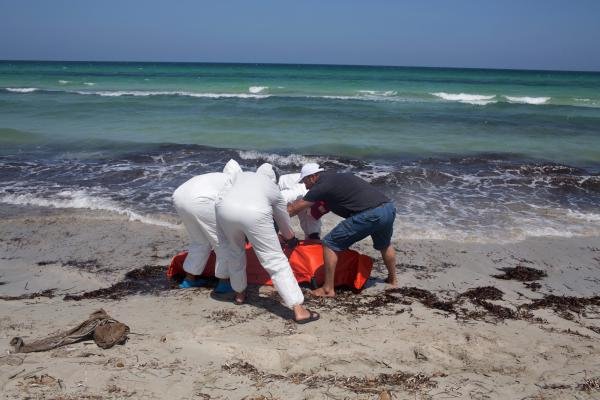
Officers of the coast guard also have the job of retrieving dead bodies from the sea – in the last 10 days nearly 300 people are known to have died while trying to cross the Central Mediterranean between the north African coast and Italy, according to the UN migration agency, IOM.
Burials to be stepped up
In the Sfax area, authorities have this week had to bury dozens of bodies washed up on the shore. Tunisia’s TAP news agency reported late Thursday that 50 people had been buried in cemeteries over the previous two days and that burials were to be 'stepped up.'
According to AP on Thursday, the morgue at the main hospital in Sfax was full. Another source cited by dpa said the number of bodies in the morgue had reached about 100 in just a few days.
On Friday, the bodies of another 41 people were recovered from waters off the coast, a coast guard official told the Reuters news agency.
36,600 reach Italy
Italian authorities say that the number of migrants to have reached Italian shores from north Africa so far this year is over 36,600 – about four times the number who arrived in each of the two previous years. The Italian island of Lampedusa, where many arrive, is about 180 kilometers from Sfax.
Italy is intent on stopping migrants from Tunisia, both by tightening its laws on immigration and promising investment and help to secure international loans. The European Union also provides aid and development assistance to Tunisia aimed mainly at controlling irregular migration.
The EU Home Affairs Commissioner Ylva Johansson, on a visit to Tunis on Thursday, said this help would continue. According to the news website tunisienumerique.com, she also stressed the need to repatriate sub-Saharan migrants based in Tunisia to their countries of origin.
Crackdown on Black Africans, and cheaper boats, fuel crossings
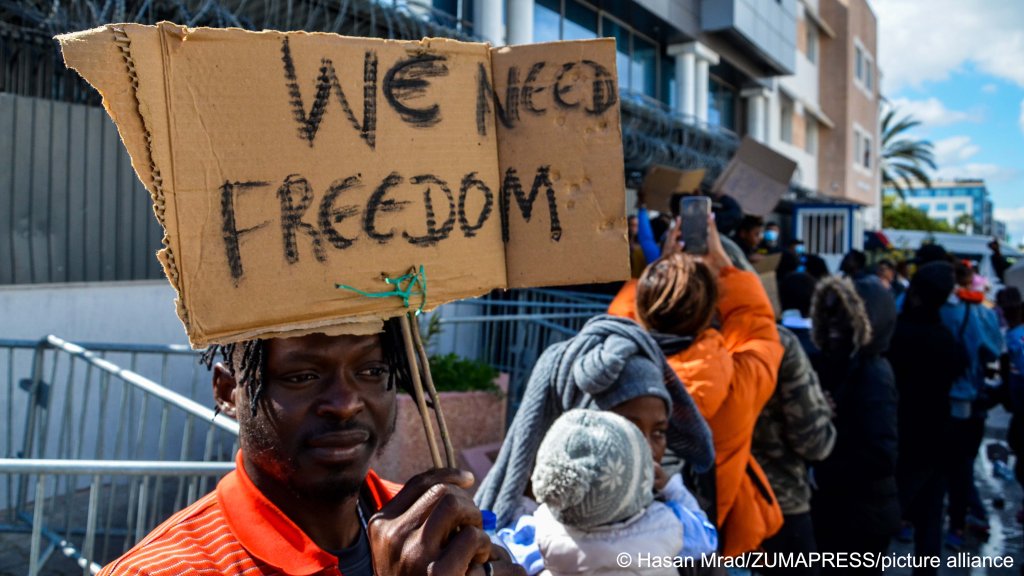
Sub-Saharan Africans, some who have been living and working in Tunisia without documents for years, began trying to leave in larger numbers after Tunisia's president, Kais Saied, announced a crackdown on Black Africans, saying they were part of a plot to erase his country's identity. Some countries airlifted their citizens back home, as attacks on Black migrants in Tunisia worsened.
Younes, the National Guard chief, told AP that the furor over sub-Saharan Africans had contributed to increased attempted crossings. "After what happened, voila. They no longer have the means to stay here," he said. "They'll try everything to get to the other side."
According to AP, another factor has contributed to people risking their lives on the crossing to Europe: it says lower-cost metal boats, instead of wooden boats, are making it easier and cheaper.
Younes said foreigners were even being recruited to produce the new boats, "like Egyptians to do the welding." But until authorities are able to establish a link between this relatively new industry and people smugglers, boat builders who are caught will continue to get away with only a fine, and the Mediterranean crossings, some with deadly consequences, are likely to continue.
With AP, dpa, Reuters