
A woman who risks being the victim of domestic violence if she is returned to her country of origin may be granted refugee status on the basis of her membership of a particular social group, the European Court of Justice (ECJ) has heard.
The grounds for obtaining refugee status under European Union law include persecution for reasons of race, religion, nationality, political opinion or membership of a particular social group. The same law (Directive 2011/95) also states that people who do not qualify for refugee status are entitled to subsidiary protection if they face the risk of suffering 'serious harm', such as the death penalty, execution, torture or inhuman or degrading treatment or punishment.
In a case currently being heard in Luxembourg, the ECJ was asked by Bulgaria to clarify which type of protection, if any, should be granted to a Turkish woman of Kurdish origin who had sought asylum in Bulgaria. The woman, a Sunni Muslim who is not named, had been forcibly married and subjected to domestic violence and threats by her husband, her family and her husband’s family. After escaping to Bulgaria, she said she feared her life would be at risk if she had to return to Turkey.
Risk of violence because of gender
The ECJ advocate general, Richard de la Tour, told the court that if the woman were forced to go back to Turkey, she would face 'acts of serious marital violence that are traditional in certain communities.' He added that repeated violence is capable of leading to a serious breach of a person’s fundamental rights.
He also said that in such cases the authorities in the EU country must carry out an in-depth individual assessment of the application for international protection. If the country is considering granting subsidiary protection, the risk of 'serious harm' should be taken to include honor crimes or domestic violence. The European authorities should also look at the level of protection offered by the third country against that serious harm.
Gender-based violence against women is recognized as a form of persecution under the Istanbul Convention on violence against women. Turkey pulled out of the Convention in 2021, a move that prompted widespread protests. Turkey has high rates of gender-based violence and femicide: according to a report published in November 2022 by the Federation of Women Associations of Turkey, at least 327 women had been killed that year, mostly by their partners and family members.
Asylum on basis of gender in the EU
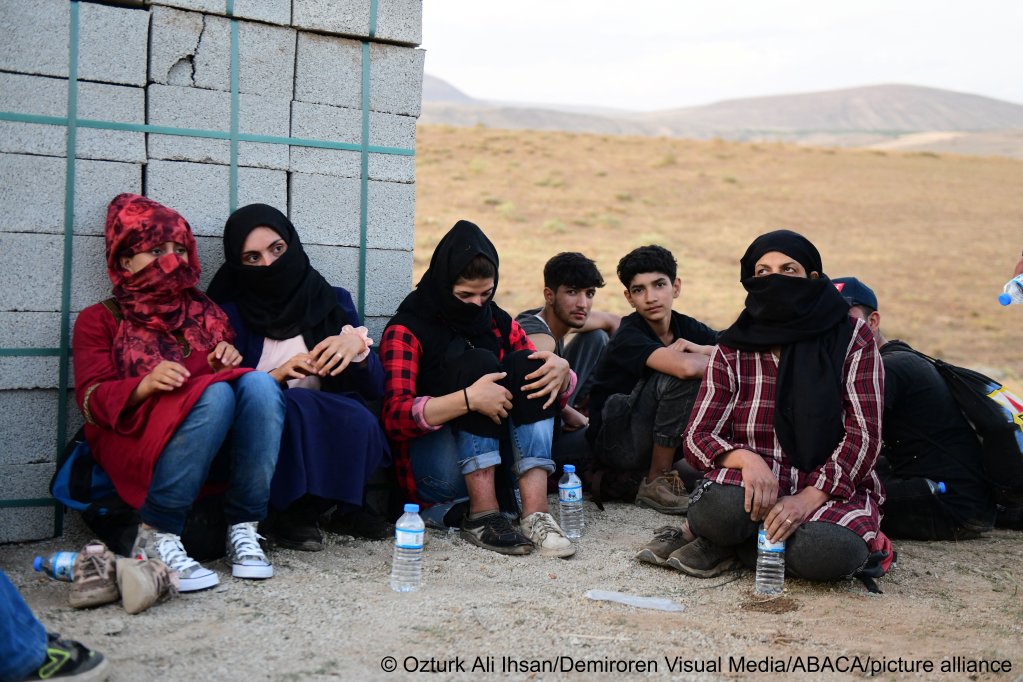
In recent months, a number of European countries have granted the right of asylum to all women and girls from Afghanistan on the basis of their gender, in line with a decision by the EU Agency for Asylum that they are at risk as a group due to harsh measures and restrictions imposed by the Taliban.
The European Court of Justice advocate general’s opinion is not binding but it is influential and is often followed by the court. On Monday April 24 the case was still in progress, and a date for the final decision by the ECJ had not been announced.
The decision in the case of the Turkish woman will be binding on the Bulgarian national court as well as all other national courts of the 27 European Union member states.