
Maryam and her five children have been homeless since November. Every night, they have to find a place to rest a few hours before the children return to class the next day. InfoMigrants followed the family during a night looking for shelter.
The primary school playground is noisy and joyful. It is 6:30 p.m. The last pupils who stayed for after-school study are leaving school. When parents arrive, they embrace the children, take off their backpacks and hurry home.
In this little school crowd, some students look more tired than others. Ibrahim, 9, Abdullah, 7, Maryam, 6, and Bilal, 3, are pupils of the school, which includes both a kindergarten and a primary school. But every night for the last two months, they have been sleeping on the street with their eldest brother Mohamed, 11, and their mother Maryam.
Since late November, at bathing and dinner time, they make their way to the Paris city hall. There, with other families, they wait for the Utopia 56 organization find them a roof to sleep under. But the volunteers are overwhelmed by the number of requests and need to house the most vulnerable first, especially families with children less than a year old, or pregnant women about to go into labor, for example.
Protecting her daughter from female genital mutilation (FGM)
Maryam left the Ivory Coast in 2019 so her daughter would not be forced to undergo female genital mutilation (FGM).
Her mother-in-law was pressuring her to mutilate her daughter.
“I myself experienced it and it causes me a lot of health problems. I didn’t want my daughter to undergo the same thing,” the mother explained to InfoMigrants.
When she arrived, she applied for asylum in France, but her request was rejected by France’s asylum agency, then France’s asylum appeals court. The mother believes her requests were denied “because I had no proof and didn’t express myself well enough.”
During the application process, Maryam lived with her children in the eastern French town Chatillon-sur-Seine, where all five attended school. When her application was rejected, Maryam returned to Paris, hoping to find help.
Quickly, her children re-joined Paris schools, except for Mohamed, the eldest, who is still waiting to know where he will be able to finish his sixth grade. But the homeless family is not considered a priority to the French emergency housing line 115, which is overwhelmed with calls from families in similar situations.
At city hall, the wait
That night, the mother leaves the school with bags full of donations given to her by the school director. There are clothes, toys and some things to snack on. Each child has a backpack, and all take a handbag. Mohamed, the eldest, holds Bilal by the hand, making their way to the center of Paris.
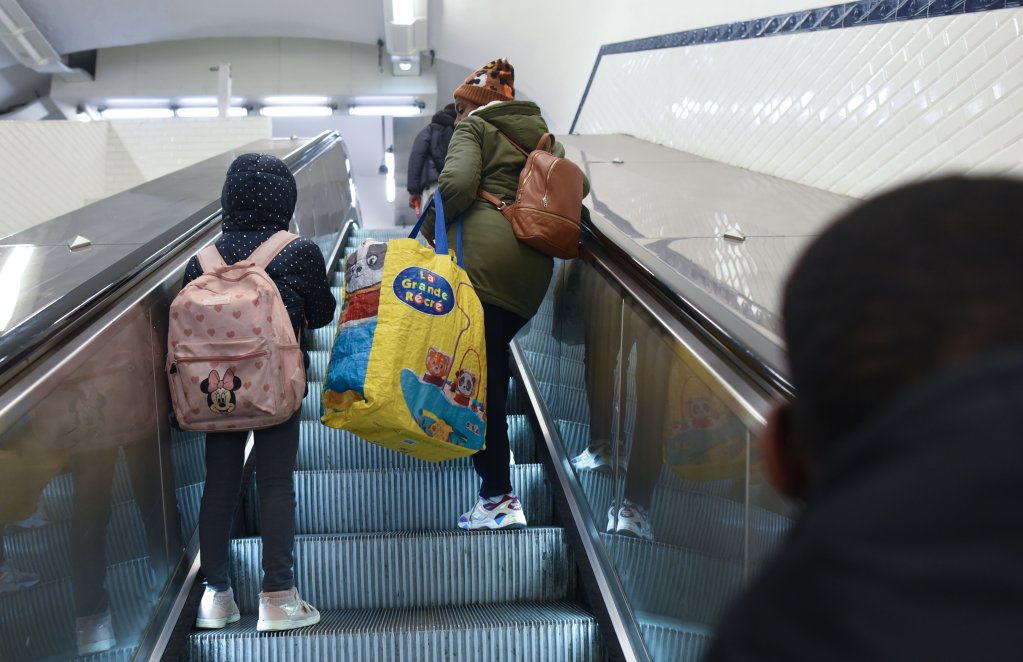
In the crowded subway, the little boy, weary from a long day, is agitated and wants to sit down. Abdullah and Maryam, who found free seats, eat a bag of chips they received from the school.
The car of the metro line 1 finally empties itself of its passengers. The children and Maryam can all sit. In a few seconds, the youngest fall into a deep sleep. Worn out, Abdullah drops the little bag of cane-shaped chocolate sweets he had been holding onto since the beginning of the trip.
In front of City Hall, Utopia 56 registers families that need shelter. They have to wait several hours before knowing whether there is an available spot.
“It’s always really hard,” Maryam told InfoMigrants, “the kids are hungry and cold. They are shivering, they cry.”
Some families are hosted by private people, others in a warehouse in the north of Paris. But that is not enough. Despite all the effort, every night, families are forced to sleep on the streets.
Despite having five children, Maryam has often spent her nights outside these last few weeks.
“Sometimes we go to train stations, sometimes we take the bus. The other night, Bilal was sick so I went to the hospital and we slept there.”
'We had two hours left to wait before going to school'
That evening, the family had to leave the hospital at dawn and found refuge in the subway.
“We had two hours left to wait before going to school,” Maryam remembers, teary-eyed. That moment is engraved in her mind like one of her worst memories of her time being homeless.
“A man was wandering around us and asked strange questions. I was afraid he would attack us.”
After barely a few hours of sleep on the Necker hospital waiting room chairs, and then the metro’s chairs, the kids went to school. On an empty stomach, like most days. Despite all these hurdles, Maryam says she’s “relieved” her children go to school. “That way, I’m sure they will eat lunch.”
After dropping them off, she and her eldest son go to a daytime family shelter in the 15th arrondissement. There, they can clean their laundry, have breakfast and rest a little.
Every day more and more foreign families, often undocumented, come to find some comfort in this warm space after a night on the street or in a shelter. In 2022, the shelter welcomed 9,785 families.
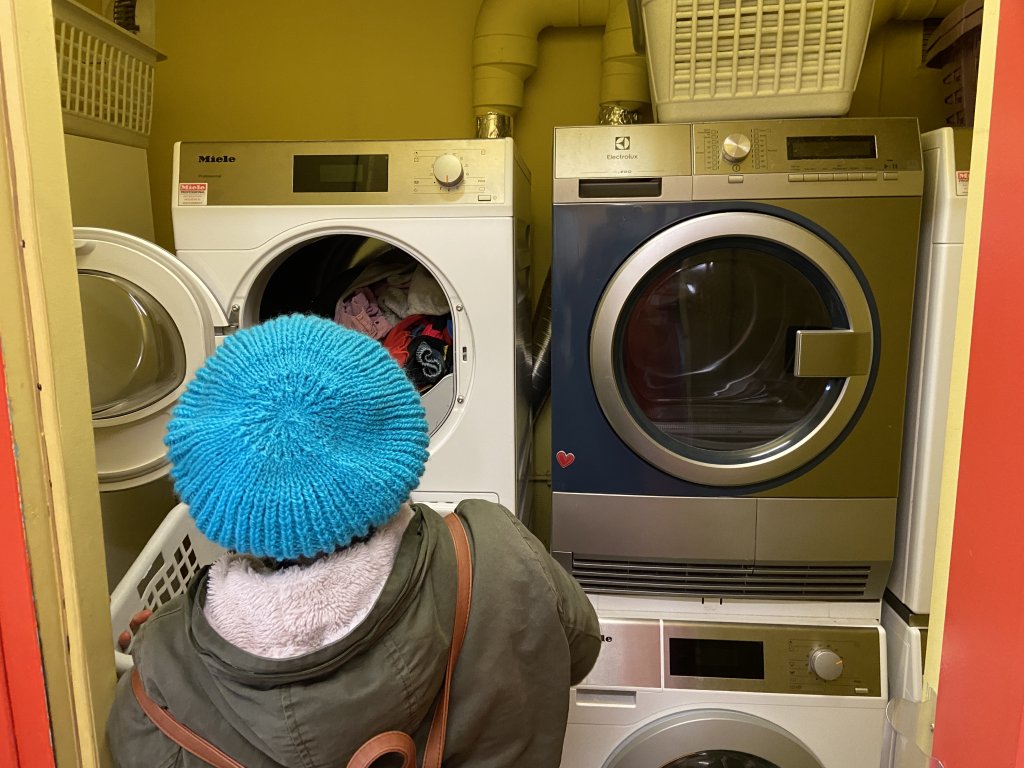
“Many people come to Paris after their asylum claim was rejected elsewhere in France. We always told them they will have more luck finding shelter in the town they were in, but it’s hard to get the message through,” Valerie Corbin, a head employee at the center said.
That night, at City Hall, Utopia 56 could not find a place to stay for Maryam and her children.
The family set up on the stone benches in front of City Hall. The children got close to one another under a big yellow cover to keep warm. Maryam thought they'd have to spend another night on the street.
But around 2 a.m., volunteers in blue shirts from the city program “Solidarity Night” dropped by. Soon after, her family and some others were moved to a gymnasium in the 12th arrondissement. They had dinner and were able to sleep a few hours.
The next day, when getting out of school, the small family took the subway, heading towards Lyon this time, for another night at the gymnasium. When they got near the building, three-year-old Bilal asked, “Can we sleep?”