
A typhoid outbreak among migrants housed on a decommissioned cruise liner last year has been found to have been caused by a sewage leak. The contaminated water made its way into freshwater supplies on board the stationary vessel, according to an investigation led by local authorities.
Reports of illness were first reported on the Liberty Ann cruise ship almost exactly one year ago. On April 6, 2022, cases of fever and stomach pain were recorded among asylum seekers on the vessel which was docked in the Dutch city of Haarlem.
Health authorities conducted tests and found that they were suffering from typhoid fever -- an infection caused by Salmonella Typhi bacteria.
A total of 52 asylum seekers and 20 staff members on board contracted the disease, according to the investigation. All recovered from the illness, but nearly a third of all affected individuals had to be hospitalized.
Nearly 350 people in total were exposed to the potentially deadly bacteria.
Typhoid: far from eradicated
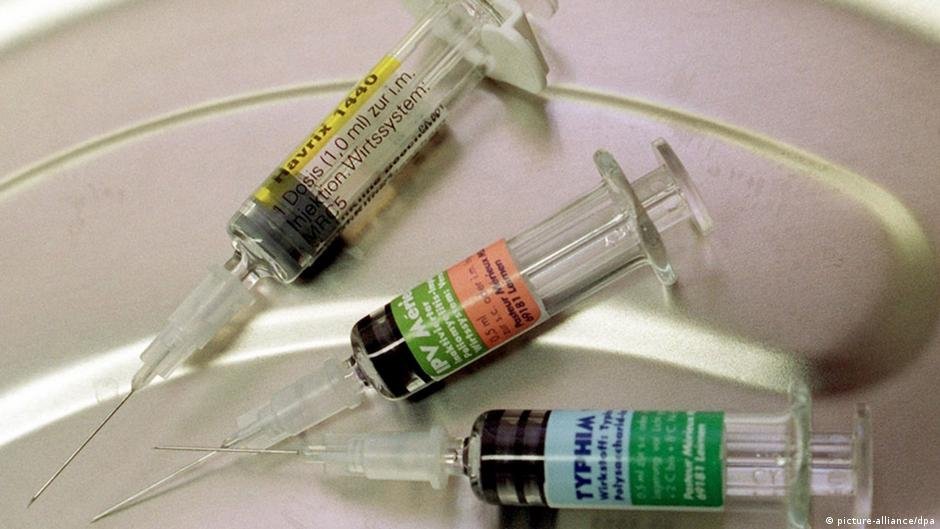
Statistically, one in a hundred people who contract the disease will die from it. Although there are vaccinations against the water-borne bacteria, it is considered to be far from practically being eradicated like other illnesses, for which there are such inoculation programs.
As for treatments, antibiotics tend to clear the disease in most people; however due to overuse and misuse of antibiotics around the world, drug-resistant forms of typhoid are also now in circulation.
Immune-suppressed individuals tend to suffer more severe symptoms and are more likely to die.
Breach of regulations
During the outbreak, all asylum seekers and staff were moved to other accommodation. Once the ship was empty, local health authorities launched an investigation to identify the source of the outbreak.
As is often the case, they found that the typhoid bacteria had spread in contaminated water.
Anne de Vries, a disease control expert at the Municipal Health Service Kennemerland-Haarlem, was part of the probe into the outbreak. She told the Agence France-Presse (AFP) news agency that the exact source of the contamination "was not easy to find."
De Vries added that she and her team had to pay numerous visits to locate the precise freshwater tank which had been contaminated with sewage, as there reportedly were no blueprints available for the ship.
Read more: Netherlands extradites Eritrean human trafficking suspect
It was eventually found that the wall between the wastewater and freshwater tanks had been corroded, allowing for an exchange of fluids between the two through numerous holes.
According to regulations, tanks holding sewage are not supposed to be placed next to tanks holding drinking water.
Too many migrants, too little space
The practice of the Dutch government to house migrants and refugees on old sea vessels like decommissioned cruise ships has been criticized as "absurd" by various human rights groups since it first was announced last year.
Faced with a shortage in accommodation in the face of rising immigration numbers, the Dutch government said at the time that it felt it had little alternatives to resort to.
Furthermore, accommodation centers in rural areas -- such as the infamous Ter Apel reception facility -- were mired in controversy, with locals rejecting the influx of asylum seekers in their neighborhoods.
Read more: Netherlands: Court rules accommodation for migrants is inadequate
UK also considering migrant accommodation on boats
The results of the investigation in the Typhoid outbreak were released just days after the UK announced that it was looking for similar housing solutions for migrants and refugees coming to its shores.
The British government last week announced that it was considering using ferries and barges to house migrants and refugees.
UK immigration minister Robert Jenrick said the British government was exploring the "possibility of accommodating migrants in vessels" such as ferries and barges -- as well as on former military sites -- in a bid to reduce hotel bills.
The practice of housing asylum seekers in hotel accommodation was reported as too expensive in the long-term, costing UK taxpayers an estimated GBP 6 million daily, according to some calculations.
Read more: Asylum seekers in tents on the streets of Belgium and the Netherlands
with AFP