
Rescuers aboard search-and-rescue vessels on the Mediterranean tell InfoMigrants they're seeing far fewer search vessels at sea than normal, and the Italian decree governing missions is prohibiting them from being able to save people in distress.
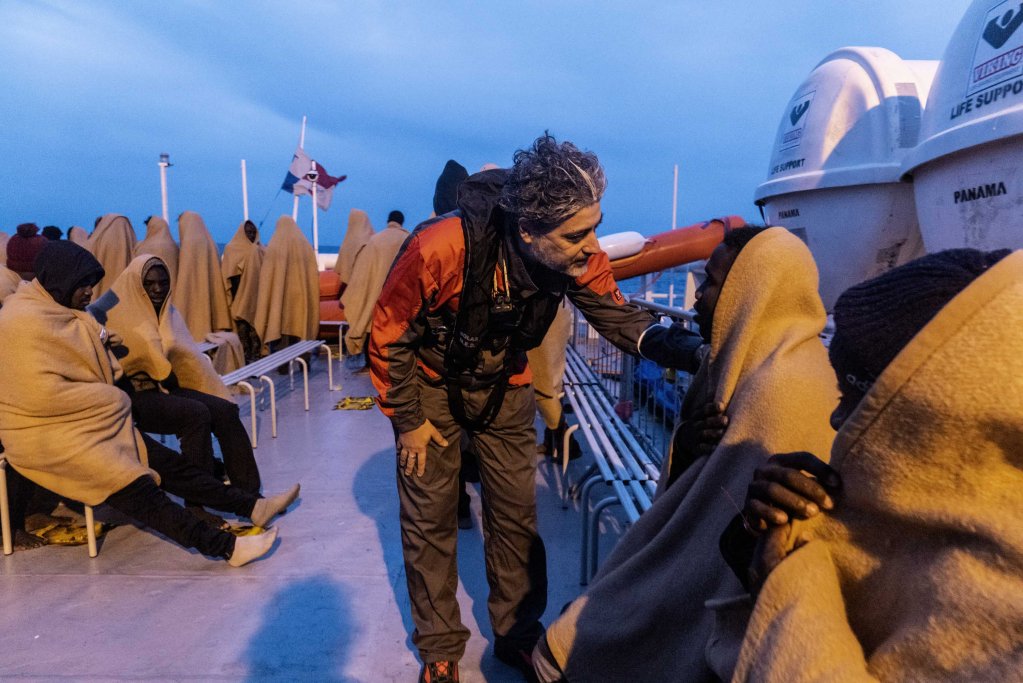
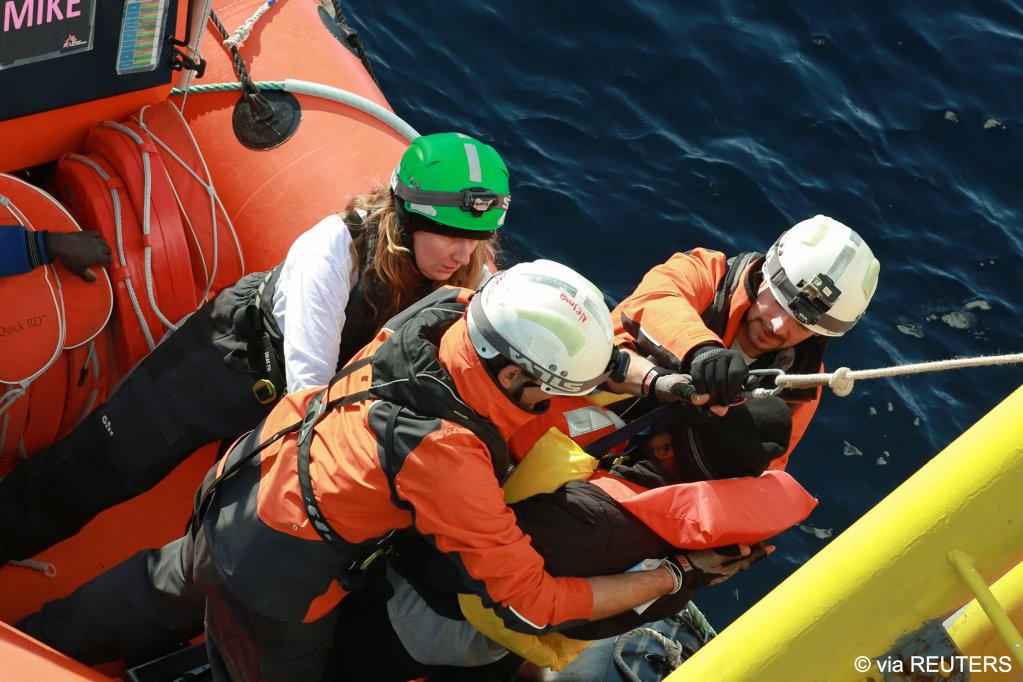
The Italian NGO EMERGENCY’s search-and-rescue vessel Life Support is currently en route to a port in the southeastern Italian city of Brindisi, where it is expected to arrive Friday after saving more than 100 people in international waters off the coast of Libya Monday evening (March 6).
InfoMigrants checked in with rescuers aboard to see how this mission has differed from missions facilitated before the controversial Italian decree governing sea rescue went into law late last month.
The law requires Mediterranean search-and-rescue boats to sail to a port immediately after facilitating a rescue, barring them from being able to stay at sea for an extended period of time to complete multiple rescues in a single mission.
Rescues in international waters off Libya
Emanuele Nannini, project coordinator on board the Life Support, said he hasn't see any other NGO search-and-rescue vessels over the course of the mission, which started March 1.
“As far as we know, we were the only vessel dedicated to activity in the area,” he said, adding that he is not aware of any other vessels planning to depart to the area in the next week.
“There are definitely fewer search-and-rescue vessels at sea,” he said, adding that there are currently virtually zero European search-and-rescue vessels in the Libyan search zone.
That’s despite the fact that since the EMERGENCY vessel left the Libyan SAR area, he and his team have noticed many dinghies under distress that have not been attended to yet, Nannini said.
Nannini added that a rescue has been facilitated by the Italian coast guard near Lampedusa, where at some 1,350 people arrived within 24 hours between Wednesday and Thursday, according to Italian news agency ANSA.
Coast guards rescued 38 and 20 people from two boats off Lampedusa on Wednesday, news agency DPA reported. They reportedly also recovered the dead body of a young woman's body.
The number of people still at sea between Libya and Italy is unknown.
Additionally, there are currently multiple boats in distress carrying around 200 people off the coast of Tunisia near the city of Karrakeh, and another carrying 80 people off the coast of Malta, according to Alarm Phone, a hotline migrants traveling over the Mediterranean Sea can call if they find themselves in distress. As of Thursday afternoon, no rescues off Tunisia or Malta had been facilitated.
580 nautical miles away
Life Support’s assigned disembarkation port Brindisi is 580 nautical miles – around 70 hours by boat – from the rescue site, Nannini said.
“There are definitely much closer ports – in Sicily, in the south of Italy – that could have been reached in much less time, more or less in 24-30 hours,” he said.
This is the result of another new rule that stipulates search-and-rescue vessels must call and receive a designated disembarkation port from Italian authorities rather than sailing to the nearest port, as they would have in the past.
Nannini said sea conditions are good, so the rescue vessel is not having problems reaching the port. But the assignment has created additional cost and logistical burden.
“We could be disembarking the survivors much faster and be operative [for another mission] much sooner,” he said.
Awareness gap
The lack of NGO and civil society vessels in the area creates additional danger for people trying to cross the sea because the capacity for rescue if things go awry simply isn’t there, Nannini said.
It also creates an awareness gap on the Mediterranean, he said, because there’s no one around to witness if a boat sinks or comes into trouble.
Before the issuing of the decree, a search-and-rescue vessel like EMERGENCY’s would have remained in the area for a few days to facilitate more rescues. That’s not an option anymore.
Nannini called EMERGENCY’s current mission “a bit strange” because the situation at sea was very quiet for the first week the vessel was searching for rescues.
But after they’d facilitated the rescue near the coast of Libya – at which point they were obliged to head back to the port – rescuers suddenly started receiving information about “many, many” vessels in distress, he said.
MSF files appeal against Geo Barents detention
Nannini said that another reason for the sparse number of search-and-rescue vessels at sea is the grounding of Doctors without Borders’ (MSF) large Geo Barents ship.
On February 23, Italian authorities slammed the search-and-rescue boat with a €10,000 fine and a 20-day detention for failing to provide the voyage data recorder (VDR) to authorities upon the ship’s arrival to the port of Ancona on February 17.
MSF has filed an appeal against the authorities, saying that in the eight years the organization has been facilitating rescues on the Mediterranean, no one has ever asked for the VDR, which is similar to an aircraft’s black box.