
Germany took in more than 1.2 million refugees in 2022. Ahead of a policy summit in Berlin, DW looks at how this has impacted different towns in very different ways.
When Bielefeld mayor Pit Clausen is asked how his city is coping with taking in Ukrainian war refugees, he remains relaxed. The situation is better than the mood would indicate, says the Social Democratic politician. His city in Germany's western state of North Rhine-Westphalia has some 340,000 residents — 4,000 of whom are refugees fleeing the Russian invasion of Ukraine.
"A big city like Bielefeld can cope easily with that," Clausen says.
More than half of those refugees are living with relatives or acquaintances, he says; no one has to sleep in a gymnasium anymore. Almost all of the children have been placed in daycare centers and schools, he says. "Basically, the system has taken everyone on and accommodated them. The first arrivals already have jobs," and have moved on with their lives, Clausen adds.
Difficult times for smaller communities
There are around 11,000 cities and towns in Germany. Only a few can report as positive an experience as Bielefeld. In addition to more than one million Ukrainian war refugees, some 244,000 asylum-seekers arrived from elsewhere in 2022 — mainly from Syria, Afghanistan, Turkey, and Iraq.
In Miltenberg, a district in Bavaria with a population of around 130,000 inhabitants, Green Party District Administrator Jens Marco Scherf calculates that he has had to take in more asylum seekers than during the last major bout of arrivals in 2015. The limits of all municipal services have been reached, he says, and he cannot justify burdening the system further.
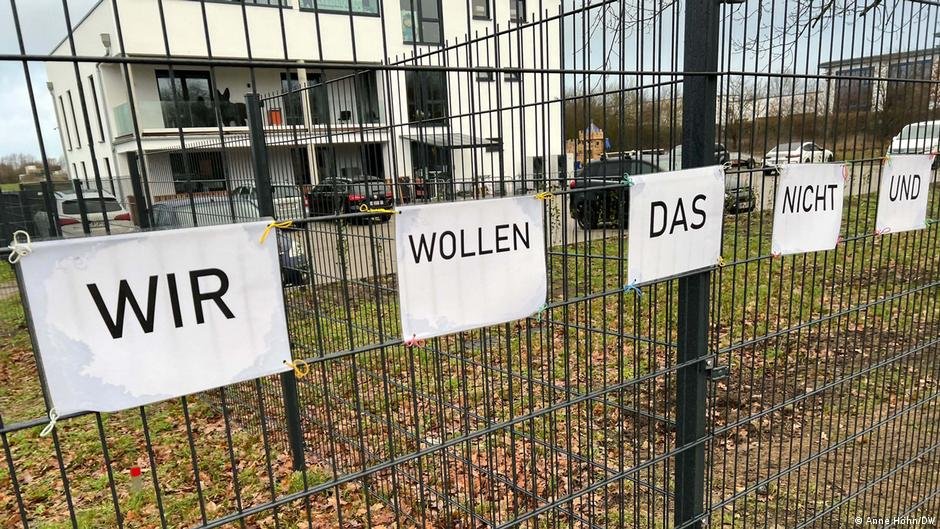
Since the autumn, the small town has had to rent homes to accommodate refugees every week, the local government told DW. But there is a huge waiting list for housing, forcing refugees to live in emergency shelters for extended periods of time. In light of the situation his town is facing, Scherf has called on the federal and state governments to "limit immigration." This is exactly what the EU agreed to at its last summit: The borders are to become tighter, and those whose applications for asylum have been rejected are to be deported. This does not affect Ukrainians, however, who need not go through the asylum application procedure.
More than just a housing crunch
But for other recent arrivals, there are other concerns. Integration is about more than just finding a place to live.
In Lindau, a town in the far south of Germany, resources are becoming scarce, even for the city's own citizens. "When refugees are no longer appropriately housed and cared for, teachers can no longer fulfill their duties properly, childcare options are lacking, gymnasiums are no longer available for schools or club sports — to name just a few examples — then the system is simply overloaded," local officials said.
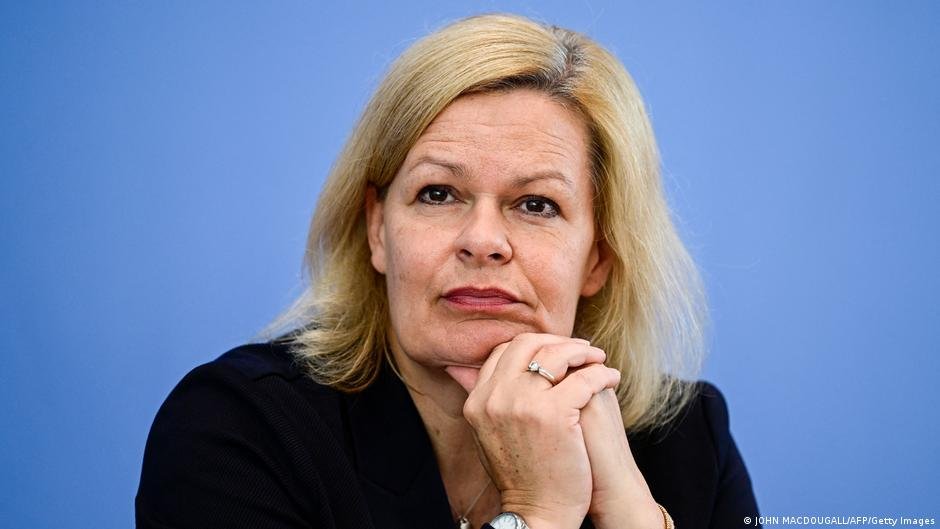
The idyllic town on Lake Constance has a population of around 81,000 and advertises itself with the slogan "very close to paradise." It is one of many municipalities that has been urgently demanding more help from the federal government for weeks. This is to be one of the main topics of discussion at a refugee policy summit on Thursday led by Germany's Federal Interior Minister Nancy Faeser.
Berlin promises billions in assistance
"We will not leave you on your own," promised Chancellor Olaf Scholz. In a speech to the German Bundestag, he assured state and local governments would continue to receive "billions of euros to ensure that new arrivals are well taken care of," just as they had done last year.
The chancellor, however, sidestepped making any concrete promises, even as many districts in Berlin complain that they are becoming overwhelmed with taking in more refugees.
According to Hannes Schammann, Professor of Migration Policy at the University of Hildesheim, whether a municipality can cope with a rise in refugee numbers is a matter of experience.
"Cities that created an infrastructure to deal with refugees in 2015 and then did not completely dismantle them are now in a better position," Schammann told DW.
Belit Onay, mayor of the northern city of Hanover, confirmed this theory. "After the attack on Ukraine began, we were able to create reception centers in, for example, exhibition halls (…) within a few days," he told DW. While he described the situation as "challenging," he said it was still "currently manageable by continuously working to increase capacity and through strong cooperation between different branches of the city administration."
Major hurdles remain in place
After a refugee policy summit in the autumn of 2022, the federal government made 4,000 additional apartments available to Ukrainian refugees. However, only about two-thirds of those are occupied. The rest are buildings that had long stood empty and lacked, for example, electricity and water. They will hopefully become available in the near future.
The Green Party, which rules in a coalition with the center-left Social Democrats (SPD) and the neoliberal Free Democrats (FDP), has suggested making it easier for refugees to access the private housing market. Filiz Polat, the Greens' spokeswoman for migration policy in the Bundestag, has proposed changing a law that restricts most asylum-seekers from moving directly to private homes.
As it stands, Ukrainians, but not most other refugees, are allowed to enter Germany and almost immediately move in with relatives or friends instead of having to wait for long processing periods in refugee centers. This is despite some 30% of other asylum-seekers already having relatives in Germany, Polat said in an interview with Deutschlandfunk, a public radio station.
Miltenberg, for its part, said the proposal was "worth considering," but would require proof that the relative or friend in question has enough space to properly accommodate the refugees.
For Mayor Clausen in Bielefeld, more needs to be done to treat Ukrainian refugees and other asylum-seekers as equals, not just in housing. "It is daft to create first- and second-class" systems, he says. "We should completely open up our social systems — as well as education and integration opportunities — to everyone who comes here."
For him, this also includes lifting the ban on asylum-seekers working for an extended period of time, and streamlining lengthy bureaucratic procedures for immigration officers. Like everywhere else in Germany, there is a growing shortage of skilled workers in Bielefeld. The faster refugees are integrated and trained, the more everyone would benefit, Clausen stresses.
This article was originally written in German.
Author: Sabine Kinkartz
First published: February 14, 2023
Copyright DW - All rights reserved
DW is not responsible for the content of external websites
Source: dw.com
Adapted by InfoMigrants