
The British government is reportedly gearing up to get even tougher on those smuggling migrants across the Channel from France. The main target of the latest policy will be Albanian gangs.
British Prime Minister Rishi Sunak is expected to announce further tough policies this week to try and stop gangs smuggling migrants across the Channel to the UK from France. At least, that is according to the right-wing tabloid The Daily Mail.
The newspaper quotes one Conservative party MP, Lee Anderson, who wrote a guest column in the Mail on Sunday on December 11, urging his government to get tougher to not lose seats at the next election.
According to Anderson, many of his constituents, who are often struggling themselves, expect the government to stop so many migrants entering the country, fearing that the costs of supporting more than 40,000 extra arrivals could squeeze the much-needed budget to improve employment opportunities and social care in their own, sometimes deprived constituencies.
Squeezed budgets generates resentment against migrants
Anderson said that Britain’s "warmth and generosity are being abused by the criminal gangs who are trafficking people to British shores."
The MP pointed out that Britain reportedly spends about €6 million per day on hotel rooms and accommodation for the migrants and asylum seekers who have arrived but not yet had their claims processed.
This, wrote Anderson, "at a time when my own constituents in Ashfield can’t afford to heat their homes, let alone pay for hotels and holidays."
The lawmaker complained about the "more than 12,000 people" who have arrived in Britain this year from Albania. He pointed out that many countries in Europe have listed Albania as a "safe" country and therefore do not accept their claims for asylum.
Anderson also said that the Home Secretary Suella Braverman had complained to him that Britain had "failed to control our borders," and Anderson said "she’s right."
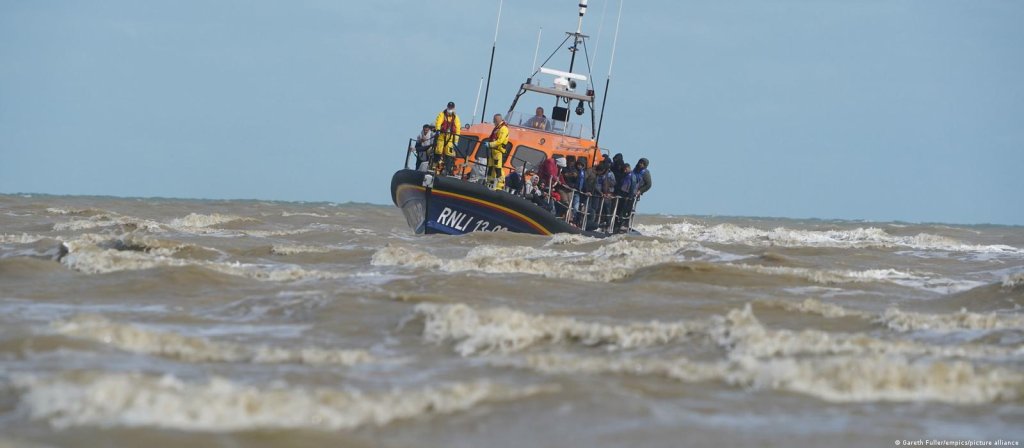
Meanwhile it was reported that the government was currently in talks with disused holiday parks, and university accommodation, as well as identifying other former military barracks to offer as accommodation to migrants and asylum seekers for longer than is currently possible at the processing site at Manston in Kent.
Manston itself has been the target of frequent criticism, after huge backlogs meant that the center became dangerously overcrowded, leading to reported diptheria outbreaks and even the death of one man who was reportedly admitted to hospital with diptheria and later died.
'Calais Group' works to ensure rapid returns
On December 8, the UK government and the Home Office (Interior Ministry) released a press release saying that Braverman had met with her counterparts in France, Belgium, Germany and the Netherlands, to discuss plans to "step-up co-operation to tackle illegal immigration across Europe and bring people smugglers to justice."
Braverman said that the group had agreed on plans at a meeting of the "Calais Group" on Thursday. The Home Secretary said that the UK will be working with the European border agency Frontex to "bolster its upstream efforts to contain illegal migrants, as other countries also committed to bolster their support."
Also read: Allegations and legal challenges surround Manston

The press release added that the group committed to work together at land and sea borders in order to "improve registration of irregular migrants and ensure rapid asylum and returns procedures, so that illegal migration flows are reduced at source."
A joint intelligence cell based in Calais, which was set up in July 2020, stated the Press Release has already "dismantled 59 organized crime groups involved in illegal crossings."
In July this year Britain’s National Crime Agency NCA and Europe’s Europol launched the "biggest ever international operation of its kind, alongside Operation Thoren in Europe," stated the press release. The operation, led by the NCA, targeted a smuggling gang which had allegedly brought at least 10,000 migrants across the Channel in the last 12 to 18 months.
French patrols prevented 'over 31,000 migrants' from crossing Channel
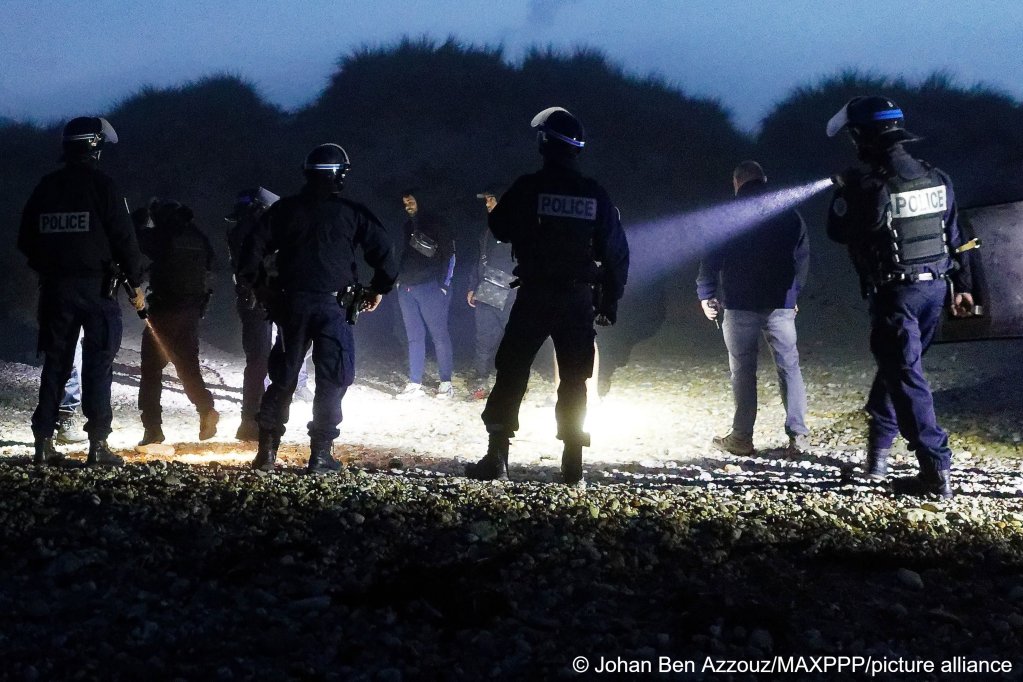
UK officers are also now working with their French counterparts. France has increased its beach patrols by 40% since the latest agreement was signed by the UK and France and according to the UK government, French efforts have managed to prevent over 31,000 migrants from crossing the Channel this year and arrested 384 people suspected of people smuggling.
Braverman added that she was continuing the work to "deliver the Rwanda partnership," in which the UK hopes to send people seeking asylum to Rwanda to have their claims assessed.
Furthermore, the Home Secretary said the government is currently tailoring "bilateral returns agreements with partners like Albania."
'Fewer than 100 arrested for knowingly arriving without permission' in UK
In theory, the UK government’s Nationality and Borders Law allows the government to arrest anyone who arrives "illegally" in the UK, including crossing the Channel without papers.
The offense came into law at the end of June. However, early on Monday, December 12, the BBC reported that "fewer than 100 people who crossed the English Channel in small boats have been arrested for arriving illegally in the UK under a new power to deter them" -- meaning 0.3% of those who have crossed since the law was changed.
A Home Office spokesperson told the BBC that a "further 180 arrests" have been made "since the summer under different immigration laws."
The law under which the UK government could arrest migrants is called "knowingly arriving without permission." It is a part of the legal text which has been heavily criticized by humanitarian groups and aid agencies, who say there is a legal right, enshrined in international law, for anyone to seek protection and so you don’t have to have papers to cross into a country to ask for asylum.
'More than 280 arrested' on various immigration offenses since June
Many members of the current government have repeatedly referred to migrants as "illegal" and said that if they left a "safe" country like France then they shouldn’t be able to pick and choose where they would like to seek asylum.
The BBC says that out of the 96 migrants who were arrested on suspicion of committing the crime of "knowingly arriving without permission," 78 people were charged with the crime and so far, 56 of them have been convicted of it.
By comparison, about 90% of those who have arrived in the UK this year, reports the BBC, have sought asylum. A Home Office spokesperson told the BBC that in total, since the Nationality and Borders Act became law "more than 280 people" have been arrested for various immigration offenses enshrined in the law.
The spokesperson added, "the figures referenced only detail those arrested for illegal arrival not illegal entry or anyone arrested for a breach of a deportation order under the new act."