
Camini is a small, isolated village in Calabria, southern Italy, with about one hundred migrants who have arrived in recent years. They live and work thanks to a cooperative created by the inhabitants. In turn, the presence of the migrants has allowed the town to regain a semblance of activity.
Forty years ago, the village square in Camini was lively and full of inhabitants who liked to spend their time chatting in one of the three bars. Today, Camini is much changed, the outlook from the hills over a valley of olive trees plunging towards the sea might be similar, but the spirit is much sadder. On a day towards the end of September, the terrace near the town hall is almost empty, just like the streets. Below, a pack of stray dogs bark and runs down the middle of a road.
In the 1990s, most of Camini’s inhabitants deserted the village. Today, the 800 remaining inhabitants are divided between two zones, a lower one near the sea and a higher one perched on the hill. The lack of jobs in this poor region of southern Italy, where tourism struggles to take hold, despite the beauty of the place, is what led to the exodus.
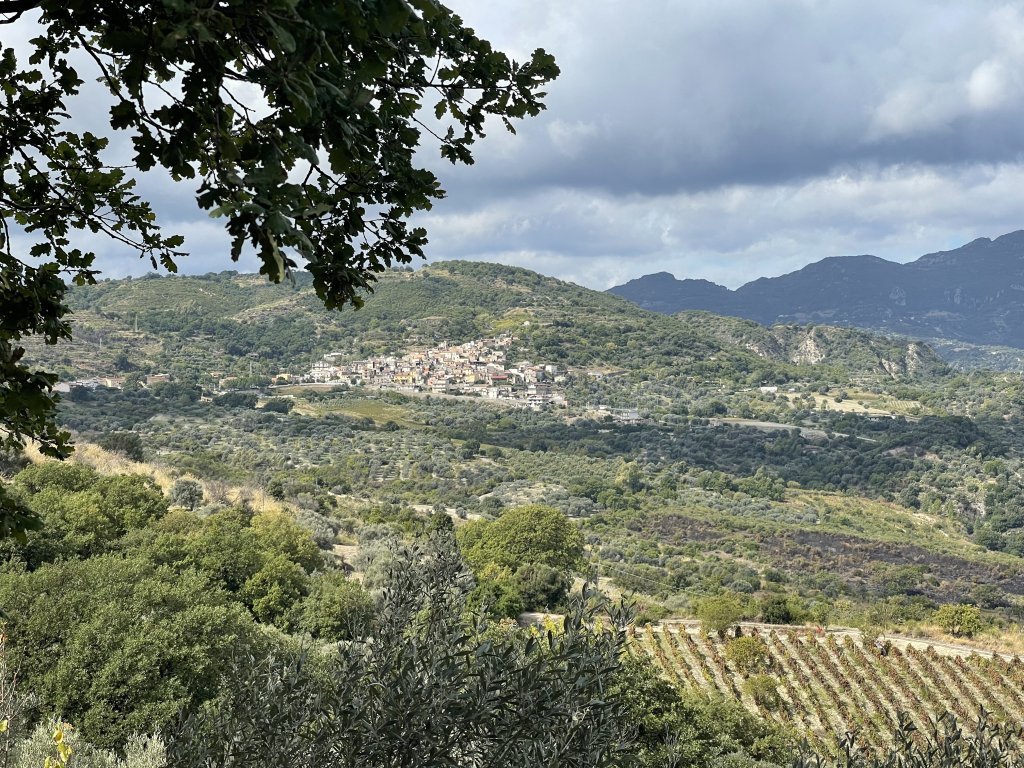
Camini was by no means an exception at the time of the exodus of its population, but it seems to be one today. From its elevated position, the city has seen a timid return of activity in recent years. A restaurant –currently the only one-- has opened; the primary school, which for 20 years had only one class, now has four; and an ATM was installed in 2020, to everyone's delight.
"The changes are linked to the migrants," says Rosario Zurzolo, a native of the country. This 45-year-old man had to leave his native village in his twenties in order to find work elsewhere. Returning a few years later in 1999, he co-founded the EuroCoop Camini cooperative. His aim was to stem the hemorrhage of inhabitants seeking economic opportunities elsewhere by creating local jobs. The situation only really changed though in 2016, when the municipality won a call for projects from the Ministry of the Interior regarding the reception of migrants. The project stipulates that EuroCoop Camini receives €35 per day and per migrant to cover their daily needs and their accommodation.
Also read: Calabria, the land across the Mediterranean where migrants are 'treated well'
Today about 150 migrants, from Afghanistan, Morocco, Tunisia, Libya, South Sudan, Pakistan, Bangladesh, Nigeria and Syria, live in Camini, making it one of the municipalities on the peninsula with the highest rate of immigrants among its population. Their presence alone has sparked an outpouring of solidarity from organizations that have injected money into the village coffers. The cooperative employs 18 refugees who operate several workshops: ceramics, woodworking, as well as the creation of clothing and art.
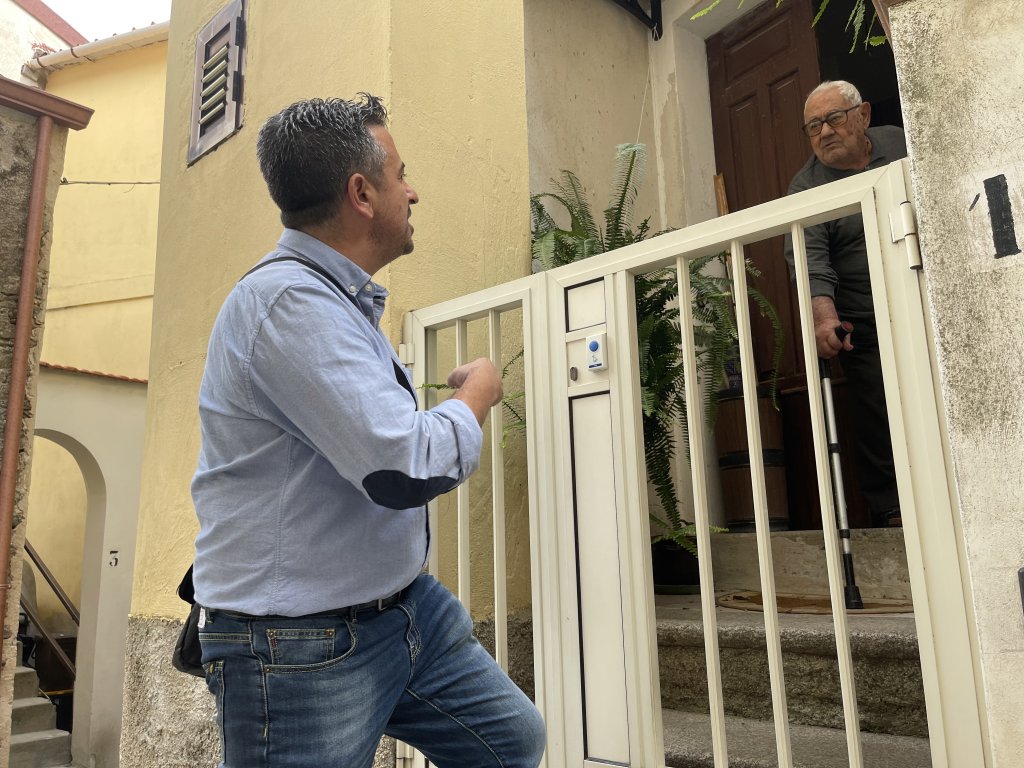
Veiled women and their children stroll in the streets of the village, passing the old Italians who often sit themselves on the steps of their houses. Rosario Zurzolo is attentive to the comings and goings, greeting everyone with a "Ciao!" or a pat on the back. "We created a sort of circular economy. The people you meet here are mostly my employees," he proudly explains.
Also read: Denmark: Migrants may be forced to work for welfare benefits
'The first Arab'
Amal Ahmad Okla describes herself as Camini's "first Arab". Arriving in 2016, the 43-year-old Syrian mother-of-five fled Damascus in 2013 for Lebanon. After three years of misery without work, she was able to benefit from the UN Refugee Agency (UNHCR)'s relocation program, to start a new life in Italy, in Camini. Back in Syria, her brother and mother died at the same time in a bombing attack.
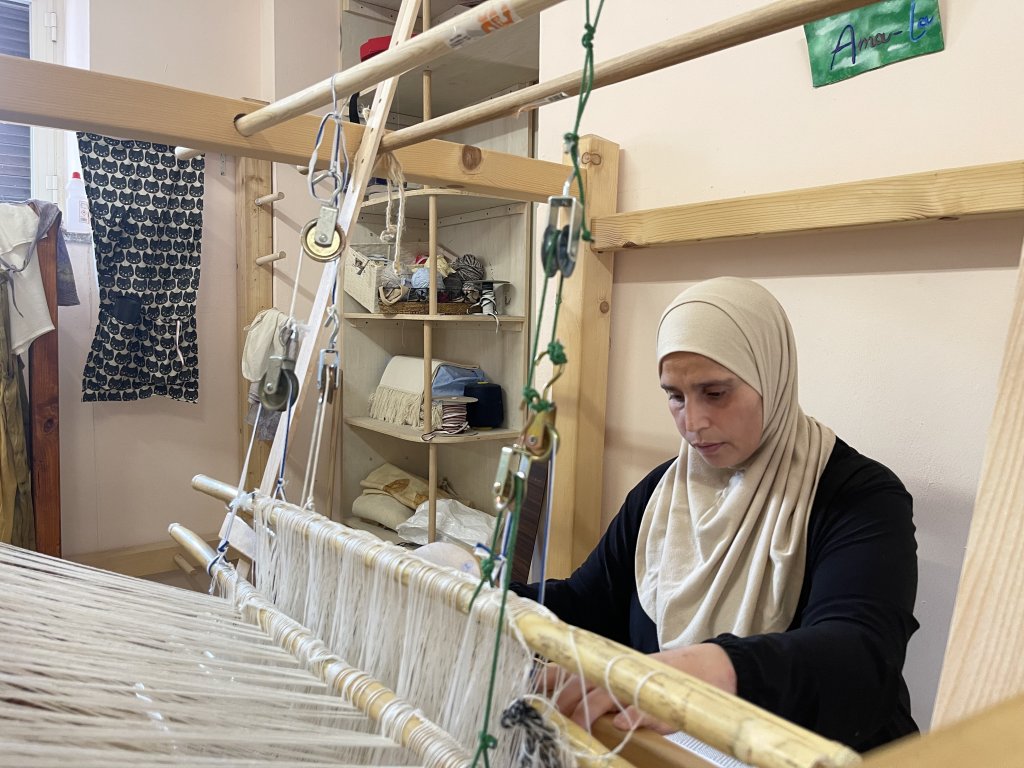
"It was difficult at first, especially because of the language barrier," she explains, in Arabic. Since then, she has since learned the basics in Italian as well as how to handle a loom. In a small workshop, nestled in one of the village's narrow streets, she makes small carpets and bags that are later sold in an adjoining shop. Buyers are rare, but Amal Ahmad Okla earns around €500 per month from EuroCoop Camini. In addition to benefitting from state aid, the cooperative receives donations from various organizations.
Also read: Serbia: Russian family offers a safe haven to Ukrainian refugees
"The idea is to give these people an activity, comments Rosario Zurzolo. It's therapy through art."
Amal Ahmad Okla looks absent as she wields the loom. Six years after her arrival, she says she still feels lost in this small isolated village. "People are kind and welcoming. Their mentality is similar to that of the Arabs because they are very close to their families and the elderly people live with their children and grandchildren," she says. "I am not worried when my daughter goes out in the evening in the village, I feel safe here. But I miss Syria." Above all, this woman is wondering about her future, in a town that has nothing to offer her children aged 9 to 21. "They will have to leave to study. My fate will depend on where they go. In Camini, they complain all the time. They are bored. For example, they complain that we do not go to the sea more often. It is nearby, but for us it is a big bus trip."
Also read: 'Exile is a long agony' – uprooted researchers share their struggles and hopes
Not far from there, the family of Haseed Bukari, originally from Pakistan, has been running a shop since 2019. The parents of this 17-year-old young man make accessories (bags, pillowcases, headbands, etc.) in a small room full of mosquitoes.
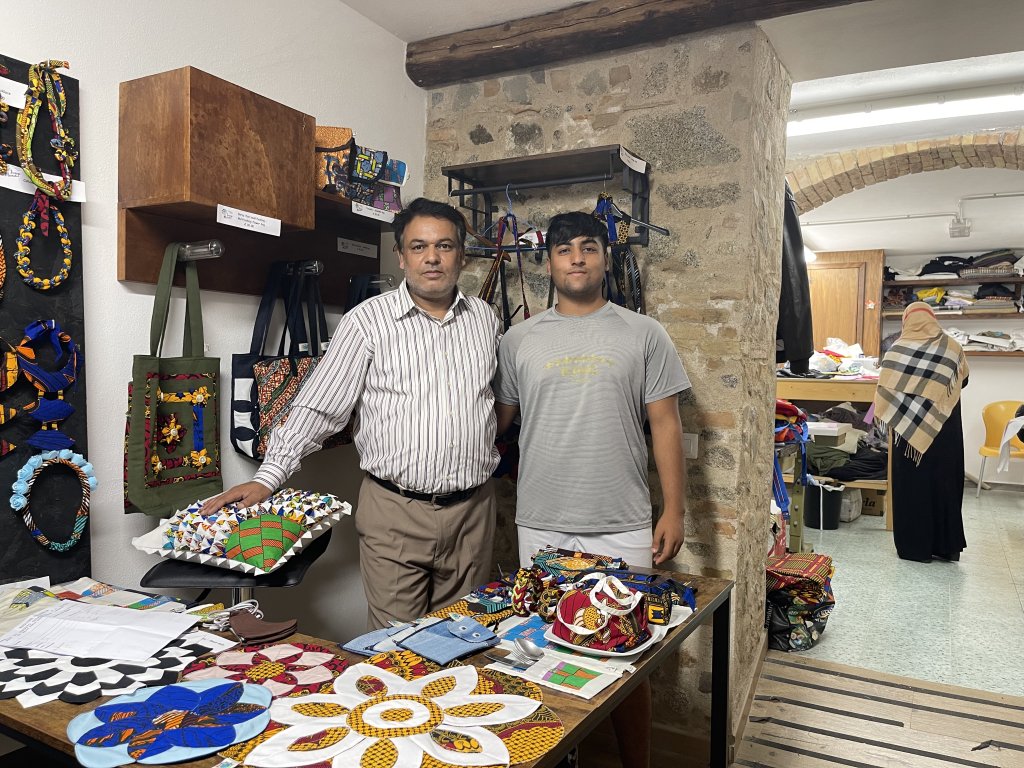
"We've been here for seven years but we still don't feel stable", explains Haseed Bukari, translating for his parents. The family first tried to rebuild their lives in Libya, before the fall of Muammar Gaddafi. In 2014, they resigned themselves to boarding a boat in order to cross the Mediterranean Sea. "My parents love Camini but the problem is transportation. They need to go to the prefecture regularly to renew their residence permit, and I have to accompany them to translate. It is so far away that I miss a day of school every time," Haseed Bukari says. The teenager, who will turn 18 in December, says the first thing he will do once he becomes and adult is find a car.
'Maybe one day the mayor will be called Mohamed'
Seated in the village square, Pino Alfarano, the mayor, has slicked back white hair and a bracelet on his wrist. He has another point of view. "The cooperative gives people hope and a new life for young people," he says. From his perspective, the migrant's impact on his village is positive even if life is different from before.
Also read: Tunisia: Economic crisis drives dangerous migrant journeys to Europe
"Before in this square, there were many people who spoke the same language. Now there are people sometimes but they do not always speak the same language", he says. He goes on to explain that he does not speak Arabic but manages to communicate with "body language."
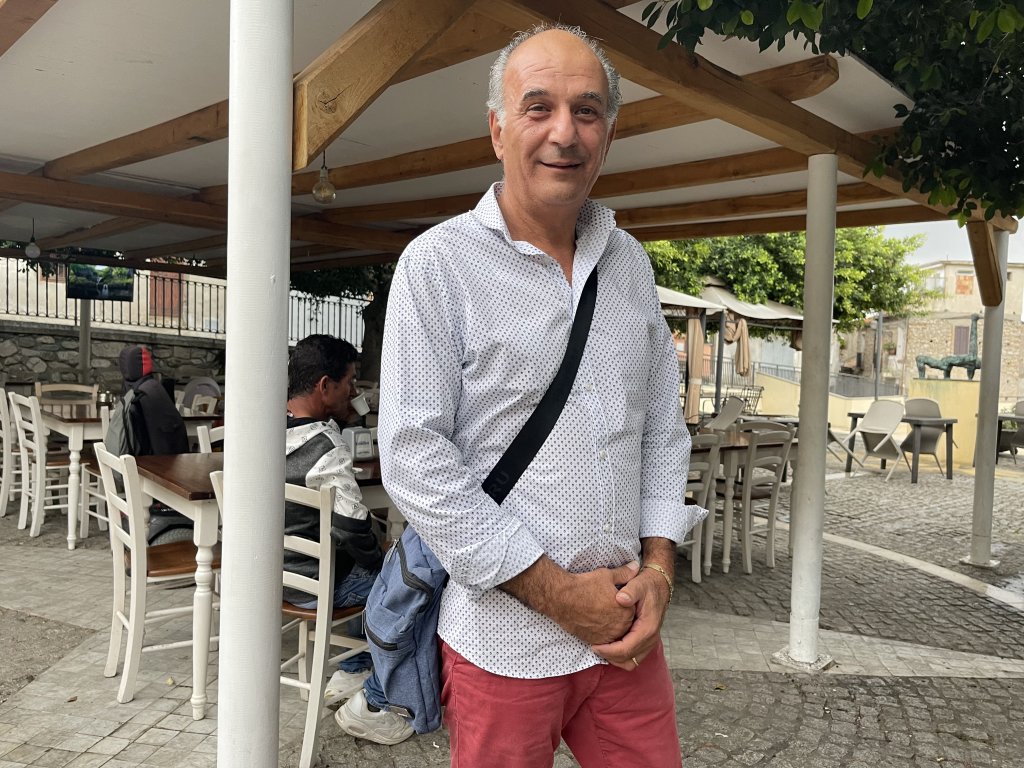
"We wouldn't be here without the migrants. Everyone would have left Camini," adds Rosario Zurzolo. He claims to be influenced by Riace, a neighboring village that was held up as a model in terms of the integration of migrants, after the mayor opened the doors of abandoned houses to accommodate them.
As for any criticism, the two strongmen of the village brush that aside. "Some say we do more for migrants than for Italians. But many Italians simply don't want to get involved in the community," comments Pino Alfarano calmly. "In any case, I am not worried about the idea that our culture will be lost. There are always more Italians than migrants, and the young people who arrive learn about our culture through school. Who knows, maybe one day one of them will be the new mayor. A mayor called Mohamed. So what? It doesn't matter."