
In the impoverished region of Calabria, in the far south of Italy, migrant boats are landing with increasing frequency. They come from Libya, as well as from Turkey and Lebanon. In the small town of Crotone, authorities are reaching out to the newcomers.
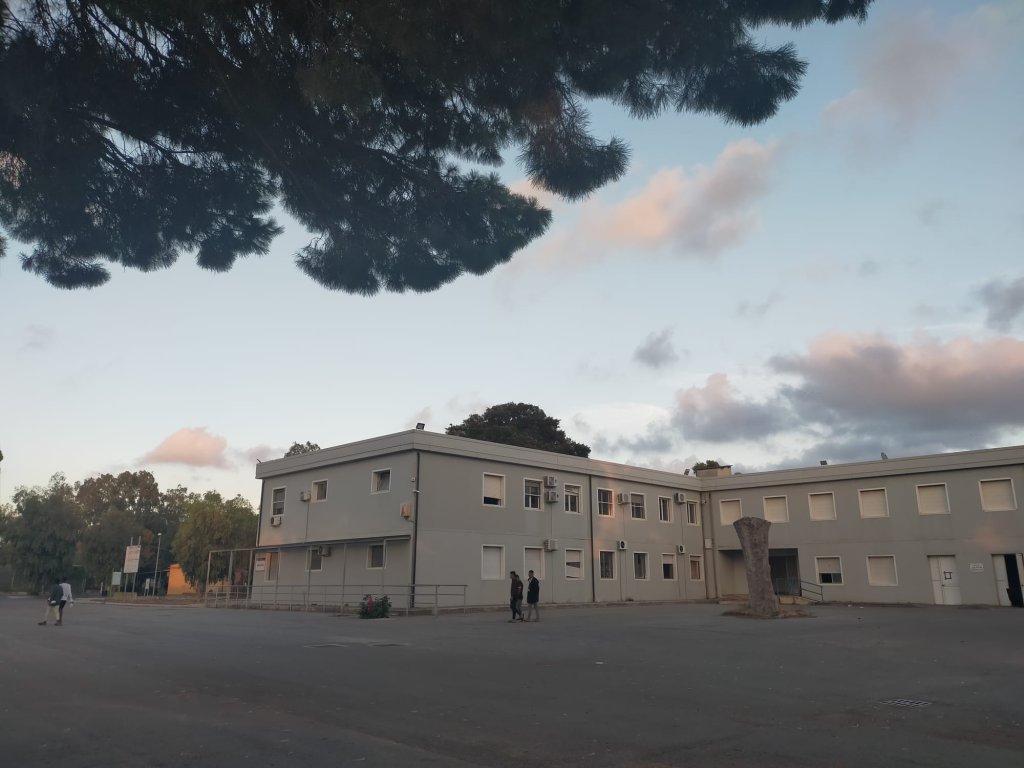
As the sun goes down, the migrants heading for the building where the meals are served have donned the same thin, close-fitting, maroon down-jacket. The clothing provided to each newcomer is reminiscent of a uniform. The men sport similar haircuts shaved on the sides because one of the migrants from the center improvises as a hairstylist. This Thursday, September 29, they joke about with one another while walking in a group, some listening to music on a portable speaker. Despite the austerity of the vast complex which used to be military site, a summer camp atmosphere prevails at the Sant'Anna reception center. The facility is located outside the town of Crotone, in Calabria, the region where those who reach Italy by sea disembark. On this day, the number of migrants to be accommodated by the center managed by the Italian Red Cross is up to 511, including around 200 unaccompanied minors.
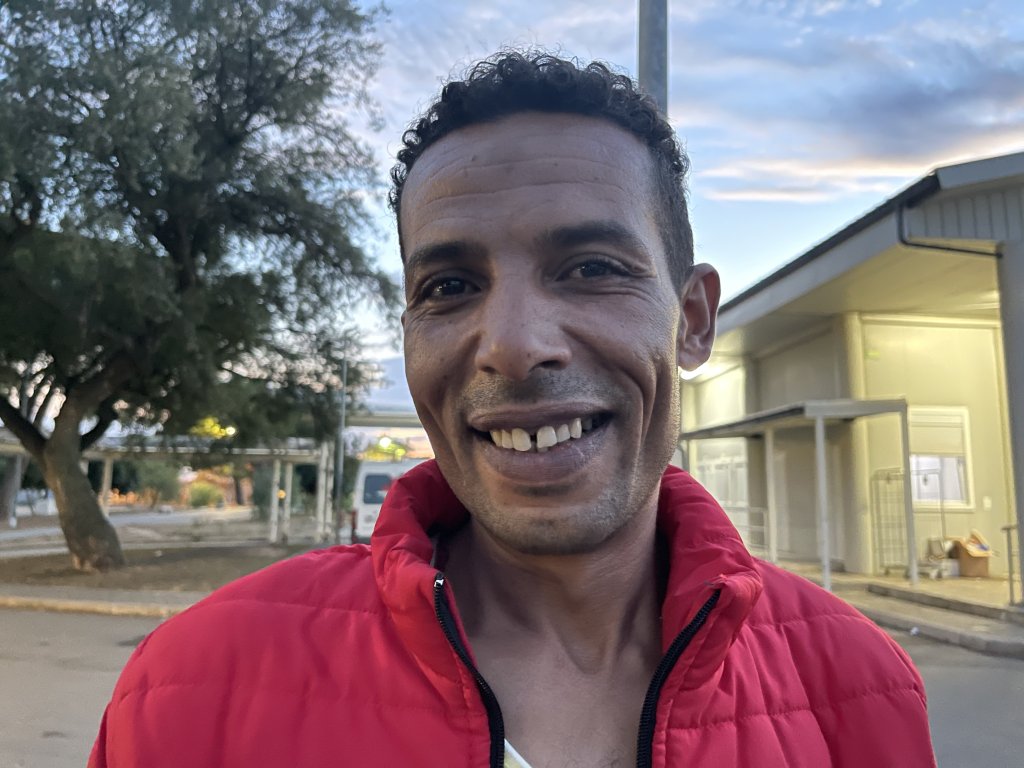
Mahmoud Ahmad Saad, a 39-year-old Egyptian, likes it here. He goes "to school" every day — a classroom located in the center where the migrants learn Italian. "The smugglers told me: 'When you get to Europe, you'll see, you won't be treated well', but I don't think that's the case. I'm fine here. I would like to stay," he says with a smile. Saad left Libya at the end of August and then crossed the sea on a fishing boat together with 475 other people. On board, he felt "death". He remain in a sitting position, eating dates, for five days. When the Italian shore came into sight, he exploded with joy, like thousands of others this year.
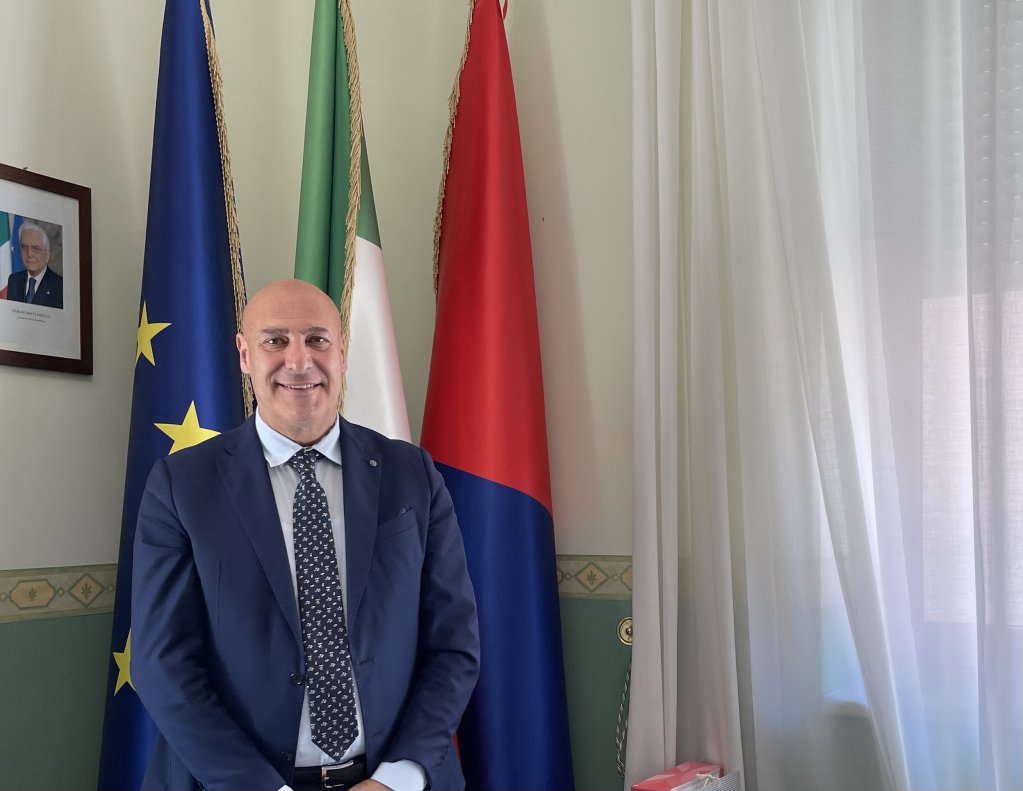
More than 71,000 people disembarked between January and the end of September 2022 along the Italian coast, a figure that has increased three-fold compared to the same period in 2020. The increase has not gone unnoticed in Calabria, a region located in the far south of Italy which has been a landing point for migrants from the Middle East and Africa for several years. Arrivals mainly take place in Crotone, or a two-hour drive away, in Roccella Ionica. "This summer, we saw boats almost every day, sometimes twice a day," says Vincenzo Voce, mayor of Crotone, seated in the imposing town hall of this municipality of approximately 60,000 inhabitants. Only two days before, a boat had arrived again.
Sailboats and large fishing boats
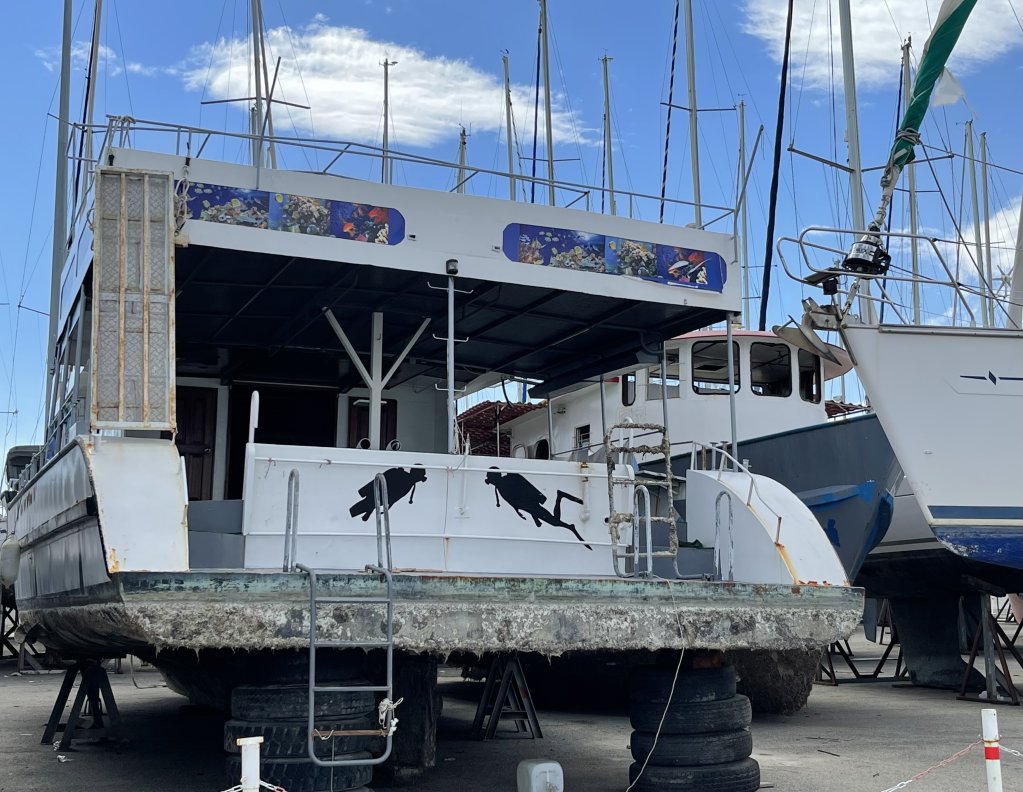
The remnants of the numerous crossings are kept under high security in the city’s port. About fifty boats, mostly sailboats and a few large fishing boats, sit on the concrete. Some display inscriptions in Arabic, as if engraved by someone on the hull, others have shredded sails that suggest the violence of the crossing. One of the boats appears to have once been a boat for transporting tourists on snorkeling trips: the hull is decorated with drawings of divers equipped with flippers and oxygen tanks swimming alongside corals and beautiful fish.
Like Mahmoud Ahmad Saad, many of those who boarded these boats are Egyptians who left the Libyan coast for a journey averaging from four to seven days. Some migrants have come from even farther away-places, such as Turkey or Lebanon, making the extremely dangerous journey across the Mediterranean that can last two weeks. Previously, these people would have stopped earlier along their route, but circumstances on the ground have changed their itinerary.
Also read: Poverty, restrictions, censorship: What's driving Egyptians to head for Europe
'Migrants pass Lampedusa without stopping'
"Migrants prefer to avoid (illegal) pushbacks in Greece and along the Balkan route [where countries have tightened border controls in recent years: ed's note]," says Giovanni Perna, the coordinator for Doctors Without Borders (MSF) in the region. "We have even recently seen people on boats pass Lampedusa without stopping. They have heard of mistreatment taking place on the island and of the difficulty of leaving the island’s reception center. They decide from the onset of their journey to set sail for Calabria," he continues.
It is difficult to speak with the many Syrians, Palestinians or Lebanese who have undertaken the journey from Turkey or Lebanon. After staying in a closed part of the Sant'Anna center during the period of their identification, these migrants immediately head north, without applying for asylum in Italy. They aim to reach Germany, France or the United Kingdom, where they say they have relatives, explains Ignazio Mangione, head of the Italian Red Cross and director of Sant'Anna.
For the other migrants from countries considered as "safe", to which they could be sent back, such as Egyptians, the priority is to gain authorization to stay quickly, via a refugee status or any other kind of legal permit.
'In the center, there are food distributors'
Ali, a 19-year-old Egyptian, has been at the center for 20 days. The young man fled his country to find work, which he found on construction sites in Libya, but he soon regretted his choice of destination. "I wanted to leave, so I took to the sea. Beside me in the boat, there were Syrian families," he says. He too is pleased with his arrival in Italy. "I'm treated well. At the center, we have choices of what to eat and there are even vending machines," he says.
During the day, Ali has a routine. He leaves the Sant'Anna center in the late morning – comings and goings are allowed from 8am to 8pm – and takes a bus to downtown Crotone, where he spends time on the streets which are full of street vendors and the smells of fried food.
"When we go downtown, people smile at us and treat us with respect," adds Khaled, a 36-year-old farmer, also Egyptian, and father of three, who arrived alone on September 14 from Libya. "I hope to be able to bring my children here as soon as I get asylum and find work," he says.
Unemployment
However, nothing is less certain for Khaled. This deprived region is one of the poorest in Europe. In Crotone, the unemployment rate is at 60%, according to the mayor, Vincenzo Voce. "It's a big problem," he says. As a consequence of this absence of economic prospects, Calabria, despite being the place of arrival for migrants, contains only 5% of the migrant population in Italy.
The mayor is saddened even more by the election results of September 25, which saw the accession of the extreme right to power in Italy. He fears a harsher stance forming towards those who enter the country illegally. Unlike many, he shows empathy towards migrants. Crotone is also one of the Italian cities granting honorary citizenship to children born in Italy to migrant parents. "They have been through so much, the desert, prison [in Libya: ed's note]. Here, they want to rebuild everything," says Vincenzo Voce.
Also read: French NGOs fear comeback of anti-migration policy in Italy
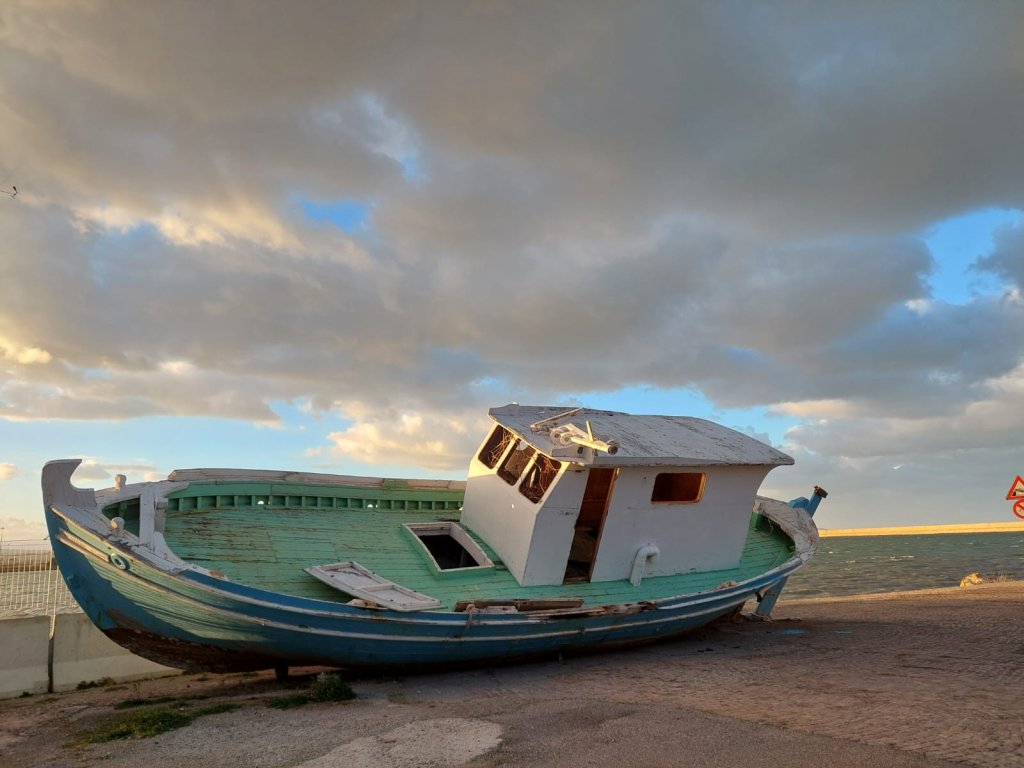
In their homage, he decided to make the symbolic gesture of saving one of the boats found at sea from demolition. The wooden fishing boat, which arrived on the Calabrian coast in March 2020 will be entrusted to an artist and then exhibited in the city in early 2023. "It will be a symbol of peace and welcome."
Also read: Lampedusa, the stories of migrants who survived shipwrecks