
37 civil organizations and charities sent a letter to Greek authorities, addressing the alleged mistreatment of LGBTQI+ asylum seekers in Greece. The letter was addressed directly to Greece's Secretary General of Reception of Asylum Seekers Manos Logothetis and Secretary General of Migration Policy Patroklos Georgiadis.
Among the 37 signatories to the letter were the Greece branch of the Danish Refugee Council, the International Rescue Committee (IRC), the Jesuit Refugee Service Greece (JRS Greece) and several LGBTQI+ associations focused on dealing with the needs of migrants and refugees.
Highlighting specific issues raised among LGBTQI+ migrants and refugees, the letter almost resembles a report, focusing on issues pertaining to three key topics the organizations involved had identified as problematic: shelter and security, services and support as well as asylum procedures.
Shelter and security
In the sections focusing on shelter and security, the letter sent to Greek authorities presented grievances brought up by LGBTQI+ migrants. Among other issues, it addressed the idea of housing LGBTQI+ minorities in separate areas, criticizing that this would ultimately be counterproductive.
"(A) specific dedicated area for LGBTQI+ people within the camps would not be appropriate as there is a risk of further isolation and stigmatization. Nonetheless, at present Greece is failing to provide appropriate reception conditions for LGBTQI+ applicants," the letter stressed.
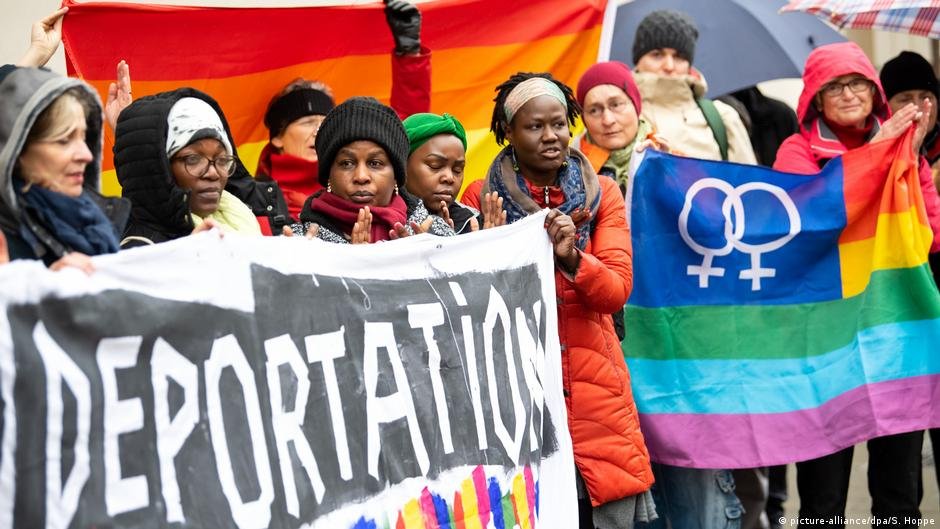
The letter also highlighted, however, that resorting to so-called 'mixed housing', whereby LGBTQI+ asylum seekers are housed with non-LGBTQI+ people, was equally difficult:
"(It) does not allow for the applicant to feel safe or comfortable to be open with their identity. Resultantly, people who have fled their countries are still having to hide and conceal their identity at all times," the letter said, adding quotes it had collected from LGBTQI+ refugees and migrants.
"Hiding in my country and hiding here, it's no difference"
This quote is one such example of the sentiments shared among LGBTQI+ asylum seekers.
Among the recommendations to improve conditions for LGBTQI+ migrants and refugees in Greece, the organizations recommended among other things that efforts should be stepped up to ensure "that the relocation to a confidential and discreet LGBTQI+ specific housing in the local city or town is an available and accessible option."
"In cases where it is not possible to relocate LGBTQI+ individuals to specific housing, improvements within the camp setting are needed," the letter reads. "For example, ensuring increased privacy or creating safe spaces in camp would be extremely helpful. In addition, accommodation with less people cohabiting in the same space can reduce the risk," the letter further suggested.
Read more: Germany: LGBTQ+ man from Algeria refused refugee status in court ruling
Services and support
The open letter also looked at mental health issues and said that there wasn't enough support available to LGBTQI+ asylum seekers -- or that only few knew of having opportunities to speak with a counselor or psychologist.
"At minimum, training should be provided for all personnel working directly with asylum seekers on the particularities of LGBTQI+ asylum claims," the document read, asking also for a dedicated focal point to be set up in each camp "with information and referral services for psychosocial support for LGBTQI+ applicants."
"The focal point should be discreet and sensitized to LGBTQI+ issues," the section on services and support stressed.
Read more: Queer refugees: UNHCR wants more protections
Asylum Process
The longest section of the document focused on issues dealing with LGBTQI+ individuals seeking asylum and the help they receive during their application process. The letter penned by the 37 organizations stressed that despite the fact that LGBTQI+ applicants enjoy special protections under EU and Greek law, "it is currently being noted that these standards are not being adhered to."
The letter not only cited repeated procedural violations in LGBTQI+ asylum processes, it also alleged that prohibited questions contrary to European Union law and international standards were being asked during asylum interviews.
These apparently include questions probing with whom a LGBTQI+ migrant may have had sexual relations, or why they hadn't had sex in Greece -- where same-sex sexual acts are legal -- "since you love it so much."
The documents also highlighted instances where individuals weren't verbally attacked for their sexuality, but suffered derogatory remarks pertaining to other attributes. These include assaults against the intellect of LGBTQI+ individuals seeking asylum -- "you are an educated man. Weren't you aware that homosexuality is a crime in your country?" --, or against their personal development: "You have a daughter, can you explain that since you are a homosexual?".
LGBTQI+ applicants are "routinely asked questions which demonstrate a lack of training or understanding with regards to sexual orientation and/or gender identity," the letter stressed.
Read more: German authorities accused of revealing sexual orientation of asylum seekers
'Forced interrogation'
The open letter found that in general terms, LGBTQI+ considerations were not sufficiently understood among many of the people who work in assessing and processing asylum issues for the Greek Asylum Service.
It underlined the fact that asylum applicants had been rejected on the basis of stereotypical notions, including on the grounds of a lack of knowledge of LGBTQI+ organizations.
It also said that from the perspective of LGBTQI+ minorities seeking asylum, there were numerous reports of encounters of skepticism and prejudice "to the extent it was described as similar to a 'forced interrogation.'"
Read more: Dutch government cracks down on Ugandan asylum seekers after 'fake' LGBT claims