
The UK Home Office has enlisted two private companies to help pick up migrants in the English Channel. While one company appears to be a small enterprise, the other one is part of a large investment and consultancy firm based in the US.
The two contracts are said to have cost more than £2.5 million (€2.9 million), and allegedly also involve staff working on the boats to assist in missions in the Channel. The two beneficiaries of the government tenders are reported to be the UK-based companies Aeolian Offshore and CWind.
Aeolian Offshore, which usually services the offshore wind turbines, is the larger of the two beneficiaries, making nearly £2 million in profits from the government contract for providing three of its boats for six months. CWind, which also works for the wind industry, meanwhile made £564,000 in five months.

Details of the two deals emerged amid a number of controversies at the Home Office in its handling of the surge in Channel crossings. Despite deportation flights being halted for the time being, Britain's controversial Rwanda policy continues to make headlines -- most recently with news of higher suicide rates among migrants since the policy was first floated in April.
There's also division at the Home Office as well as at the Ministry of Defence in regards to Operation Isotrope -- Home Secretary Priti Patel's plan to receipt the Royal Navy to help out in the English Channel and deter people from reaching Britain. Meanwhile, the UK's general reception of migrants intercepted in the Channel has also repeatedly come under fire.
Read more: UK plans to outsource asylum processing to Rwanda
24 meters in length: big enough for over 100 people
The Aeolian contract stipulates that the three vessels sail into the Channel from the port of Ramsgate to react to "reported sightings of migrant vessels, to collect the migrants found." It started in June and is due to end next January, according to The Guardian.
While the contract says that "Border Force staff will conduct all migrant movements and work the deck areas while at sea," it also states that some Aeolian crew "may be required to assist" with managing the intercepted migrants.
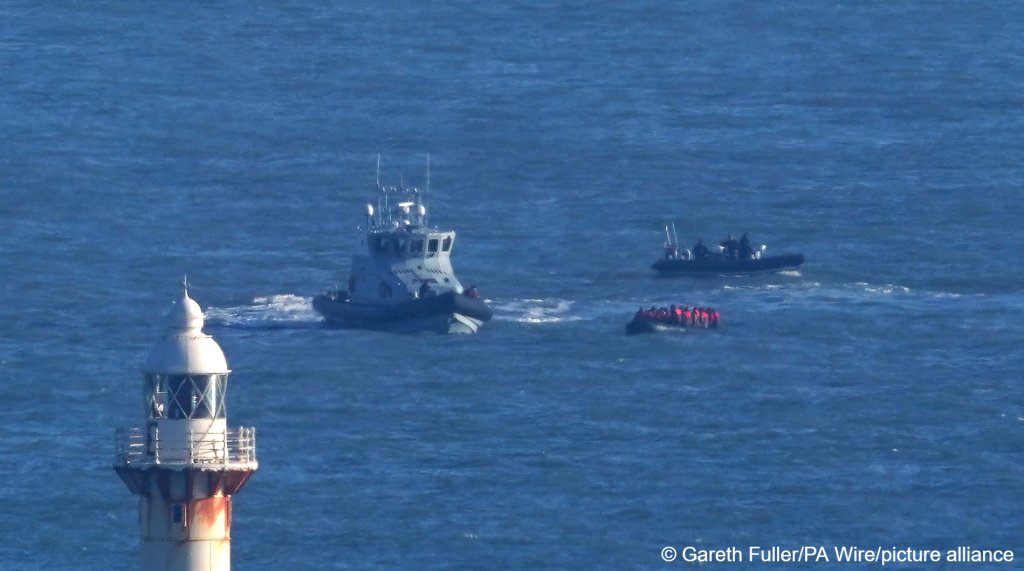
The UK government also requested that the boats must be able to accommodate a "minimum of 100 migrants" on deck -- plus have the capacity to tow any boats that the intercepted migrants may have used to try to cross the Channel. Normally, the vessels used by Aeolian have space only for three crew and 12 passengers.
Seacat Services meanwhile claimed that there was enough room on board for 100 people in addition to 12 Border Force staff and three crew. The three vessels used, however, are reported to be 24-meter-long catamarans.
Read more: Why do migrants try to come to the United Kingdom?
Ethical concerns for small enterprise?
Public records in the UK meanwhile show that Seacat Services, which owns Aeolian, is exempt from filing full details about its accounts, which under UK law only applies to certain such incorporated entities:
Companies which do not have to file full accounts must have two of the following three qualifiers fullfilled: they must have an annual turnover of less than £6.5 million, assets of no more than £3.26 million or fewer than 50 people employed as staff. By this definition, it qualifies as being a small business under UK law.
Ian Baylis, the founder of Seacat Services, said the company was partly motivated by the "humanitarian" dimension of the contract: "(The tender) secures employment for our vessels and therefore crew, but also we felt this work was an important thing to be able to assist with, given the importance of the humanitarian element."
Former top US politician lining his pockets
Details about the second government contract with CWind appear to be sparse at this point, however, The Guardian reported that the outline disclosure of the deal says that its services for government involve "personnel transfer in support of migrant operations."
The company is apparently owned by US investment firm JF Lehman & Co (JFLCO), which says is delivers "attractive risk-adjusted returns as sector-focused private equity investors" in various sectors, including "Defense and Government" as well as "Maritime."
The chairman and founding partner of JFLCO, John F. Lehman, is a former Secretary of the US Navy who served under the administration of former US President Ronald Reagan from 1981 to 1987, and has been involved in the fringes of conservative US politics since.

Channel crossings keep breaking records
The Home Office has not addressed the reports of the two companies being used to intercept migrants. It merely referred to the fact that it does not comment on operational matters.
However, in a statement, it said that it would always "ensure Border Force have the resource they need to protect our borders, including cracking down on the unacceptable small boat crossings and to save lives in the Channel."
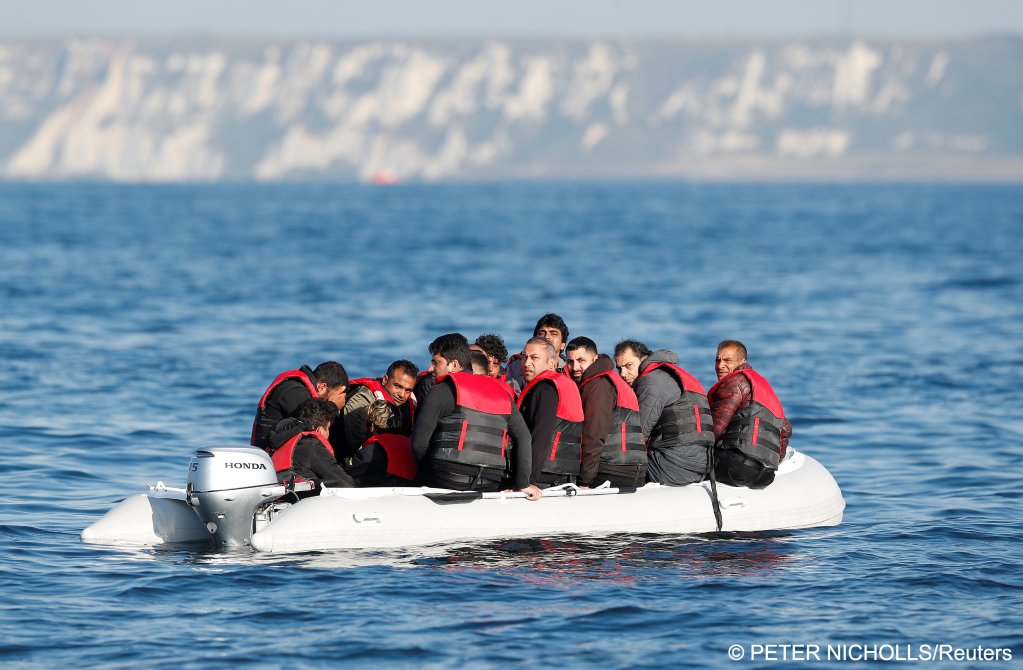
As details of the government's outsourcing actions were revealed, the number of migrants crossing the English Channel meanwhile hit another record: In August, more migrants managed to cross the Channel from France to the UK than ever before in any given month.
More than 8,500 people managed to make their way to British soil using this irregular method of migration, the Home Office announced. A total of 189 boats and dinghies were also accounted in the Home Office statement.
Read more: Two categories of refugees under Britain's new law
The majority of those coming to the UK this way reportedly were Albanian nationals, who are highly likely to all be deported back to their country as it is considered a safe country of origin.
So far in 2022, more than 25,000 people have reached British shores from across the Channel. It is believed that at least some of the migrants are persuaded by smugglers to act quickly while the Rwanda deportation policy remains suspended, pending legal action.
They are thought to believe that if they manage to get to the UK during the suspension, they will not be sent to Rwanda if the policy were to be deemed legal and thereby enacted.
Read more: Migrants crossing the English Channel hit new 24-hour record
Government and private sector fighting irregular migration together
Private enterprises are becoming increasingly scrutinized by the public in the UK for their potential roles in the country's migrant policies. Some activists have called for boycotts of organizations like Aeolian and CWind, which are happy to assist the government fight irregular migration, while making a profit.
Meanwhile, other companies have publicly distanced themselves from assisting the government with their migration policies: certain commercial airlines like Virgin and Titan Airlines have ruled out assisting the Home Office with any deportation activities.

With the next British prime minister to be announced on Monday (September 5) immigration is poised to remain on the forefront of the government's agenda as one of the top issues. With both candidates, Liz Truss and Rishi Sunak, being supporters of free enterprise and limited government interference, and with both having promised to continue the UK's current asylum and immigration policies, it is likely that the UK will continue to seek help from business to do its bidding.
Read more: Terms and acronyms that asylum seekers need to know in the UK