
A privacy group has filed complaints with UK regulators following claims by asylum seekers forced to wear GPS ankle tags that they are being "treated like animals."
The UK Home Office began using GPS ankle tags on asylum seekers in June to track their movements while they waited for a decision on their immigration status.
The tags, which are usually used for criminal offenders, record data about the wearer’s movements at all times. Critics accuse the government of treating people who have fled persecution as criminals.
"This draconian and punitive approach not only shows no compassion for very vulnerable people; it will also do nothing to deter those who are desperately seeking safety in the UK," said Enver Solomon, the chief executive of the Refugee Council.
Read more: Electronic tags proposed as latest addition to UK's 'Rwanda policy'
Impact on health and relationships
Since the pilot scheme was introduced for migrants, the charity Bail for Immigration Detainees says the impact on asylum seekers’ mental and physical health, and family relationships, has been disastrous. "They report feeling depressed, ashamed and stigmatised and many have told us that they are being treated like animals," Rudy Schulkind, the group’s research and policy coordinator said in a report by Privacy International (PI), a charity based in London.
"Being forced to wear a GPS ankle tag structures the minute details of an individual's life including the clothes they wear, the public places they go to, how they pray or exercise or care for their children. The experience of being constantly watched through 24/7 surveillance is particularly traumatising for people who are already particularly vulnerable including survivors of torture or modern slavery," said Schulkind.
Migrants have confirmed to PI that the use of tags discouraged them from learning English or taking part in sport. "Sometimes I just go to buy food, not anywhere else. I don’t want people to see the tag and it’s not comfortable, but I have no choice," one person said.
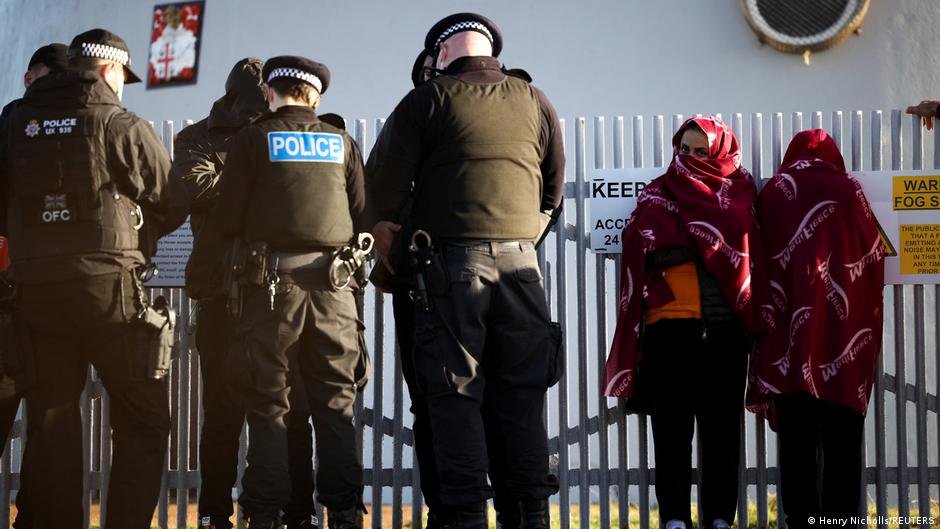
Call for investigation
Alarmed at what it considers a "seismic change in the surveillance and data- intensive systems used against those subject to immigration control," PI last week announced that it had filed complaints with the Information Commissioner’s Office (ICO) and the Forensic Science Regulator (FSR) against the practice of tagging of migrants.
Anyone subject to immigration control, including asylum seekers, can be GPS tagged, according to PI. A person may be ordered to wear an ankle tag if they are released on bail from immigration detention. The main reasons for detention are that the Home Office believes the migrant will abscond, their identity needs to be established, or they are about to be removed from the UK.
PI’s main arguments against the tagging scheme are that it breaches data protection laws and violates the right to privacy in a number of ways. It says 24/7 monitoring of migrants is excessive, subjects are not informed about the nature and extent of data collection and processing, and the scheme lacks safeguards.
This form of surveillance also poses a risk to fundamental rights and freedoms, according to PI. The Home Office plans to use individuals' GPS location data instead of evidence from third parties to inform decisions on their asylum and immigration applications. This "inevitably leads to a permanent anxiety of going places or making journeys that might later be judged as damaging to their immigration application - thereby further impacting their rights to free expression, movement, assembly and association," PI argues.
Inaccuracy of location data
The charity is also calling on the Forensic Science Regulator to investigate claims of technical flaws in the Electronic Monitoring system, following critical reports from the National Audit Office and the Independent Chief Inspector of Borders and Immigration. With reports of the tags failing to charge properly – migrant organizations say they have poor battery life and need to be charged multiple times a day, according to the website ComputerWeekly.com. Inaccuracies in location data can give rise to an error of 100m or more, it added. PI says migrants may be wrongly accused of being in breach of bail conditions resulting in civil and criminal penalties.
"Data extracted from GPS tags could lead to the loss of liberty and prosecution of an individual who has done nothing more than be forced to wear a tag that does not work as it should," said Camilla Graham Wood, research director at PI.
Critics of GPS tracking say there are alternatives, such as radio frequency tags which were used until January 2021. They also point out that the number of people released from immigration detention who do try to abscond is low – in 2020 it was only 1%, according to Computer Weekly.