
Since tightening its migration policy in 2025, Mauritania has carried out large-scale expulsions of undocumented migrants, but also sometimes of those with legal status. These individuals say daily life has become extremely difficult in a general context of hostility from the population, violence, and harassment by authorities. InfoMigrants collected the testimonies of three Senegalese nationals, all fishermen, who were affected by this anti-migrant policy.
By Clémence Cluzel, special correspondent in Senegal
Having become one of the main departure points for migrants seeking to reach Europe by crossing the ocean to the Spanish Canary Islands at the end of 2023, Mauritania has intensified its efforts to combat irregular migration since the beginning of 2025.
Operations have increased, both on land and at sea, resulting in thousands of arrests of foreign nationals who were subsequently largely turned back at the borders. Between January and April 2025, Mauritania intercepted more than 30,000 migrants, according to government sources cited by the Spanish newspaper El País.
Due to the geographical proximity between the two countries, Senegalese nationals are among the largest groups of foreigners living in Mauritania and most often work in the fishing industry.
InfoMigrants collected testimonies from three Senegalese nationals, all fishermen, who were victims of this anti-migrant policy, supported by the European Union, to prevent boats from leaving for the Canary Islands.
Lamine, 29
"I left Mauritania to return to Senegal in October 2025 because of the situation in the country. I wanted to avoid being deported because if that happened, I would have difficulty returning to Mauritania in the future.
If their fingerprints are taken, foreign nationals are banned from Mauritanian territory for two years.
The young father had been making trips back and forth between the two countries for several months at a time since 2012. His wife and three-year-old child had joined him in Nouakchott." (northern Mauritania) with the aim of leaving together for Europe. Now, they are back in Thiaroye, a suburb of Dakar. Lamine hopes to return to Mauritania legally: he has already submitted a residency application.
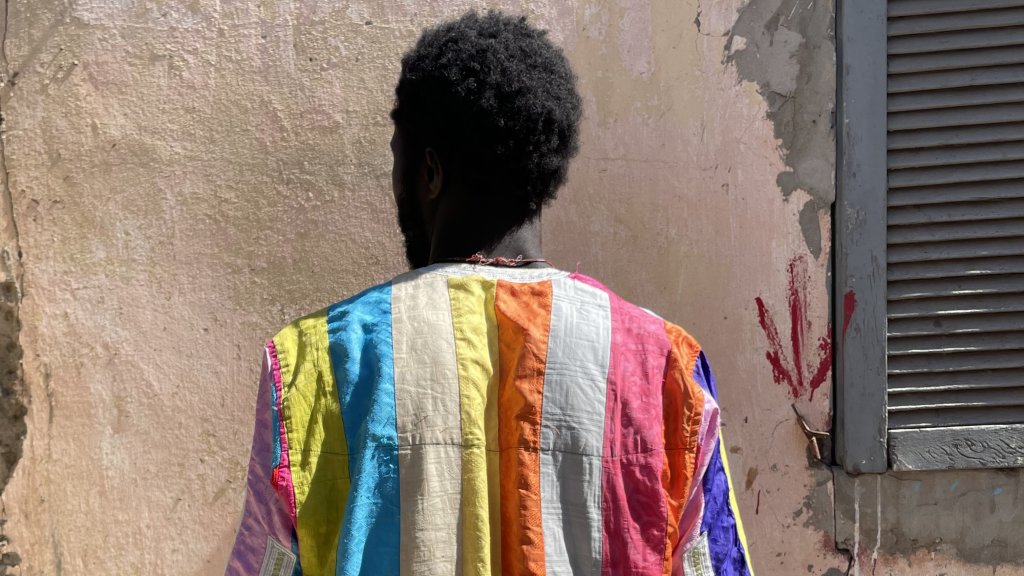
The situation there is very difficult; foreigners face many daily challenges. It is easy to enter the country, but staying has become very complicated because of the numerous and daily checks. Mauritanians do not respect foreigners; they accuse us of everything. Problems. Black people are slaves in this country.
A friend was arrested and taken away because his papers weren't in order. He was put in a cell and quickly deported to Senegal. His wife and child weren't informed and found themselves alone, without support overnight.
Despite the increased controls, I think there are still opportunities to leave for Europe. Mauritania, like Senegal, is a corrupt country; there are always people, like police officers who are paid, to organize departures in pirogues.
Lamine is determined to try crossing the sea again: he's planning to leave for the archipelago this summer, during the rainy season, which offers better weather conditions. From Mauritania, as he's already done once, or from The Gambia.
I have friends who are preparing to leave Gambia. I am ready to take any risk because there are no solutions in Senegal. I have many worries on my mind. I can't live here without the means to support my family; I have to leave again. I have to ask my 90-year-old father to buy me breakfast! Meanwhile, young people who left for Spain in 2019 have bought land here and are building their houses."
Magueye*, 39 years old
"If we don't have the proper documents, even when the travel permit is about to expire, the authorities harass us to pay them, otherwise they arrest us and deport us. Mauritanians create daily hassles for us to force us to pay.
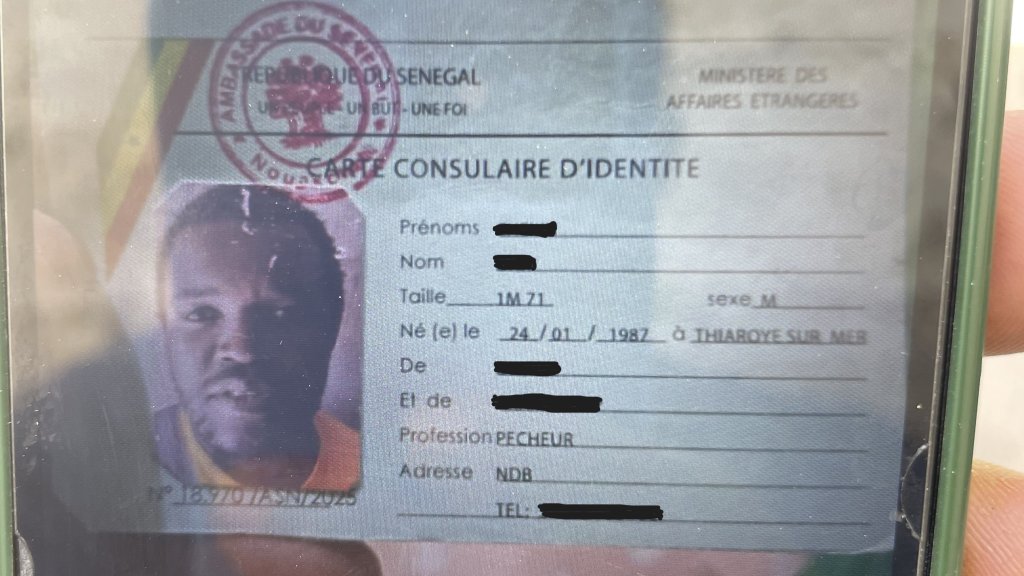
Upon entering the country, a Senegalese national must obtain a "laissez-passer" issued by the Senegalese embassy in Mauritania. This permit is valid for three months and costs 12,000 CFA francs (18.29 euros). Once it expires, they must apply for a consular card, costing 30,000 CFA francs (45.73 euros), to obtain a one-year residency permit.
Several associations and migrant rights advocates, as well as professional fishing associations, denounce the slow issuance of these documents by Mauritanian authorities. These excessive delays and the difficulties in obtaining them plunge migrants into illegality and insecurity, since without proper documentation, they become undocumented and risk arrest and deportation.
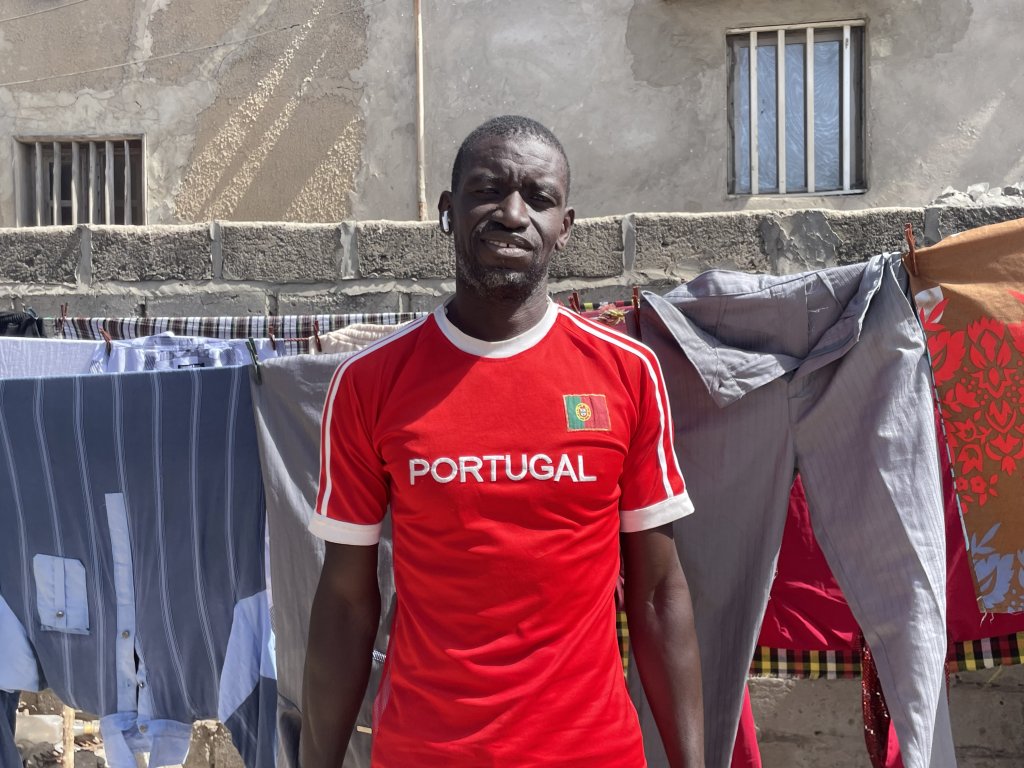
There is no respect for the rules or for foreigners. Some have valid documents, receipts, but the authorities refuse to acknowledge them. In their eyes, we are always at fault. They extort money from us, break into our homes, and wake us up at night. We are never left alone.
Relations with the local population are difficult; things are not going well. They report foreigners to the police and accuse us of being bandits. They don't want to see us.
Magueye was deported from Mauritania in October 2025. The Senegalese fisherman had been living there for a year and hoped to reach the Canary Islands by sea. He had already tried to leave Gambia in 2009, and then from the Senegalese coast. His last attempt, from Mauritania, failed when his pirogue was intercepted by the authorities, who simply confiscated the fuel without arresting the migrants.
The Mauritanian gendarmerie arrived at the house where we were staying with about thirty other people, mostly Senegalese, in the middle of the night. They had followed us from the fishing pier where we had landed. They forced the door open, asked no questions, and then started beating us. I was hit in the back with a baton. One person had their arm broken from the violent blows.
Mauritania is heavily criticized by human rights organizations for its treatment of migrants. In a report published in September 2022, the NGO Human Rights Watch (HRW) accused Mauritanian authorities of committing "serious human rights violations" against migrants and asylum seekers between 2020 and early 2025.
We had to leave all our belongings behind and ended up with nothing, without any money. Not going to the police station, they put us in a truck to go to Rosso [one of the border crossings with Senegal]. There were foreigners there; they had already been arrested in several other neighborhoods of Nouakchott. There were about 200 of us, including women and children. Mauritanians left us to fend for ourselves, without water or food. We had to walk two kilometers by foot to reach the border with Senegal. There, Senegalese police officers told us to call our families so they could send us money and we could return home. Everyone had to manage on their own; there was no help from the authorities. A woman at the border gave me a doughnut and some water because I hadn't had anything to eat or drink since the arrest.
Magueye managed to contact his family, who sent him 10,000 CFA francs (15.24 euros). At the end of the day, he finally managed to get a "seven-seater" (a shared taxi) to Dakar.
I spent about 230,000 CFA francs (350.63 euros) to come to the country; it's a waste because I'm starting from scratch again when I return to Senegal.
However, he says he's ready to try again if an opportunity to leave arises.
Cheikh, 49 years old
Things started out very hard in Mauritania: I did odd jobs like bricklaying, I sold things at the markets, but it didn't pay. So I went back to fishing in Nouadhibou, with a three-month contract. But after two and a half months, problems began to arise. I was harassed and intimidated: if I didn't pay, they took me to the police. I hid from the checks because I didn't have the money to apply for my consular card.
Having settled there in November 2023, Cheikh was finally arrested in February 2025 and deported to Senegal a few days later.
We were arrested at 2 a.m. as we were returning from our day's work at sea. A patrol followed us to arrest us at our home. We were tortured, beaten with wooden sticks.
The police know very well where foreigners live: there are few cities in the country, and they know the houses where we live. There are also local informants who provide them with information.
After his arrest, Magueye was locked up for two days in what he calls a "prison," where arrested migrants receive very little water and food. Because the place is located near the sea, when the tide is high, the water also rises in the cell.
There were many people in the cell, and the water was up to our waists.
The migrants are then driven for over 11 hours to the Rosso border post (Senegal) to be deported from the country.
We were in the car the whole time. There were no stops to relieve ourselves, eat, or drink. My legs were aching terribly when we arrived, and I was exhausted. When they left us, the Mauritanians knew we were too weak to walk back to Nouakchott.
In early 2025, these deportations sparked fierce criticism in West Africa, prompting countries like Mali and Senegal to express their outrage. Mauritanian authorities described the deportations as "routine" operations targeting undocumented migrants.
Mauritanian authorities play politics in front of the cameras but do nothing on the ground!
Cheikh, a father of three children, denounces the absence of NGOs and authorities at the border to provide support for the expelled migrants.
With no phone number to contact and no money, Cheikh helped out at the market in exchange for a few coins to pay for his transport to Dakar. He managed to leave that same evening.
I explained my situation to the bus driver who helped me: I was able to pay 3,000 CFA francs (4.57 euros) for my trip. And I was finally able to sleep. Before that, I was too stressed to rest.
Back in Thiaroye, Cheikh was reunited with his wife and children. It wasn't the first time the fisherman had tried to reach Europe by sea: he had tried three times before, from Senegal.
When I returned, my children were happy to see me, but my family was discouraged because they were counting on me to support them and hoped I would make it to Europe. I'm going to keep trying because Senegal is tough; the people are poor and struggle to feed themselves. I know it's different in Europe, as evidenced by the migrants who live there: they build houses back home and support their families.
I'm a fisherman; I know the sea. My wife knows about my plan to leave. But I wouldn't take the responsibility of putting a child on a canoe because I know it's a dangerous journey."
*The name has been changed.