
Marie and her seven-year-old daughter, Aya, are from Cameroon. They were imprisoned in the notorious Zawiya and Abu Salim prisons in Libya in 2024 and 2025, for several months each time. They now live in Zintan, south of the capital. Here is their story.
Marie* and her daughter Aya* left Cameroon in 2022. Marie said she fled an abusive husband who frequently raped her. She fled to Nigeria, then crossed into Niger, traversed the desert, and reached Algeria. With her four-year-old daughter, she arrived in Libya, hoping to cross the Mediterranean Sea and reach Europe. She shared here story with InfoMigrants.
"My first time in prison was at the beginning of 2024, after an attempt to cross the Mediterranean Sea.
I was with my daughter and a friend of mine, who had paid for the crossing for the three of us. The smuggler had just launched us into the sea [a term used by migrants when they board a dinghy to cross the Mediterranean, editor’s note], from Zawiya [west of Tripoli, ed.]. But we were intercepted after a few hours by Libyans. They brought us back to shore. When they arrested us, they told us they were going to repatriate us to our country. But that was a lie; they locked us up.
Since 2017, Libyan authorities have been tasked by the European Union with intercepting migrant boats leaving irregularly for Europe, particularly for the Italian coast of Lampedusa, 300 kilometers from Libya. By 2025, more than 26,000 migrants had been intercepted at sea and forcibly returned to Libya. These interceptions were frequently marred by violence. Libyan coast guards are regularly accused of using firearms during these operations. Once ashore, the migrants are generally sent to detention centers.
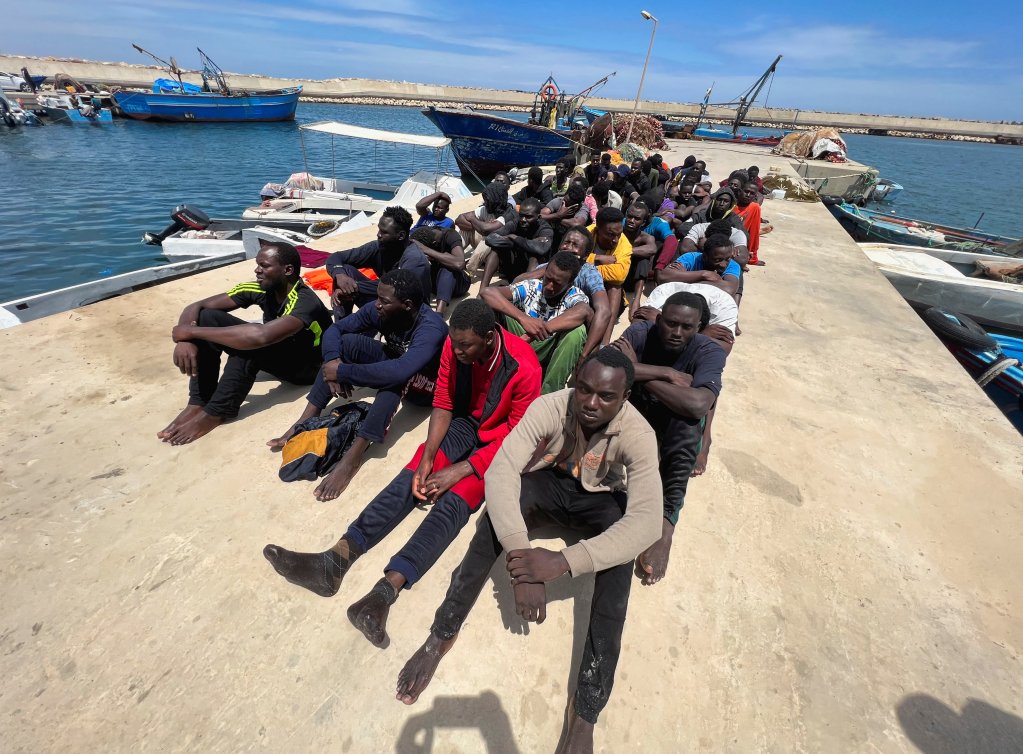
They took me to the Zawiya prison. I stayed there for three months with my daughter. I was beaten, I was hit. I didn't have the money to pay the 5,000 dinars [approximately 670 euros] ransom the Libyans demanded for our release. That's why I stayed there for so long, at the ‘Osama Prison' [the nickname given to the Zawiyah center, ed.].
After three months, Marie managed to escape with her daughter and dozens of other migrants who revolted and "broke down the prison gates," she explains.
'Everyone fell into the water'
Once out of prison, I tried to cross the Mediterranean again. This time, the Libyans didn't stop us, but the dinghy was poorly secured, everything was wobbly. When the smuggler launched the boat, some immediately wanted to turn back, return to the beach. But others wanted to continue anyway. So we kept going. No one had a life jacket.
After an hour, there was a lot of water, and we could see the boat sinking. Waves came in, everyone fell into the water. I fell in with my daughter. There were a lot of waves, if you only knew, they were strong and huge...
I was saved because a passenger threw me an inner tube so Aya and I could grab onto it. It was in September 2025, I think... There were about forty of us, half of them drowned that day. My friend disappeared too. The water took her. Aya and I managed to reach the beach thanks to those who knew how to swim.
Later, the mother and daughter were arrested again. Police officers burst into an apartment while Marie was cleaning. "Libyans came and broke down the doors; they took a lot of Black people that day." They were sent to Abu Salim prison in Tripoli for five months.
'Life in prison is horrible'
It was the second time I'd been to prison. All I did was pray to get out. I had nothing, no money to pay the ransom they were demanding.
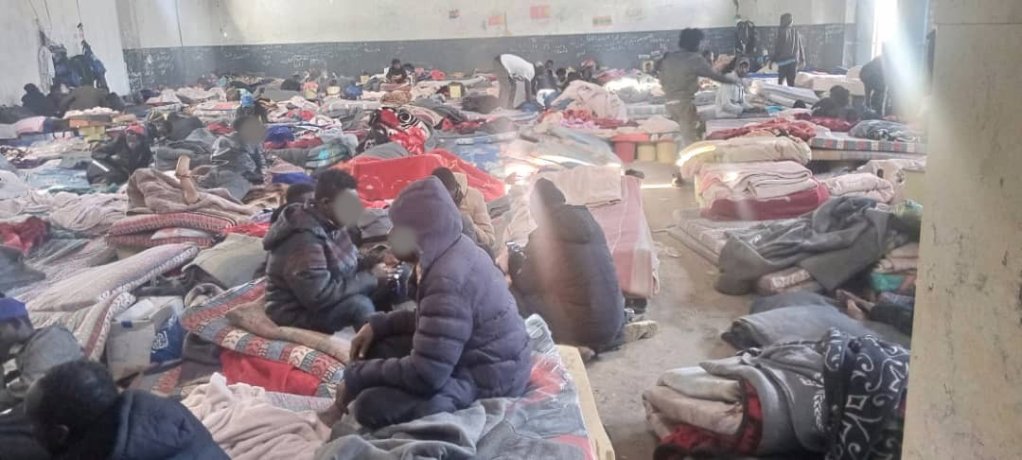
I managed to get out because an Arab woman who lived nearby was looking for a maid. She asked some prison guards if a Black woman could work for her. Since I didn't cause any trouble, the guards released me, and I went with my daughter to this woman's house. I worked for her, but she never paid me. She told me she had paid my ransom and was recouping it. After a few weeks, I think she took pity on me. She let me leave.
The majority of migrants arbitrarily thrown into prison are victims of extortion. The jailers torture them, film them, and send the videos to their families to demand ransoms. But many migrants die in detention, for lack of family and money.
Marie would go to prison a third time, again in Abu Salim, in February 2025. Once again, she was arrested by Libyan security forces in an apartment building while cleaning. She would remain there for three months before escaping again. "There were bombings, gunfire, one day. I don't know what was happening. Libyans were shooting at each other. The prison gates were opened, and we escaped with Aya." Intense clashes—which left several dead—took place in May 2025 between various armed groups vying for power in the Libyan capital. The fighting pitted militias loyal to the UN-backed Government of National Accord against the Stability Support Apparatus (SSA), which controlled the Abu Salim district, and the Radaa force.
Life in prison is horrible. I still have scars on my face from how badly they beat me. I don't even know how to explain it… One day, they tried to rape me. Aya screamed, she cried, she threw herself on me to stop them. She shouted, 'Leave my mother alone, leave her alone!' So they left me alone, but they raped the other women next to me.
For Aya, prison was horrific. There were other children. But they didn't play; they had nothing to play with anyway. Aya's days consisted of sleeping and crying. She would cling to me, crying. Children in prison can't do anything. When you're arrested, they take everything, they leave you with nothing.
One day, she couldn't walk anymore. I think my child had become very weak. We weren't fed, not enough. Some days, we had nothing to eat. We saw people from the IOM [International Organization for Migration] in Abu Salim, but we couldn't speak to them.
We were beaten every day. The women were never spared. They often beat those who didn't understand them. Like me. I didn't speak Arabic, so that angered them. And when I didn't understand them, they beat me up.”
*All names have been changed.