
A recent BBC undercover investigation claims to have found an underground market of unregulated law firms, lawyers, and immigration advisors targeting migrants and instructing them how to make fake gay claims in order to seek asylum. Rights groups warn that this further endangers LGBT people who flee their countries of origin and seek protection in the UK.
An underground market of unregulated law firms, lawyers, and immigration advisors are reportedly charging hefty amounts of money to help people make false claims about being gay so they can apply for asylum and stay in the UK, a BBC undercover investigation revealed on Wednesday (April 15).
These bogus firms and unscrupulous individuals allegedly promote their services online and reportedly charge anywhere from 1,500 British pounds (1,700 euros) to assist with making a fake claim and additional 2,000 - 3,000 (2,300 to 3,400 euros) British pounds to fabricate evidence. One law firm reportedly charged about 7,000 British pounds (8,000 euros) to file a fabricated asylum claim that had a "very low" chance of being disapproved by the Home Office.
The BBC report series highlighted how people whose visas are due to expire are coached by unregulated immigration advisors to make up cover stories about being gay and are given instructions about how to obtain fabricated evidence, including supporting letters, photographs and medical reports.
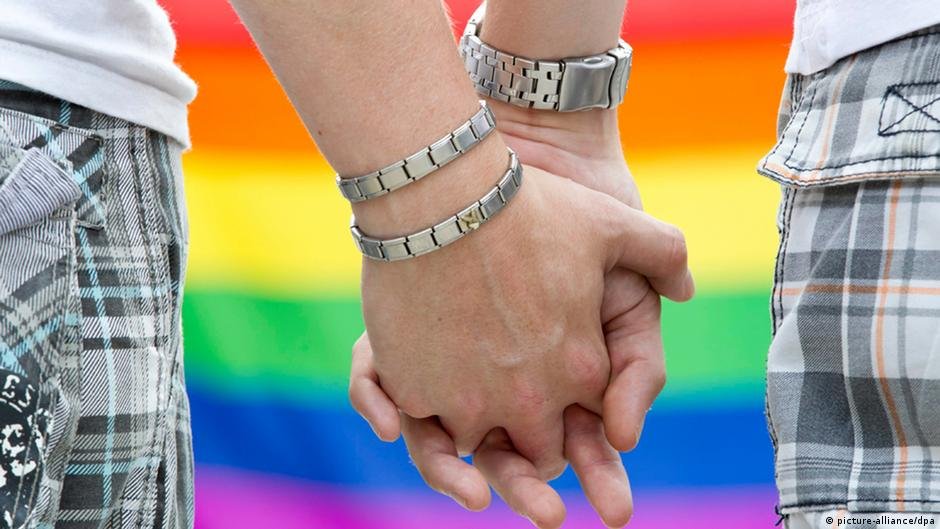
An undercover BBC reporter went to an LGBT (Lesbia, Gay, Bisexual, Transgender) asylum event and found that many of the attendees admitted to not being gay. Over an exchange of phone conversations between the undercover reporter and purported immigration advisors or paralegals, when the reporter said that he was not gay, he was advised, "Listen to me. There is nobody who is real. There is only one way out in order to live here now and that is the very method everyone is adopting."
According to the BBC, those who are making these fictitious claims are often people whose student, work or tourist visas have expired. This is not the case for migrants who have arrived in the country on small boats or through other irregular means.
"Anyone abusing protections for people fleeing persecution over gender or sexual orientation is beyond contempt," the UK Home Office Secretary Shabanna Mahmood tweeted on April 15, in reaction to the BBC report.
"Sham lawyers facilitating this abuse will face the full force of the law. With them behind bars, their dirty money will be seized and reinvested to shut down the crime they once bankrolled," Mahmood continued.
A 'front' to make false claims
The Peter Tatchell Foundation, a London-based charity that focuses on LGBTIQ+ (Lesbian, Gay, Bisexual, Transgender, Intersex, Queer +) rights last year raised concerns about what they had seen as an increase in fraudulent applications and said the BBC findings reflected longstanding warnings from campaigners and underlined the need for effective safeguards.
"Last year, we spoke out after being overwhelmed by a surge in asylum seekers who we believed to be fake. We expressed concern that Worcester LGBT+ was not a genuine group but a front for ripping‑off authentic LGBT+ refugees with exorbitant fees and promoting fake asylum claims by people who are straight," the foundation said in a statement.
"False claims and the exploitation of LGBTs by organized criminal gangs undermine public confidence in the asylum system. It is damaging to those who have a legitimate claim for refugee status," continued the organization's statement.
However, other groups working with LGBTIQ+ people raised concerns about the BBC report itself. Microrainbow, an organization working with LGBTIQ people seeking asylum in the UK said: "The suggestion that large numbers of people are falsely claiming asylum on the basis of sexual orientation or gender identity is deeply misleading and risks harming those genuinely fleeing persecution,” on their Instagram page.
In a BBC report on Friday (April 17), the Home Office said that it is conducting a robust investigation into these claims.
UK asylum claims based on sexual orientation
Statistics released by the Home Office indicate that in 2022, two percent of asylum claims in the UK equivalent to about 1,334 claims included sexual orientation as part of the basis for the asylum claim.
Pakistani nationals accounted for the greatest number of these asylum applications in each of the last six years. In 2022, Pakistanis accounted for 21 percent or about 278 applications of all asylum applications based on sexual orientation and identity. Compared to the overall asylum applications, Pakistani nationals were the 10th largest nationality and accounted for just three percent of overall asylum applications.
In terms of decisions, the Home Office reported 1,024 initial decisions made on asylum applications based on sexual identity and expression in 2022. Of this group about 72 percent were granted asylum or an alternative form of leave to remain.
This translates to an approval rate of about 72 percent, more than three times higher than the rate in 2017 when only 22 percent of LGBT cases were approved. However, in the same comparitive time period, the overall grant rate for asylum claims also rose to 76 percent. The current grant rate for LGB asylum applications is more than three times the rate in 2017.
The Home Office data notes that not all of the individuals were granted protection on the basis of their sexual orientation. "Other LGB asylum seekers may be granted protection without referencing their sexual orientation in their claims, and therefore would not be included in these figures," said the Home Office.
Global regression
A global mapping by Human Rights Watch shows that at least 67 countries have national laws criminalizing same-sex relations between consenting adults with sentences that range from fines to life imprisonment and even the death penalty.
Additionally, there are at least nine countries that have national laws that criminalize forms of gender expression that target transgender and gender nonconforming people.
The consolidated findings indicate that legal sanctions against same-sex conduct vary in scope and application.
In some countries, only specific sexual acts are punished, while in others the laws are more general, often vague and open to varying interpretation. In some countries, law enforcement agencies aggressively pursue and prosecute people suspected of being lesbian, gay, bisexual or transgender. In others, the laws are rarely enforced but nonetheless have severe consequences for LGBT people, serving to justify discriminatory treatment and impeding LGBT people’s access to employment, health services, and police protection," said the organization Human Rights Watch.
"Any advice to misuse the asylum system should be condemned, but such behavior by a small number of bad-faith actors does not reflect the reality of LGBTQI+ people seeking asylum," Carla Manso Garcia, Communications Manager at Rainbow Migration, a UK-based organization that provides assistance to LGBTIQ migrants told InfoMigrants.
Case studies
Cases handled by Rainbow Migration include a gay man from Pakistan whose family found he was living with his boyfriend in the UK. "They started threatening them both, saying 'If you come back, we will not spare you. We will kill you. We’ll make an example of you because you are giving a bad name to the family, the country and the religion.'"
Or a gay man from India, who had tried to get mental health support back in India
"He was met with a lot of stigma, and comments about how he was 'possessed by a ghost,' simply for being gay," said Manso Garcia.
Both cases highlight the stigma and aggression that surrounds sexual identity which are also reflected in the local country laws.
According to the Human Dignity Trust, the Pakistan Penal Code of 1860 introduced during the British Colonial period criminalizes same-sex sexual activity with a maximum penalty of life imprisonment. Only men are reported to be criminalized under this law.
"There have been consistent reports of discrimination and violence being committed against LGBT people in recent years, including murder, rape, assault, and the denial of basic rights and services. Transgender women are particularly vulnerable to violence and abuse, despite an improving legislative environment for transgender people," said the Human Dignity Trust on their website.
Information on the UK Home Office website echoes these findings.
Pakistan
"LGBT+ people are unlikely to face persecution or serious harm from the state. Prosecutions are rare, but police sometimes use punitive laws to extort bribes or sexual favors from men who have sex with men (MSM) and trans women. There are no known cases of the government applying Sharia to punish same-sex acts, and there were no known cases of executions for same-sex conduct," reads a 2025 country policy note about sexual orientation and gender identity or expression in Pakistan.
Trans and intersex people are protected under the Transgender Persons (Protection of Rights) Act, 2018, though some provisions were declared ‘un-Islamic’ by the Federal Shariat Court in 2023, the policy note adds.
In terms of assessing claims for international protection, the Home Office Policy note states: Where a claim is refused, it is unlikely to be certifiable as 'clearly unfounded' under section 94 of the Nationality, Immigration and Asylum Act 2002. All cases must be considered on their individual facts, with the onus on the person to demonstrate they face persecution or serious harm.
Slow progress in India
In India, legal and policy decisions favoring LGBTIQ+ rights include the 2014 NALSA (National Legal Service Authority) decision wherein the court upheld everyone's right to identify their own gender. Additionally, it legally recognized hijras and kinnar (transgender persons) as a 'third gender.'
Following this, in 2018, portions of the Indian Penal Code that criminalize private consensual sex between men was ruled unconstitutional by the Supreme Court. Most recently, in 2021, a landmark judgment by the Madras High Court directed the state to provide comprehensive welfare services to the LGBTQIA+ communities.
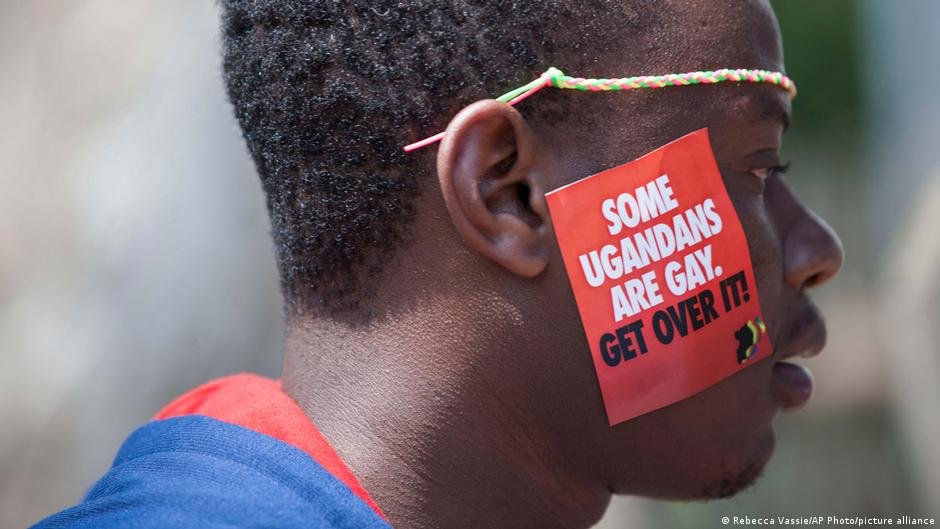
However, despite this, the United Nations noted that rewriting and erasing the stigma that has surrounded these gender identities has not come as easily, noting a "persistent lack of understanding and intolerance towards the LGBTQIA+ community whether in larger cities or in rural areas."
"The asylum system is hostile and complex, and particularly difficult for LGBTQI+ people as they are required to "prove" their sexual orientation or gender identity to complete strangers. Many have spent much of their lives hiding or denying who they are to avoid violence," said Rainbow Migration's Manso Garcia.