
Ukrainians who arrived in Germany after the 31 March 2025 cut-off date will no longer receive the citizens' allowance known as Bürgergeld. The government said that this will put Ukrainians on an equal footing with people who come to Germany as refugees from other countries and for other reasons.
Under the European Union Temporary Protection Directive, Ukrainians who fled their country following the invasion of Russia in 2022 were granted immediate rights that included residence, the right to work, and access to social benefits without the need to apply for these privileges as a person seeking asylum.
In Germany, the implementation of the EU Temporary Protection Directive meant that many Ukrainians were entitled to the social benefits package known as a citizen's allowance or 'Bürgergeld', which is financial support provided to unemployed citizens.
The citizen's allowance benefits allocate about 563 euros per month for a single adult and provide additional financial support to cover housing and heating costs.
For Ukrainians, that will now change.
Ukrainians who arrived in Germany after March 31, 2025, will no longer qualify for Burgergeld and will instead be placed under the Asylum Seekers’ Benefits Act, a lower-level welfare system that applies to most people seeking protection in Germany.
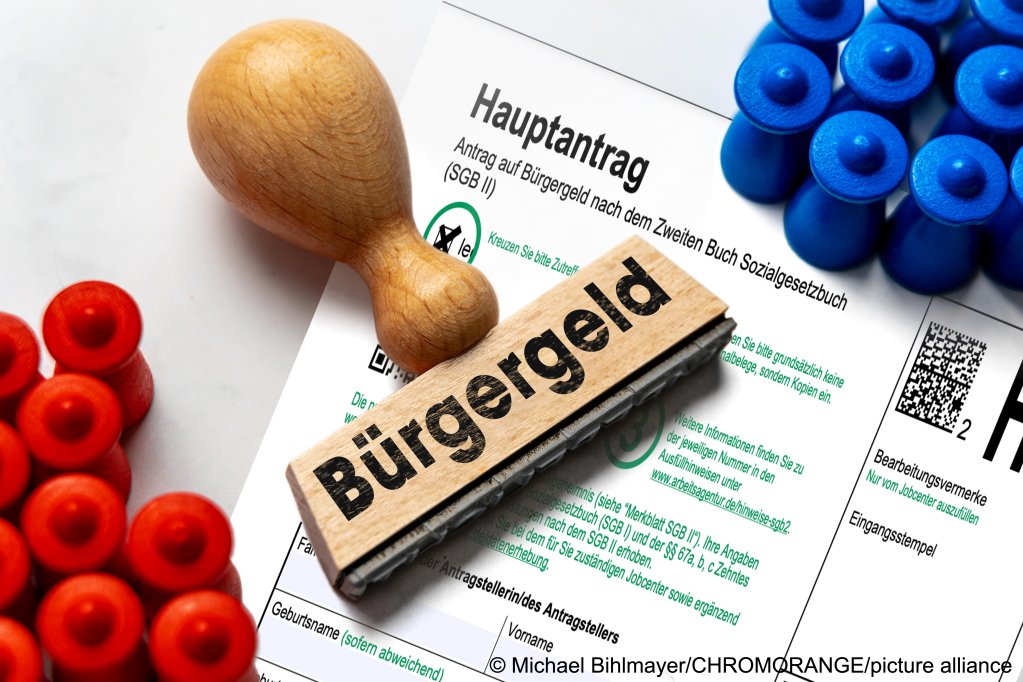
In a statement issued when the changes were first announced in November, the government said that the move "will put them (Ukrainians) on an equal footing with people who come to Germany as refugees from other countries and for other reasons."
The move reflects efforts of the German government to consolidate social welfare benefits and reduce disparities between different groups of migrants. The streamlining of benefits under the asylum-seeker framework is meant to promote faster integration and reduce the burden on state resources.
Read AlsoUkrainian refugees in Germany: Why few work for a living
Transition period
It is important to note that Ukrainian nationals who arrived before the 31 March 2025 cut-off date will retain their existing rights under the temporary protection directive. In effect, nothing changes for those who arrived in Germany before the cut-off date.
The changes will apply only to those who arrived after 31 March 2025. Ukrainian nationals who fall into this category and were receiving Burgergeld are given a three-month transition period. This means that they may continue to receive citizens' allowance benefits for up to three months before the new system takes effect.
Major changes
The major change is a reduction in state support as a result of this change in policy.
Ukrainian refugees who fall under the new rules will face lower levels of state support and a different administrative system. They will be covered by the Asylum Seekers’ Benefits Act, under which state financial support is roughly 20 percent lower.
While the exact amount depends on personal circumstances, a single adult currently receives a basic allowance of about 455 euros, compared to the standard citizens' allowance rate of 563 euros. The state mandate for administering these benefits will shift from job centers to local social welfare offices.
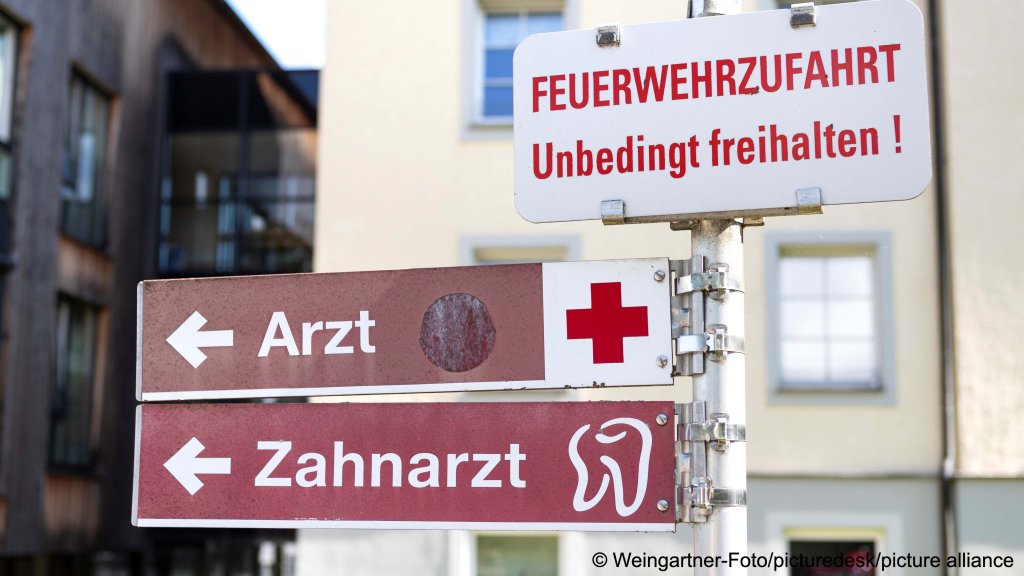
Access to healthcare will also change. Affected refugees will no longer be covered by regular statutory health insurance but will instead receive basic medical care funded through tax revenues. According to the government, this is meant to reduce costs for health insurers. Effectively, only essential care for acute illness, pain, pregnancy and childbirth, and vaccinations is covered. Additional treatments can also be provided, but must be applied for separately.
Full access to standard healthcare, as provided to other residents, will only be available after three years of lawful residence in Germany or once individuals become financially self-sufficient and pay taxes and social security contributions.
Those who are able to work but are unemployed will be legally required to actively seek employment. The support previously offered by job centers, which included integration assistance and tailored employment programs, will also come to an end. However, refugees will still be entitled to general advice from employment agencies.
Overall, the changes mean reduced financial support, more limited healthcare access in the initial years, and greater expectations to find work, while providing fewer institutional resources to help refugees navigate these demands.
Read AlsoIreland: Every third Ukrainian refugee to lose most of welfare payments
Opposition
Several groups have criticized the move to consolidate social benefits under the Asylum Seekers' Benefits Act. The German section of Doctors of the World slammed the change "symbolic politics" and called for the abolition of the law. Their experiences indicate that it fails to provide adequate healthcare and leads to the worsening of chronic and mental illnesses, for example. Often, these illnesses are only treated when they become emergencies.
"This is more costly for the healthcare system than if people were treated preventively or at the first signs of symptoms. Aside from the financial disadvantages of these regulations, they are discriminatory and violate the fundamental right to a healthy life," Doctors of the World said in a statement.
Meanwhile, rights group ProAsyl pointed out that the current Asylum Seekers' Benefits Act is already riddled with inconsistencies, such as benefits paid out through what they called "error-prone and freedom-restricting payment cards."
ProAsyl, which was included in draft consultations of the law, said, "This populist disadvantaging of parts of the Ukrainian asylum seekers does not even save state funds, but plunges those affected into a life below the constitutionally guaranteed minimum subsistence level and excludes them from social participation."
Read AlsoGerman center-right gets tough on Ukrainian refugees