
Raids were carried out on Tuesday in south-west Germany. At least four people were arrested on suspicion of migrant smuggling.
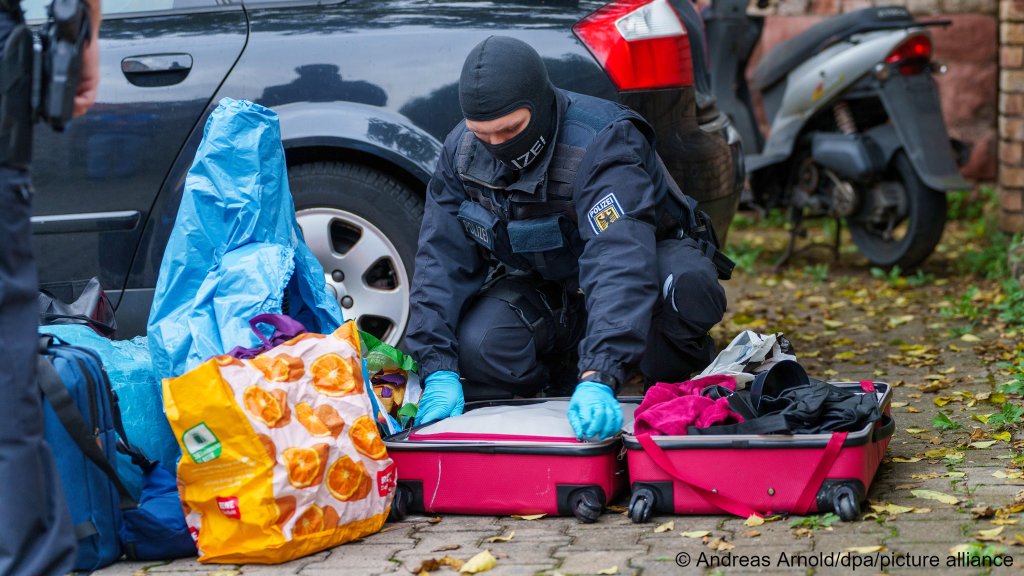
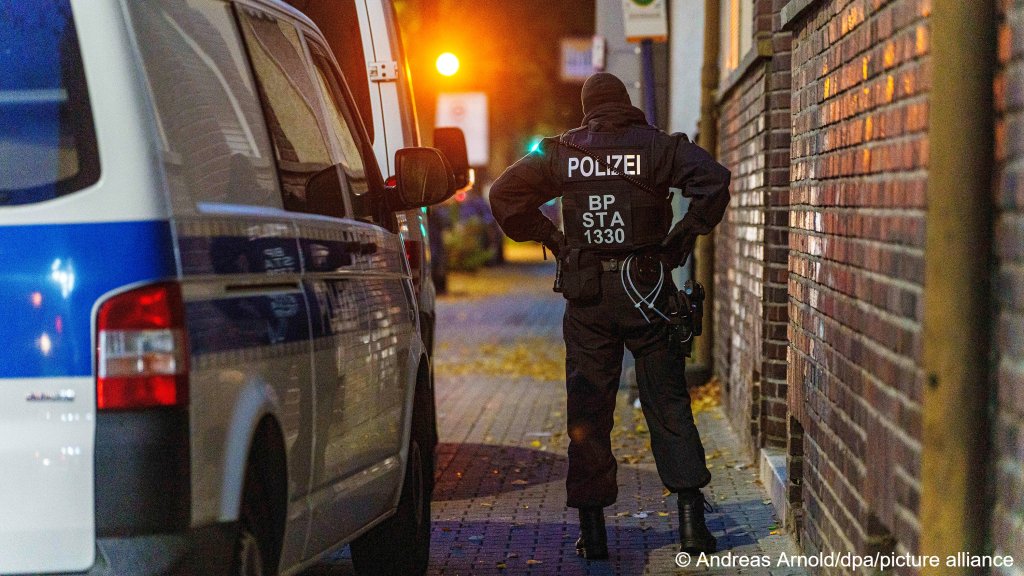
Raids were carried out by Germany’s Federal Police (Bundespolizei) in areas surrounding the south-western cities of Mannheim, Karlsruhe and Worms in the early hours of Tuesday (September 24).
400 police officers searched a total of 24 properties, a police spokesperson told the news agency Reuters. Both businesses and private properties were searched, Germany’s regional state broadcaster SWR reported.
Police said the searches were triggered by an investigation into migrant smuggling from the Caucasus region. They believe the migrants were being smuggled into Germany to work illegally. Because of their lack of work permits, the migrants could be paid below the statutory minimum wage on places like construction sites, added Reuters.
Also read: Police raids target alleged people-smuggling ring in Germany
Investigation began in January
Police began investigating the alleged smuggling network in January this year. The investigation was triggered after one of the smuggled migrants attempted to leave Germany via Frankfurt airport, police said.
Later, further controls at Frankfurt and Stuttgart airports uncovered more migrants, who police believe may have been smuggled by the gang. The first man had a passport and visa, but no work permit, although he had said he had been working in Germany. Later, the other two men were found to have a similar story.
This led police to carry out checks on several construction sites in the area, where they found a number of people from the Middle East and nationals from the Caucasus region working illegally.
The suspects are believed to have brought in the migrants with visas, and then provided them with fake EU identity cards. With these cards, the migrants were then able to find work in Germany. But despite possessing the fake cards, they were still paid below the minimum wage, reported SWR.
Also read: UK and Germany cooperate to curb irregular migration
Tighter controls
Germany imposed stricter border controls at all its borders, including airports and ports, on September 16, to try to apprehend migrants attempting to enter the country without the correct papers.
The tighter controls follow a series of knife attacks perpetrated by migrants and asylum seekers, some of whom had been issued with notices to quit the country. The fatal attacks triggered heated debate in German political circles and society and are understood to have influenced the result in three big state elections this month in Thuringia, Saxony and Brandenburg.
On Tuesday morning, a police spokesperson told the German press agency dpa that four arrest warrants had already been executed, but that police are investigating at least seven people, alleged to have smuggled the migrants into the country. The suspects include both men and women, reported SWR.
The broadcaster said later on Tuesday that two people had been arrested in Worms and Neustadt, as well as two people in Mannheim, where most of the raids took place. They were expected to appear before a judge later on Tuesday, confirmed the police spokesperson.
Working in construction
It is still unclear exactly how many migrants may have been smuggled by the network. A police spokesperson told SWR that the figure was likely to be "two-figure" but would not give more precise details on Tuesday. Later, SWR reported that at least 35 migrants had been brought in to Germany via the suspected network. Most of them are thought to have been working in construction.
Those being investigated are suspected of people smuggling, employing migrants without residence permits and fraud.
During the raids, investigators gathered a number of fake documents, as well as laptops and other evidence. At least three more people are still under investigation.
SWR also reports that the customs office in Karlsruhe, involved in the investigations, believes that some of the suspects have been claiming social welfare benefits on a false basis, and have been working illegally on the side.
With Reuters and dpa