
The Italian government's latest security decree has passed a hurdle in the Chamber of Deputies, and is now on its way to the upper house, the Senate. If passed, the decree includes a series of restrictive amendments, some of which would have a direct impact on the lives of migrants in Italy.
The new Italian security decree includes a wide range of around 20 laws, that the right-wing coalition government says are meant to make life safer in Italy. Some of the amendments seek to increase possible sentences for already-existing crimes, and others could directly impact the lives of migrant communities in the country.
One part of the security bill, which has now passed its first hurdle in Italy's lower house, the Chamber of Deputies, and is on its way to the Senate, includes allowing the authorities and police forces wider surveillance in both prisons and pre-removal detention centers for migrants (CPR).
"In places and environments where individuals are held under restrictions of personal liberty, surveillance devices may be used," an article of the decree states. Over 23 million euros have been allocated over three years to allow the authorities to increase their surveillance capabilities.
Requests by opposition denied
Some members of the opposition have reacted strongly to this measure and several other aspects of the security decree. However, the request for identification numbers to be displayed on officers' uniforms, proposed by the opposition, was denied.
Also included in the decree is a new crime of "passive resistance." This has been nicknamed the "anti-Gandhi" measure by its critics, as it would have criminalized the kind of passive resistance advocated by the Indian independence leader when contrasting British colonial rule.
Under the new decree, a group of three or more people offering opposition to orders issued in a prison or CPR, either with violence, threats or resistance, including passive resistance, could face imprisonment of between one and five years.
This would mean, that anyone passively resisting any order in a CPR could be further criminalized within the Italian penal code.
"This equates non-violent protest with aggression," said Riccardo Magi from the left-leaning +E party. "You would have jailed Gandhi," echoed Marco Pellegrini from the Five Star Movement (Movimento a Cinque Stelle (M5s).
Also read: Italian migrant decree approved, includes tougher measures and expulsions
The SIM card rule
Another aspect of the security decree seeks to criminalize shops and businesses that attempt to sell a SIM card for mobile phones to someone who lacks identity documents and a residence permit. This would essentially mean that unregistered migrants would find it harder and harder to purchase a SIM card legally within Italy.
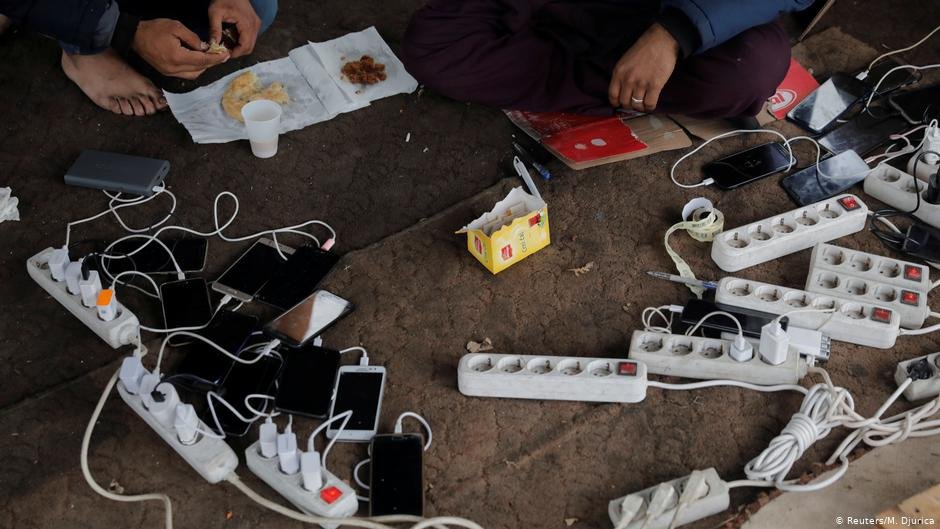
Not having legal access to a phone could make life even harder, particularly for those who may not have access to a computer or a fixed address. Often phones are a migrants' only form of communication, and a phone is also needed for many of the registration processes linked to the Italian state.
The new decree stipulates that, along with identity documents, "if the customer is a citizen of a non-EU state," a "copy of the residence permit" must also be provided before purchasing a SIM card. Shops or stalls who are found to be selling SIM cards without carrying out the correct checks could be subject to closure for between five and 30 days, reports the Italian newspaper La Stampa.
Deputies from the M5s party attempted to get this amendment repealed, but their appeal was rejected.
Also read: Italy's new draft decree targets unaccompanied minors
Opposition: 'Atrocities and inhumanity'
Another part of the decree, reports La Stampa, sets out to remove the deferral possibilities offered to pregnant women and those with a baby under a year old. This, stated the newspaper on Thursday (September 19) would appear to be mostly aimed at Roma and Sinti women convicted of crimes like theft and pickpocketing, or for those who put their children to work begging. However, it could also affect migrants and any other woman in this category convicted of a crime.
If the judge decrees that the woman convicted is at risk of reoffending, or has a long history of being pulled up for this kind of crime, irrespective of how young her child is or how imminent a birth might be, the judge would still be able to send this mother to a detention center equipped to house mothers and babies.
The opposition has branded some of the proposals contained within the decree "atrocious" and "inhumane." Simona Bonafè from the Democratic Party (PD) concluded that criminalizing potential passive resistance was "unjust and unconstitutional."
The Five Star Movement (M5s) was even more critical: "This legal aberration includes the crime of revolt against orders issued, even in migrant centers and even in facilities housing unaccompanied foreign minors. You are writing a series of legal, ethical, and civil aberrations," argued M5S deputy Valentina D'Orso.
Left-wing Green politician Filiberto Zaratti from AVS (Alleanza Verdi e Sinistra --Green and Left alliance) voiced a similar view: "It is aberrant to ban phone cards for irregular migrants, the same people illegally employed in our fields and businesses. This rule opens the door to the black market and makes life harder for people. You accuse us of excessive compassion, but we are proud of it; we are your opposite. You are extremely cruel," concluded the deputy passionately in the chamber.
Also read: Freedom of movement solidarity network launched in Italy