
Hundreds of people have been intercepted while trying to reach Ceuta from neighboring Morocco by sea, local police said. An unknown number managed to enter the Spanish enclave.
Up to 1,500 people tried to reach Spain's Ceuta enclave on Sunday and early on Monday (August 25/26), Reuters reported, citing Spain's government representative in Ceuta.
According to a spokesperson for the Guardia Civil police, many of the migrants were intercepted near or on El Tarajal beach next to the border with Morocco.
The migrants apparently took advantage of thick mist, which had disappeared by Monday morning, the spokesperson added.
"There was pressure and we handled it with Morocco," the spokesperson said. According to Reuters, they declined to provide an exact number of those who tried to cross or were sent back to Morocco.
Similar episodes have been reported repeatedly over the past few months in Ceuta, as migrants try to take advantage of poor visibility conditions to swim to Spain from Moroccan territory -- even at the risk of dying.
Earlier this month, around 200 migrants were apprehended while trying to swim from Morocco to Ceuta. Most were handed over to Moroccan authorities under the terms of a bilateral agreement between the two governments. In January, Morocco's army stopped more than 1,100 migrants from reaching Ceuta and Melilla.
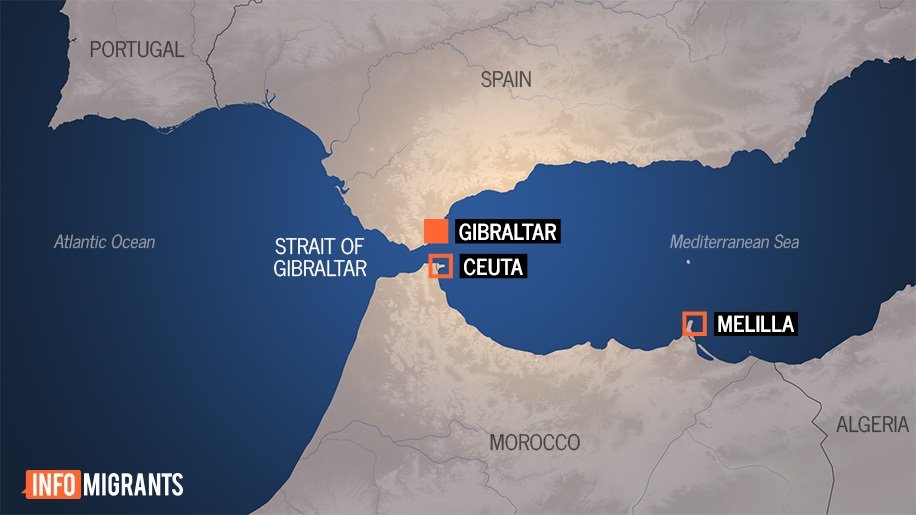
The 12-kilometer border between Melilla and Morocco, as well as Ceuta's eight-kilometer border, are Europe's only land borders with Africa. Despite being protected by fences, migrants frequently try to cross into European Union territory in the hope of reaching mainland Europe.
Read more: Officials to stand trial for allegedly expelling migrant minors from Ceuta
700 intercepted migrants per day
Since last Thursday, August 22, police have intercepted an average of around 700 migrants per day trying to enter Ceuta, Reuters reported, citing the government representative, Perez.
Unless they are underage or seeking asylum, people with Moroccan nationality who are intercepted and detained while attempting the crossings are sent back to Morocco immediately, Perez said. Migrants from other countries are taken to special facilities where they are given shelter and released after a few days, she said.
A spokesperson for Perez's office said the number who succeeded in entering the enclave without being detected in the latest crossing was unknown.
A little over two years ago, on June 24, 2022, around 2,000 migrants attempted to cross the border from Morocco into the Melilla enclave. At least 37 people from sub-Saharan Africa died that day; 77 people are still missing, according to human rights organization Amnesty International.
Read more: Cameroonian migrant files lawsuit against Spain
with Reuters